Portuguese
  Spanish


Environmental robot inspired by the mudskipper fish uses crawling movement to cross mud, assess degraded soil, and deliver seeds to difficult areas, in a project by young Egyptians that entered the African selection of The Earth Prize 2026 and draws attention for showing how nature can guide new solutions for environmental recovery
While common machines get stuck in wet terrains, young Egyptians created a fish-inspired robot to crawl through mud, monitor degraded soil, and plant seeds in difficult areas. The team is formed by Egyptian students Ziad Kotb, 17, Kareem Ahmad Abd Elkareem, 17, Mostafa Mohammed, 16, and Nader Syed, 16.
They live in the agricultural context of the Nile Delta and observed a problem close to their local reality: the advance of salinity in degraded lands. From this difficulty, the group sought inspiration in the mudskipper fish to create the Terraskipper, a robot designed to crawl in mud, monitor the soil, and plant seeds without relying on common wheels.
The information was published by Mongabay, an international environmental news and conservation portal. The case gained prominence for combining environmental robotics, observation of nature, and recovery of degraded areas in an idea created by young people.
-
Twin Earthquakes of Magnitude 7.2 and 7.5 Strike Venezuela, Leaving Over 1,400 Dead and Affecting Millions, Potential Losses Estimated at $6.7 Billion

-
Latin America’s Largest Residential Complex Located in São Paulo Boasts 1,160 Apartments, 72 Shops, 22 Elevators, and 104 Staff Members

-
Rare 1747 Lutheran Bible from Germany, Preserved in Southern Brazil, Showcases Unique Engravings and Handcrafted Techniques
-
Before Japan Became a Football Powerhouse, Zico Transformed the Amateur League, Boosted the J.League, and Was Honored with a Statue at Kashima Antlers




Why a fish that walks on mud became an inspiration for an environmental robot
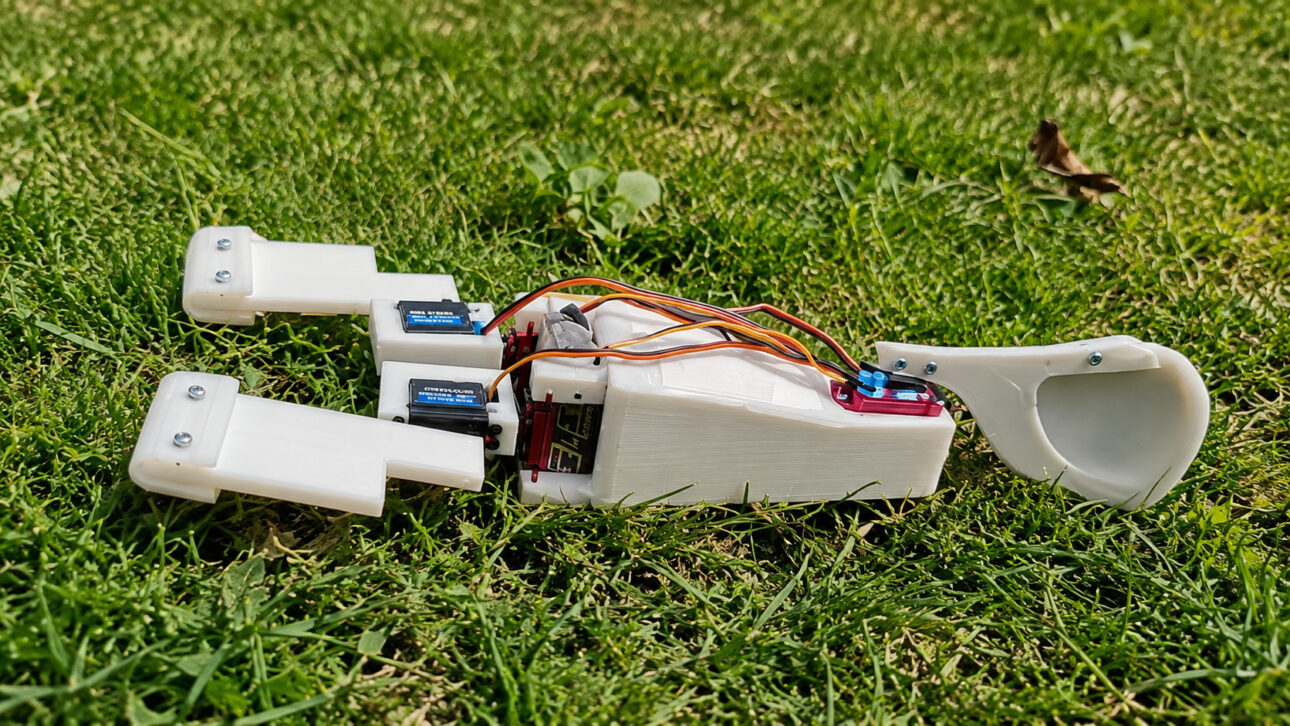
The mudskipper fish can move in wet and muddy environments, even out of the water. This behavior served as inspiration for the Terraskipper, created to mimic part of this ability in terrains where movement is difficult.

The logic of the project is simple. Instead of relying on wheels, the robot uses a crawling movement to cross muddy areas. Thus, it attempts to advance where common machines may lose power or get stuck.
This detail makes the project visually strong and easy to understand. The central image is of a small robot, inspired by a fish, trying to move on a floor that usually hinders the progress of traditional equipment.
Even so, the Terraskipper needs to be viewed with caution. It is an environmental prototype, not a machine ready to recover large areas on its own.
How the Terraskipper monitors degraded soil and delivers seeds to difficult areas
Degraded soil is land that has lost part of its quality. In many cases, this type of area may have difficulty receiving vegetation again, especially when the terrain is wet, soft, or unstable.
The Terraskipper was designed to monitor the soil and plant seeds in these difficult locations. Monitoring, in this case, means observing the terrain conditions to help understand the state of the area.
The proposal also includes delivering seeds to points where access is more complicated. This part is important because planting in mud or degraded land does not only depend on the seed but also on reaching the right location.
The project gained visibility in May 2026, and the information was published by Mongabay, an international environmental and conservation news portal. The proposal attracted attention by placing young people from Egypt at the center of a solution that mixes environmental robotics, nature observation, and recovery of degraded areas.
Why planting seeds in mud is more difficult than it seems
Planting seeds in dry and firm terrain already requires care. In a muddy area, the challenge increases because the ground can sink, slip, or prevent the movement of common machines.
When the soil is very wet, wheels can lose traction. When it is degraded, the area can become even more sensitive. Therefore, a heavy machine may not be the best option in certain spots.
The Terraskipper draws attention because it tries to tackle this problem in a different way. It does not rely on the strength of a large piece of equipment but on a movement inspired by nature.
This type of idea shows that environmental recovery can also depend on small, light, and specific solutions, especially in areas where access is part of the problem.
Why the project entered the radar of an environmental competition for young people
The Terraskipper entered the African selection of The Earth Prize 2026, an international environmental competition for young students. The choice reinforces the interest in solutions created by teenagers for concrete environmental problems.
The proposal stands out because it mixes curiosity and utility. A robot that mimics a mud fish seems unlikely, but the obstacle it faces is easy to visualize.
The recovery of degraded soil requires access, observation, and care. The project tries to combine these three points into an experimental solution, created from a behavior observed in nature.
The strongest point is the idea of adaptation. Instead of forcing the terrain to accommodate a common machine, the robot tries to adapt to the terrain.
What is still missing before considering real use in the field
The Terraskipper should not yet be treated as a ready solution for automatic reforestation. It is more accurate to view the project as an environmental prototype in development.
This means that the idea needs to go through tests, improvements, and evaluation in real situations. Monitoring soil and planting seeds in difficult terrain are useful tasks, but they depend on consistent results to advance.
There is also no basis to claim that the robot can already recover large areas. What exists is a creative proposal to move in mud, observe the soil, and deliver seeds to challenging locations.
Even so, the project draws attention because it shows a new way of thinking. Nature became the starting point for a machine created by young people trying to address a concrete environmental problem.
The Terraskipper shows that an environmental solution can be born from a simple observation: a fish that moves in mud where many machines would struggle. From this, young people from Egypt created a robot to monitor degraded soil and plant seeds in difficult areas.
The idea still needs to mature, but it already raises an important question about the future of environmental recovery. Do you think robots inspired by nature can help care for degraded areas, or is this type of solution still far from reality?