






 Portuguese
  Spanish


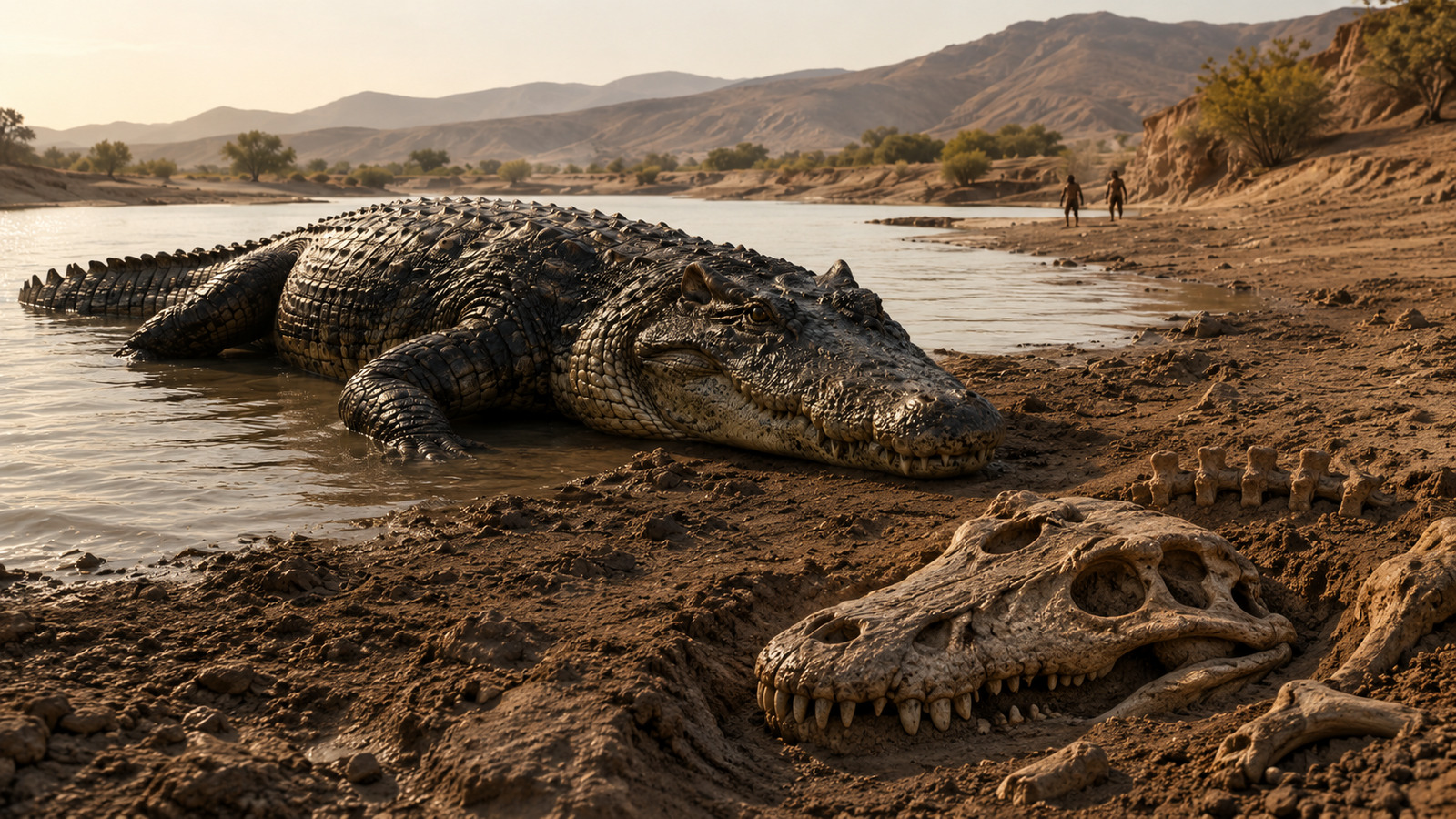


Fossils found in the Turkana Basin indicate that Crocodylus thorbjarnarsoni, the largest crocodile ever discovered, could exceed 8 meters and share rivers and lakes with ancient hominids
A giant crocodile over 8 meters long lived in the rivers and lakes of ancient Kenya and was likely among the largest predators in its environment. Fossils found in the Turkana Basin indicate that Crocodylus thorbjarnarsoni may have coexisted with hominids like Australopithecus near water sources.
The fossils were found in the 1960s and 1970s, but the species Crocodylus thorbjarnarsoni was only officially described by science in 2012. The fossils date from approximately 1.5 million to 5 million years ago.


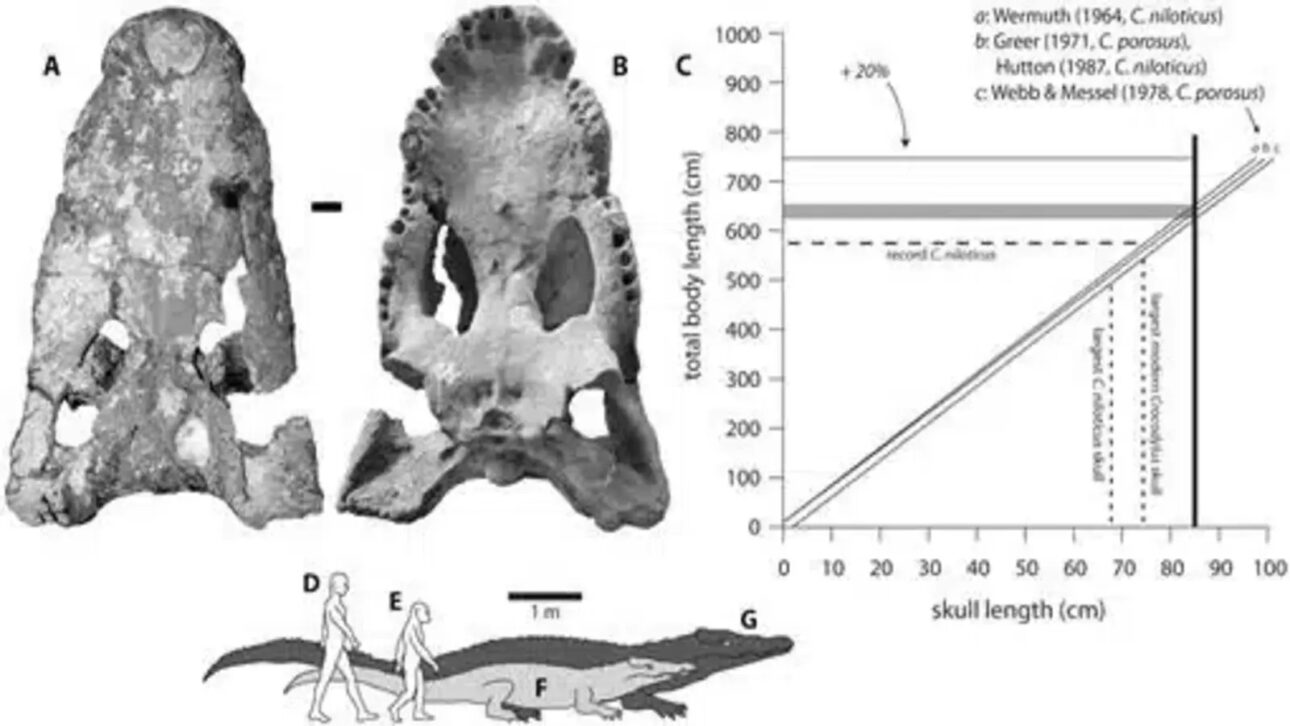
Giant crocodile was larger than any living species today
Crocodylus thorbjarnarsoni is considered the largest crocodile ever discovered. The animal had a robust body, a wide snout, and an appearance similar to that of modern Nile crocodiles, but reached much larger dimensions.
-
World’s Most Powerful MRI Machine in France, Weighing 132 Tons and Generating 11.7 Tesla Magnetic Field, Offers Unprecedented Clarity of the Human Brain

-
Hong Kong Converts Former Coastal Landfill into Desalination Plant Producing 135 Million Liters of Drinking Water Daily
-
Texas Teens Win $50,000 at World’s Largest Science Fair for Developing Non-Surgical Brain-Controlled Bionic Prosthesis with 98% Accuracy
-
Samsung Galaxy A27 Launches with 6.7-inch Super AMOLED Display, Full HD+ Resolution, Android 16, Six Years of Updates, Snapdragon 6 Gen 3, and Dust and Splash Resistance; Available for Pre-order in the US for $350


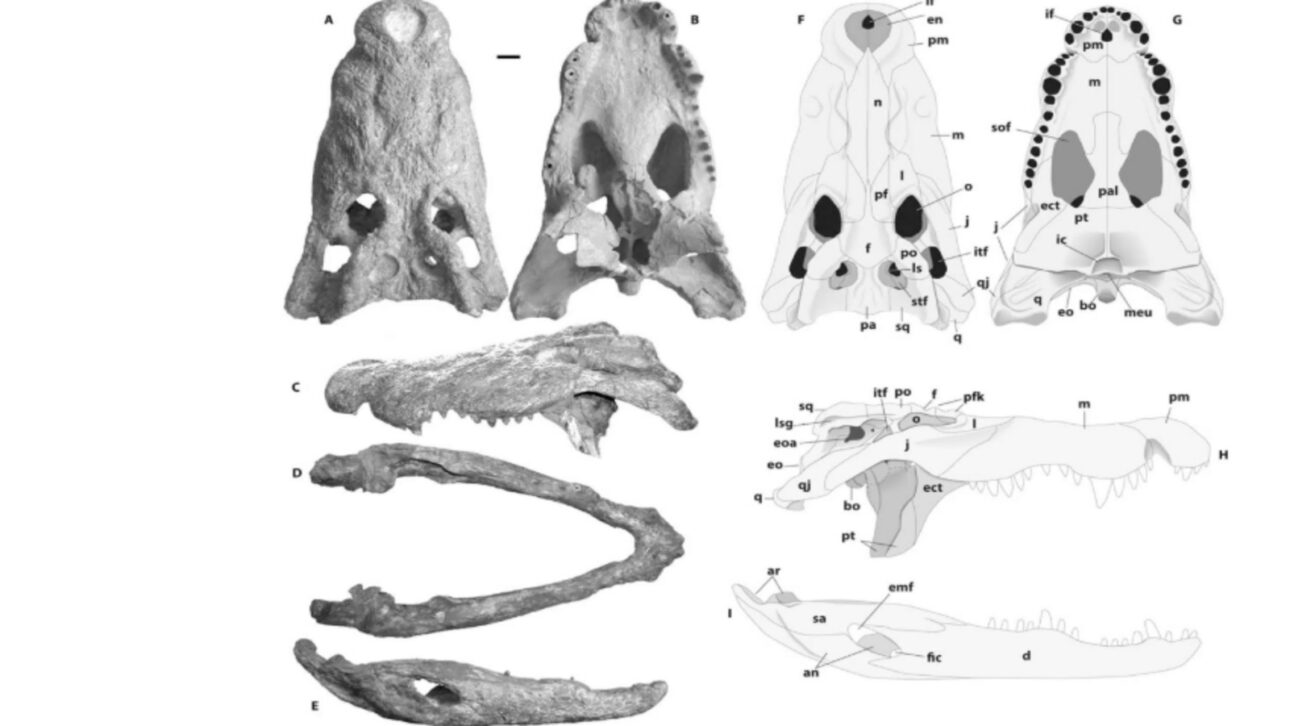
The fossil remains show that just the skull of the animal was extremely heavy. Researchers reported that four men were needed to lift it, a measure that helps gauge the physical strength of this prehistoric predator.
Besides its size, the species had horn-like protrusions behind the eyes. This feature distinguished the animal from modern crocodiles and reinforces the uniqueness of the fossil preserved at the National Museum of Kenya in Nairobi.
Predator dominated rivers and lakes of the Turkana Basin
The study published in the Journal of Vertebrate Paleontology indicates that C. thorbjarnarsoni was probably not selective in its diet.
The species could consume fish, mammals, and possibly other reptiles, occupying the top of the food chain in aquatic environments.
The size of more than 8 meters placed the animal above any living crocodile today. This scale helps explain why it is considered important evidence of the presence of large predators of the Crocodylus genus in Africa millions of years ago.
The combination of a robust body, heavy skull, and ambush behavior suggests an animal adapted to attack from the water.
Like current crocodiles, it probably remained hidden until the moment of capturing the prey.
Early humans may have shared the same environment
Fossils of Australopithecus found near the remains of crocodiles indicate that early hominids probably roamed the same rivers and lakes inhabited by this predator. Water, essential for survival, also represented a constant risk.
When drinking, fishing, or crossing flooded areas, these groups could become vulnerable to attacks. The analyzed material suggests that, in that environment, early humans were not at the top of the food chain.
The evolutionary relationship with Crocodylus anthropophagus, a species from Tanzania associated with human predation, reinforces the hypothesis that C. thorbjarnarsoni could also pose a direct threat to ancient hominids, including primitive members of the Homo genus.
Fossils help reconstruct a risk scenario in ancient Africa
The fossils preserved in Nairobi allow researchers to examine the crocodile’s skull, body, and evolutionary relationships.
This data helps understand how giant predators occupied African ecosystems before the expansion of humans.
The discovery also broadens the understanding of the long history of crocodiles on the continent. C. thorbjarnarsoni shows that the Crocodylus genus had already produced giant species capable of dominating rivers and lakes.
More than revealing an unusually sized animal, the fossils help reconstruct the environment faced by early humans.
In the Turkana Basin, water sources could be as dangerous as open areas with large terrestrial predators.
This article was prepared based on information from the Daily Galaxy provided about the Crocodylus thorbjarnarsoni, with data, numbers, and statements preserved as per the consulted material.


The article is great