






 Portuguese
  Spanish
  5 min of reading
  0 comments


Artificial Intelligence Could Cause a Global Population Collapse Without War or Pandemic. Scientist Explains How This Will Happen.
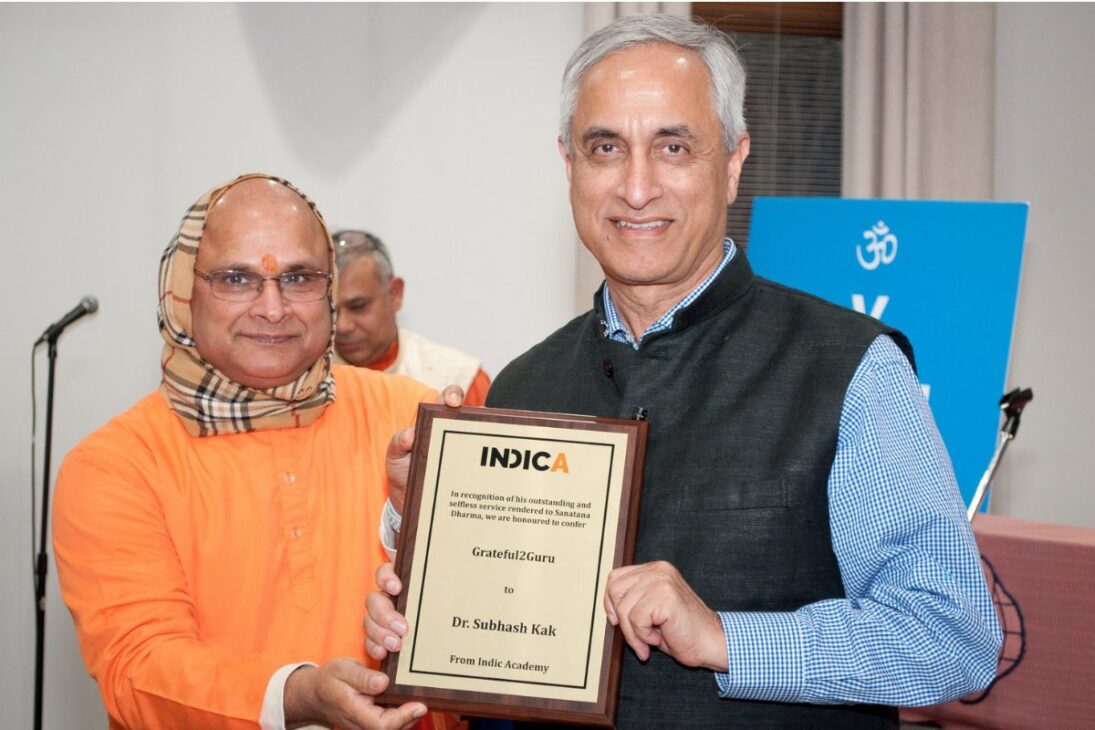
Imagine a world where major cities become empty scenarios, where birth rates plummet and where, silently, humanity slowly fades away. It may sound like a science fiction script, but this is exactly what artificial intelligence expert Subhash Kak predicts. According to his projections, by the end of the 23rd century, the global population could be reduced to just 100 million people, about 1.2% of what we have today.
The cause? It will not be war or a natural disaster. According to Kak, the greatest danger lies in the complete automation of society and the psychological and economic impact this will have on human life. In other words: the current system will not collapse violently, but will slowly disintegrate as artificial intelligence takes over all essential human functions.
A Silent Decline That Cannot Be Stopped
In an analysis published by various specialized outlets, Kak emphasizes that the problem will not be a rise of the machines, but the simple fact that they will do everything better than us. Every time a new automated technology replaces a human job, it creates a chain reaction that further weakens the structures of society.
-
After swapping sewing for cement, a woman from Paraná became a mason, spent 12 years on construction sites, started building her own house, and even gained fame for restoring old Opalas.

-
Tired of relying on a conventional house, a young woman with no construction experience built an off-grid studio apartment with solar energy, rainwater, a biodigester bathroom, and a routine designed to live with more autonomy.
-
Brazilian student creates a cheap formula that makes plants grow up to 90% faster and wins an award in a global scientific competition.

-
The European city hall that transformed an old urban avenue back into a canal, recovered a section that was filled in the 1970s, and delivered a new public space with water, vegetation, and pedestrian paths.




With less work available, economic insecurity increases, which in turn discourages the formation of new families. When it becomes impossible to afford the costs of raising children and planning for a stable future, the birth rate inevitably drops. This situation is already beginning to be observed in highly industrialized countries like Japan, South Korea, and parts of Europe.
As a recent study from the UN points out, birth rates are already in rapid decline in almost all developed countries. The forecast is that this trend will worsen as automation advances.
Ghost Cities: The End of Urban Life
The scenario Kak describes is particularly unsettling for those living in large metropolises. Imagine urban centers like Tokyo, New York, or São Paulo completely emptied, with silent streets and abandoned buildings.
According to the scientist, when companies no longer need offices or human labor, and when culture is produced by algorithms and consumed online, the cities will lose their meaning. It is not a technological collapse, but an emptiness of human purpose.
Moreover, trends such as remote work and the use of generative AI for cultural production are already heading in this direction. Platforms like ChatGPT and Midjourney are changing the way we create content, while automated robots begin to take on roles in logistics, customer service, and even the legal sector.
As Kak states: “What were once engines of economic growth will become empty shells, with no reason to continue existing.”
AI Will Not Need to Rebel: We Will Hand Over Control Willingly
One of the central ideas in Subhash Kak’s warning is that AI does not need to be conscious to cause havoc. It will have no emotions or will of its own, but it will be extremely efficient at taking over all human tasks—from manufacturing goods to making complex decisions in corporate environments.
We already see this today in financial systems that use predictive models for investments, or in recruitment AI that selects candidates based on behavioral data. This trend is likely to intensify, increasingly eliminating the need for human intervention.
And here lies the darkest point: when work disappears, the cost of living will rise, social cohesion will be lost, and the birth rate will fall irreversibly. It will not take a war or a global pandemic; it will simply be enough for the systems we rely on to stop needing us.
An article published by MIT Technology Review reinforces this view: the mass replacement of jobs by AI could create a deep economic imbalance, directly affecting the sustainability of modern societies.
The Great Trap of Total Efficiency
According to Kak, humanity will lose control of its destiny not because machines will take power by force, but because we will willingly surrender that control in search of greater efficiency.
This is already happening in areas such as public management, where automated systems are starting to make decisions in the name of supposed resource optimization. In a not-so-distant future, algorithms may decide where to invest, how to allocate health services, and even what type of education to offer—all based on data, but without any consideration for the nuances of human experience.
The result, the scientist warns, will be a world in which social and community functions lose their meaning. Education, personal relationships, the sense of community, and even politics will become pale shadows of what they once were.
A Future That Has Already Started?
Although the prediction of a population collapse by the year 2300 may seem far off, many of the processes described by Kak are already in motion. According to a report from McKinsey & Company, by 2030 more than 375 million workers worldwide may need to change professions due to automation and AI.
Moreover, a recent study by Oxford Economics estimates that by the end of the decade, 20 million industrial jobs worldwide could be eliminated by automated systems.
The question that remains is: how to avoid this scenario? Kak does not provide easy answers. The scientist only warns that we urgently need to rethink the role of artificial intelligence in society and how to balance the quest for efficiency with the preservation of human dignity.
As he himself says in one of his most recent lectures: “AI will not destroy humanity with weapons but with efficiency. And we, fascinated by its potential, may not see the danger until it is too late.”


-

-

-

4 people reacted to this.