






 Portuguese
  Spanish


Chinese Researchers Developed Plants That Can Emit Light in Multiple Colors After a Few Minutes of Solar Exposure, With Potential to Replace Street Lights in Sustainable Lighting Systems
Scientists from South China Agricultural University announced the creation of succulents that glow in the dark after receiving sunlight, in a process that takes only a few minutes and costs about R$ 8 per plant. The study was published in the scientific journal Matter, by Cell Press, last Wednesday (8/27).
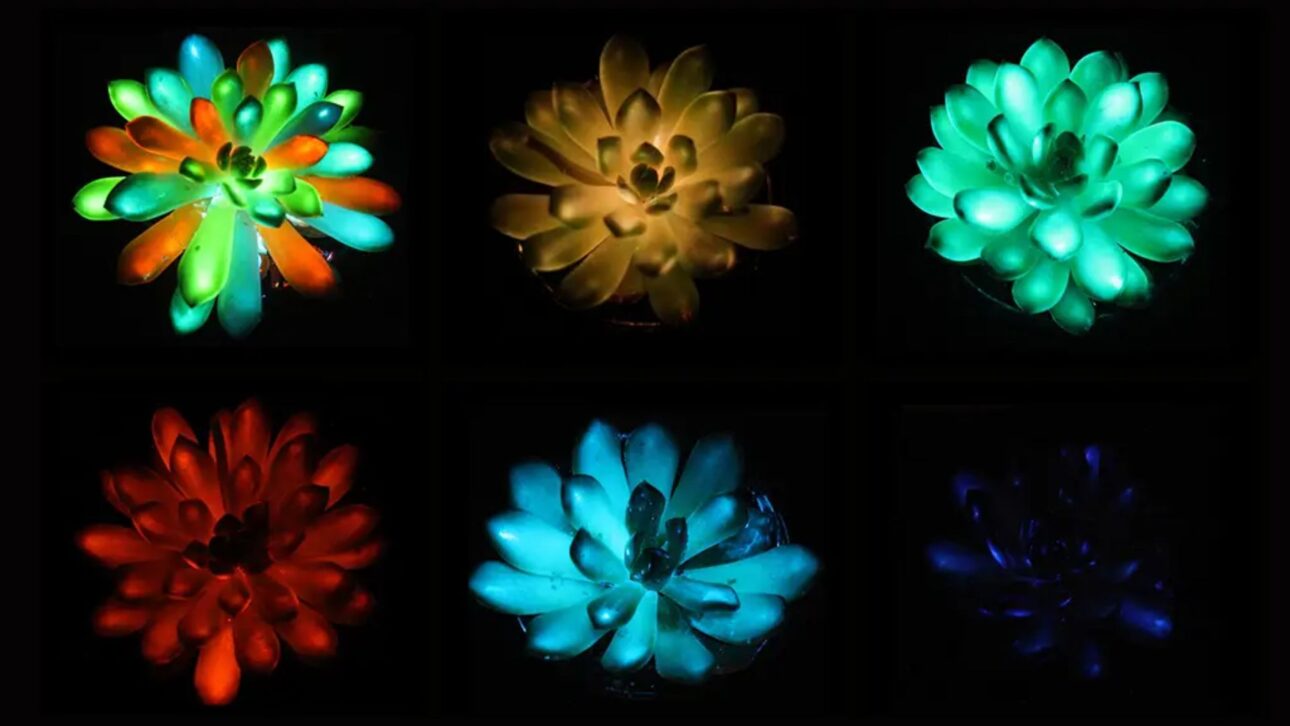
The plants were treated with a liquid containing microparticles of phosphorus, responsible for absorbing energy and releasing it slowly in the dark. As a result, the leaves begin to emit varied colors like green, blue, red, and even golden tones, maintaining an intense glow for up to two hours before needing another solar exposure.
According to researchers, the effect can be reactivated daily and remains stable for more than 15 days, creating an innovative and low-cost solution that could potentially be applied in projects for sustainable urban lighting.
-
China Develops Custom 140-Ton Electric Mining Truck with 770 kWh Swappable Battery, Deploys 290 Units in Xinjiang’s Largest Zinc Mine

-
Meta to Launch Arena, a New Prediction App Targeting 3.56 Billion Users, Competing with Polymarket and Kalshi

-
Scientist Challenges Famous Human Evolution Theory, Argues Homo Sapiens Evolved Gradually Over Thousands of Years
-
15-Year-Old American Builds Ocean Generator with PVC Pipe and 3D-Printed Propeller for $12, Wins National Prize, Presents at White House, and Makes Forbes 30 Under 30 List




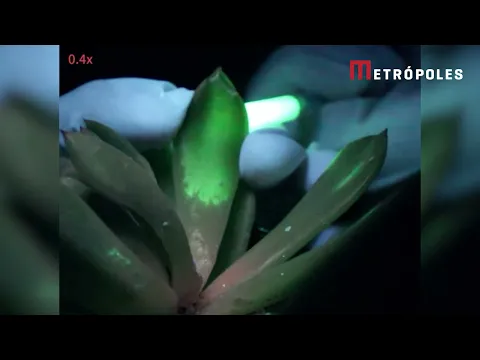

How Artificial Bioluminescence Works
The microparticles used are about 7 micrometers in size, equivalent to the diameter of a red blood cell. This size was essential for the compound to spread evenly in the leaf tissues without causing damage to the plants.
The mechanism is similar to that used in glow-in-the-dark toys but adapted for plants. Unlike previous research, such as the Firefly petunia developed in 2024 through genetic engineering, the new method is cheaper and allows for glowing in multiple colors.
In tests, a wall formed by 56 luminescent succulents was capable of illuminating nearby objects and even allowing reading in dark environments. According to scientists, this demonstrates the scalability potential of the technique.
From the Laboratory to the Streets
Researcher Shuting Liu, one of the study’s authors, stated that the result was surprising, highlighting how a material created in a laboratory was able to integrate naturally into the plant structure. “I think it’s just amazing that a material entirely made by humans, on a microscale, can fit so perfectly with the natural structure of a plant. The way it integrates is almost magical. It creates a special kind of functionality. Imagine the world of Avatar, where glowing plants illuminate an entire ecosystem,” he said.
The immediate application is primarily aesthetic, but experts believe that luminous trees and shrubs could replace public lighting poles in the future, reducing energy costs and minimizing environmental impacts.
The information was released by Metropoles, based on data from the journal Matter and official statements from South China Agricultural University.
Limitations and Next Steps of the Research
Despite the excitement, the process still needs to be applied leaf by leaf, which limits its practicality on a large scale. In addition, although short- and medium-term tests have not indicated damage to the plants, studies are still lacking to assess potential long-term effects.
Another point under analysis is the durability of the glow. Although it remains intense for up to two hours after each “solar recharge,” it tends to weaken over the days, requiring periodic reapplications of the compound.
Even with these restrictions, scientists highlight that the method could pave the way for new bioillumination technologies, integrating science, sustainability, and urban landscaping into a single system.
Would you like to see luminous plants replacing streetlights in the future? What do you think about this idea of sustainable lighting?





