






 Portuguese
  Spanish


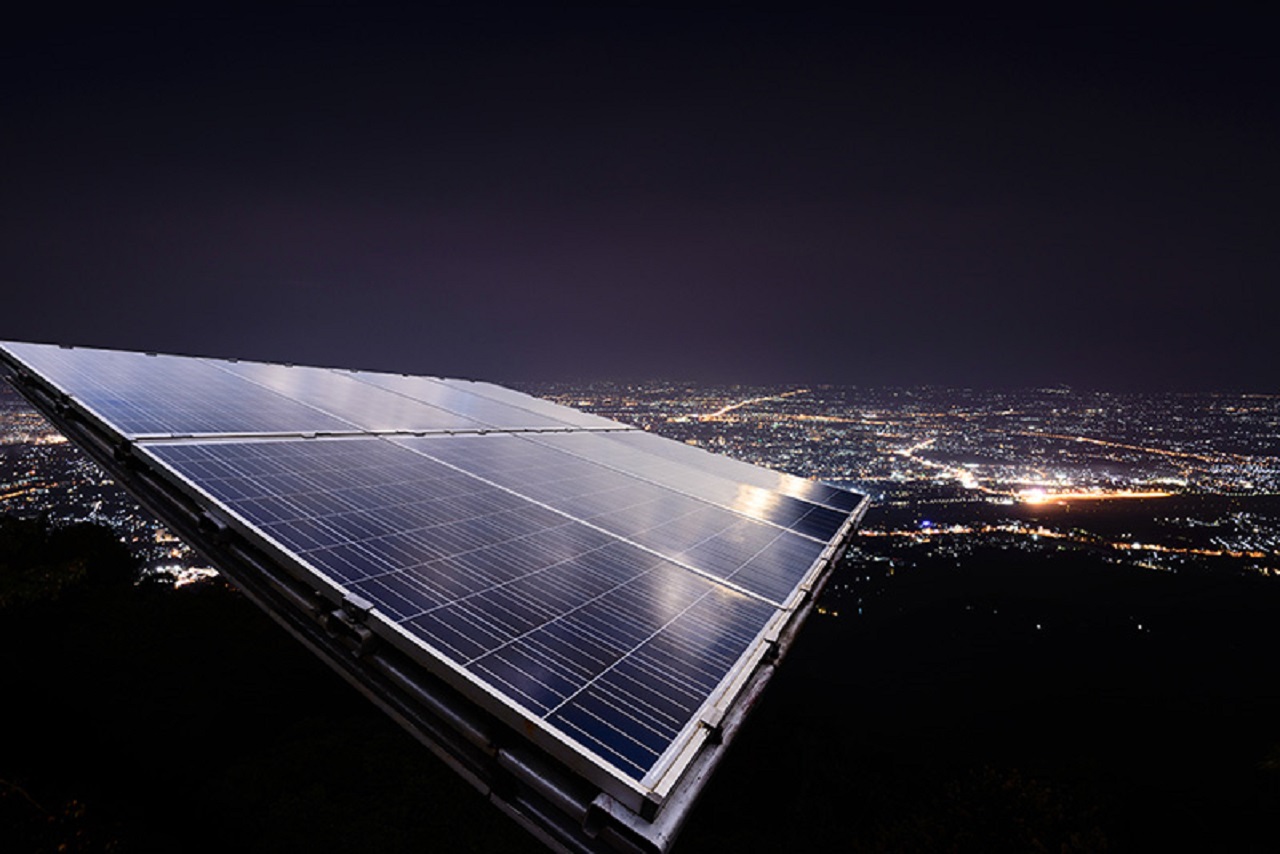


Scientists Discovered a New Category of Material Called Vanadium Dioxide Capable of Generating Solar Energy 24 Hours a Day.
Scientists recently discovered a new material capable of absorbing solar energy during the day and emitting it into space for cooling at night, potentially generating solar energy 24 hours a day. The material was developed by the University of Science and Technology of China. The coating material is based on vanadium dioxide (VO2), and its change from heating mode to cooling throughout a 24-hour day-night cycle incurs no extra energy costs, according to Zou Chongwen and Pei Gang, leading scientists of the university’s project.
Material Capable of Generating Solar Energy 24 Hours a Day
The VO2 film has self-adaptive properties and is in a metallic phase, allowing it to be heated to 170 degrees Celsius above ambient temperature under sunlight; in the dark, the film capable of generating solar energy 24 hours a day transforms into an insulator, being able to cool down 20 degrees Celsius below ambient temperature.
The scientists’ study represents a new approach to solar energy and outer space, and is of emerging interest, according to their peer review. The material capable of generating solar energy 24 hours a day can be applied in various areas such as energy conservation in buildings, cooling of thermal power plants, photovoltaic systems, and energy supply in outer space, scientists say.
-
Brazilian scientists are simultaneously advancing two research projects on clean hydrogen and driving solutions that could transform the energy matrix, enhance industrial competitiveness, and accelerate large-scale emission reduction targets.

-
Advancement in renewable energy: A R$ 150 million project launched by Petrobras and Finep aims to create state-of-the-art electrolyzers for green hydrogen, strengthening national research and preparing Brazil to compete in a billion-dollar energy market.
-
Solar energy can increase property value by up to 10% and become a selling point.
-
Illiterate or semi-literate grandmothers were trained to repair solar systems, open rural workshops, and light up homes that still depended on kerosene.




So far, the only issue with using the material is its high cost; however, substitute materials with similar techniques, although less efficient, are approaching mass production, according to Pei.
Solar Energy Market Advances and Creates New Technologies Daily
A group of scientists from the University of New South Wales in Sydney, Australia, developed a technology that can generate solar energy at night. The equipment generates electricity through nighttime solar energy, a recently discovered technology. This can be generated through heat radiated in infrared light, just as the Earth cools by radiating into space at night.
The study was led by a team of scientists from the School of Photovoltaic and Renewable Energy Engineering at the institution.
To achieve this feat, the team used a semiconductor device called a thermoradiative diode, which is made from materials found in night vision goggles. Although the useful solar energy generated by the technology is small, the scientists claim that the technology can be improved in the future.
Solar Energy in Brazil
Brazil reached the milestone of 1 million solar energy generation systems on rooftops, small plots, and facades, totaling over 10.6 gigawatts in capacity, according to a mapping conducted by the Brazilian Photovoltaic Solar Energy Association (Absolar) released last Monday (23).
The installed capacity of distributed solar energy generation, which basically consists of plants up to 5 MW built at the consumption site, has already surpassed the large plants of the source in the country and currently represents over 67% of the total capacity.
Residential consumers lead the use of distributed solar energy, both in the number of systems connected to the grid (77.6% of the total) and in installed capacity (45.4%), according to a survey by the institution. Following residential consumers are small businesses in commerce and services, with 12.5% of connections and 32.3% of capacity.








