





 Portuguese
  English
  Spanish
  3 min of reading
  0 comments


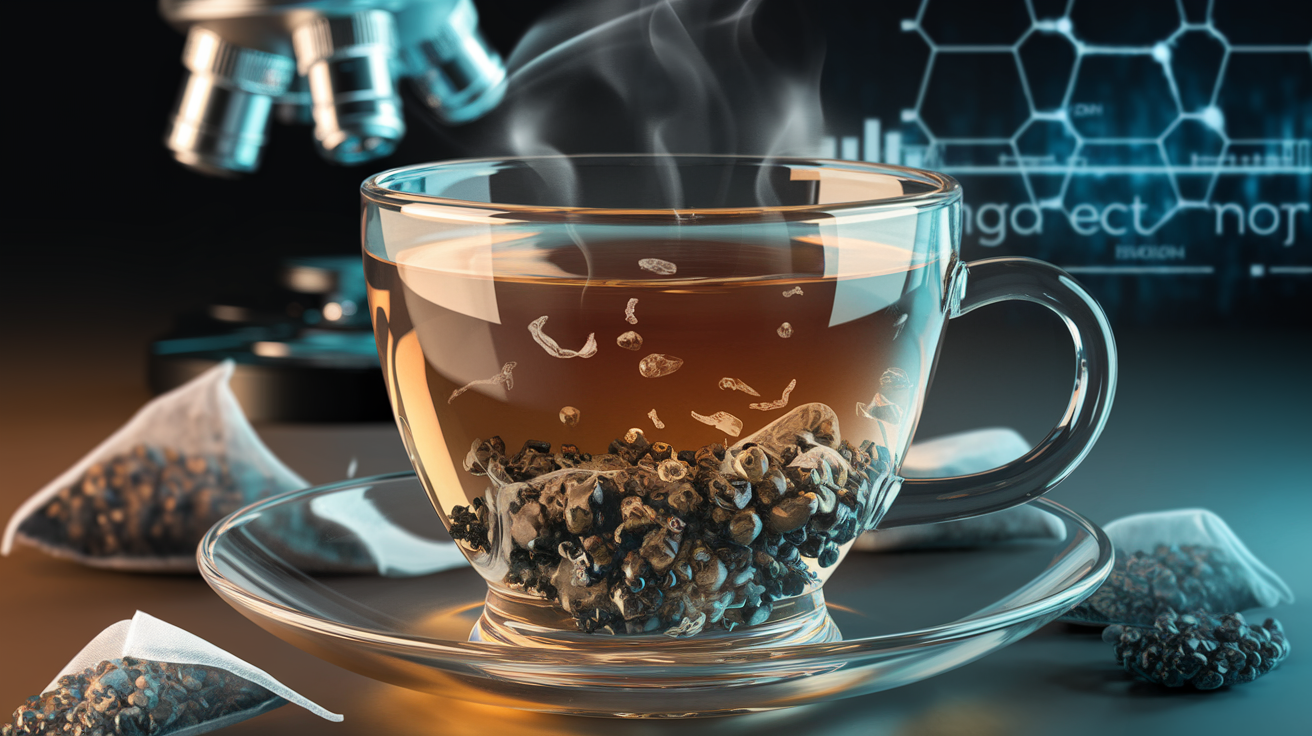
Autonomous University of Barcelona Study Warns About Invisible Contamination Caused by Tea Bags and Its Possible Impacts on Human Health. Find Out How This Can Affect You!
It may seem harmless: you heat the water, place the tea bag in the cup, and wait for the perfect infusion. But what you may not know is that these tea bags can release a surprising amount of microplastics and nanoplastics into your drink. A recent study conducted by scientists from the Mutagenesis Group at the Autonomous University of Barcelona (UAB) revealed alarming details about this invisible contamination and its potential impact on human health.
What Are Microplastics and Nanoplastics?
Microplastics are small plastic particles less than 5 millimeters in diameter, while nanoplastics are even smaller, measuring up to 1 micrometer. These materials, derived from the degradation of larger plastics or released directly from products like packaging and utensils, have become an increasing concern for human health and the environment.
In the case of tea bags, researchers found that many of them, made from materials like nylon-6, polypropylene, and cellulose, release an impressive amount of microplastics during infusion. And this is not something we can ignore.
-
Man built a 5-acre lake to raise bass, but after 1,000 days the project turned into a wildlife sanctuary with eagles, deer, ducks, owls, and live cameras that transformed the farm into a biodiversity laboratory.

-
2,000-year-old Greek computer continues to intrigue scientists after simulation shows gears jamming within a few months of solar movement

-
The window that carries water inside the glass to block heat before it invades the house: technology makes the facade circulate liquid between the panes, transforming the transparent wall into an active thermal regulator and promising cooler buildings without relying solely on air conditioning.

-
A respectable cold takes over Brazil with a polar air mass, minimum temperatures below 5°C in elevated areas of the South, a drop in temperatures in the Southeast, and showers on the coast.





Surprising Amount of Particles Released
Scientists observed that the infusion process releases millions, and even billions, of microplastic and nanoplastic particles into the beverage. Here are the data:
- Bags made of polypropylene release approximately 1.2 billion particles per milliliter, with an average size of 136.7 nanometers;
- Bags made of cellulose release about 135 million particles per milliliter, with an average size of 244 nanometers;
- Bags made of nylon-6 release 8.18 million particles per milliliter, with an average size of 138.4 nanometers.
These alarming numbers show that even the most relaxing moment of the day can be a source of exposure to plastic contaminants.
What Are the Impacts of Microplastics on Human Health?
The microplastics released by tea bags are not just an environmental problem. They also pose significant risks to human health. Researchers have demonstrated, for the first time, that these particles can be absorbed by human intestinal cells.
In laboratory experiments, the particles were stained and exposed to human intestinal cells. The result? They were absorbed by the cells, especially the mucus-producing cells, which had the highest absorption.
Even more alarming, some of these particles managed to penetrate the cell nucleus, where the genetic material is located. This raises important questions about the long-term effects of chronic exposure to these contaminants.
Advanced Techniques for Study
To better understand what is happening, scientists used state-of-the-art analytical techniques, such as scanning electron microscopy (SEM), transmission electron microscopy (TEM), infrared spectroscopy (ATR-FTIR), and dynamic light scattering (DLS). These tools allowed for precise characterization of the particles released by tea bags, which is crucial for advancing the understanding of their impacts.
What Can Be Done?
The scientists from UAB and the Helmholtz Center for Environmental Research in Leipzig (Germany) emphasize the importance of creating standardized methods for assessing microplastic contamination in materials that come into contact with food. They also draw attention to the need for stricter regulatory policies to mitigate this problem.
Additionally, it is vital for people to be aware of the risks associated with tea bags and to seek safer alternatives, such as loose leaf teas or teas packaged in more sustainable materials.
The Role of Everyone in Reducing Microplastics
While we wait for stronger regulations, small steps can make a big difference. Choosing products that prioritize sustainability and pressuring manufacturers to adopt less harmful materials for health and the environment are ways to contribute.
After all, ensuring that something as simple as having tea is not a source of concern is something we all deserve.
For now, the alert remains: that tea bag may contain more than just the flavor of your favorite infusion. And you, will you look at your next cup differently?





-

1 person reacted to this.