






 Portuguese
  Spanish


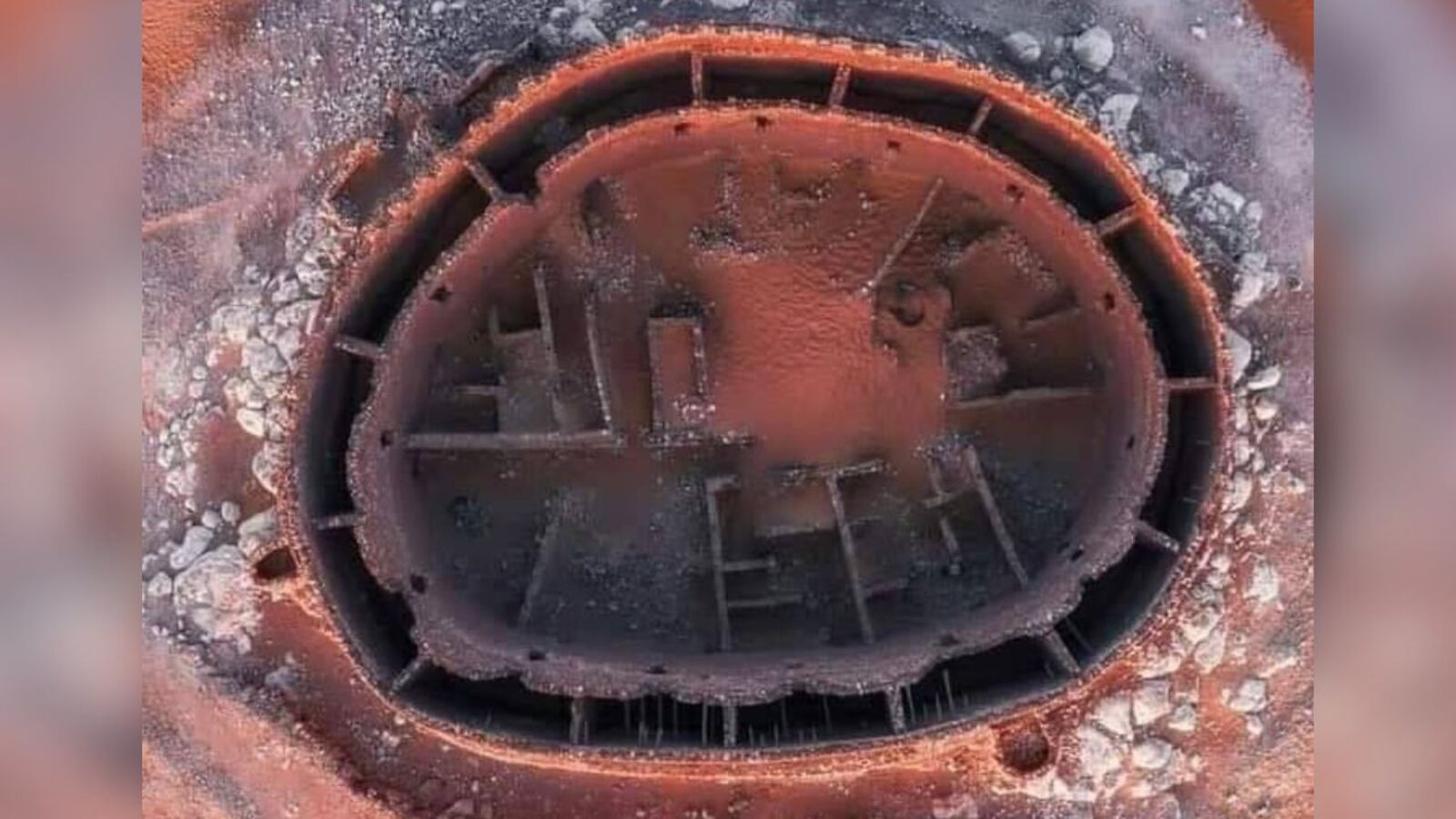
Circular fortress of Ksar Draa, in Algeria, impresses with nine-meter walls, unknown origin, and theories involving caravans, prison, desert community, and possible refuge for the persecuted
The circular fortress of Ksar Draa, located in the province of Timimoun, Algeria, draws attention for a rare combination: monumental structure in the middle of the Sahara Desert, walls over nine meters high, and still unknown origin. Without inscriptions or documents explaining its function, the site remains surrounded by hypotheses.


Ksar Draa stands out for its circular shape in the middle of the Sahara
Ksar Draa is located in an isolated area of the Sahara Desert and is little known to the general public. Seen from a distance, the construction imposes itself on the desert landscape with its circular shape and thick walls.
The ancient citadel was built with clay, sand, straw, and stone. The combination of these materials helped to erect a resistant structure, adapted to an environment marked by intense heat, sand, and long periods of isolation.
-
U.S. National Park Deploys Robotic Birds Near Wyoming Airport to Protect Endangered Species: Dancing and Sound-Emitting Replicas Aim to Lure Real Birds to a 100-Acre Restored Area Away from Runways After 32 Aircraft-Related Deaths

-
Russia and India Lift 320-Ton Pressure Vessel into Kudankulam Nuclear Plant Reactor, Advancing Project That Has Already Prevented 112 Million Tons of CO2 Emissions

-
Brazilian Student Wins Global Science Fair in the U.S. with Sound Wave Method to Alter Alzheimer’s-Linked Genes
-
Bosch Unveils Revolutionary 2.3 kg Hub Motor for E-Bikes with 45 Nm Torque and 400 Watts Power, Eliminating Resistance Above 25 km/h in Historic Shift for German Manufacturer


The walls are over nine meters high and about two meters thick. These dimensions indicate a clear concern with defense, climate protection, or control of access to the interior of the fortress.
Another important element is the existence of only one main entrance. In a desert region vulnerable to attacks, this design would make the space easier to protect.
Ruins indicate possible organized occupation
The interior of Ksar Draa is now reduced to ruins. Even so, archaeologists and historians believe the site may have housed residences, communal kitchens, schools, and a large mosque.
These elements suggest that the structure may have functioned as more than just a simple fortification. The complex could have gathered activities of living, coexistence, worship, and daily organization.
Despite these clues, almost nothing is considered certain about the site. The age also remains undefined. Experts believe Ksar Draa is at least 700 years old, but the construction may be even older.
The absence of inscriptions, documents, hieroglyphs, or preserved records prevents a definitive answer about who built the citadel, when it was erected, and why it was eventually abandoned.

Fortress name helps explain part of the mystery
The name Ksar Draa offers one of the few available clues. “Ksar” is a term used in North Africa to designate traditional fortified villages, especially linked to the Berbers.
These settlements usually gathered interconnected houses, community warehouses, and defensive structures. The word can also be translated from Arabic as “castle” or “fortress.”
This definition matches Ksar Draa, but does not solve the enigma. The citadel deviates from the pattern of many known ksars, generally built in mountainous regions and with the appearance of clustered houses.
Instead, Ksar Draa stands out for its almost perfect circular shape and isolated position in the middle of the Sahara. This difference raises doubts about its original function.
Prison, community, or caravan stop
Among the main hypotheses, one suggests that Ksar Draa may have functioned as a prison. The isolation among dunes and the high walls would make any escape attempt difficult.
Another possibility is that the fortress was a community adapted to the extreme conditions of the desert. In this case, the walls would serve both against the hostile climate and against raider attacks.
There is also the hypothesis that Ksar Draa was a caravanserai, a fortified inn used by merchants, pilgrims, and travelers on trade routes of the Islamic and Asian world.
These places usually had high walls, a single gate, areas to store goods, stables, dormitories, and prayer spaces. The description matches elements attributed to the Algerian fortress.
If this function is confirmed, Ksar Draa would have been a safe point on ancient trade routes of the Sahara, where travelers faced extreme heat, lack of water, sandstorms, and risk of attacks.
There is also a hypothesis linked to religious persecution. Some researchers suspect that the citadel may have served as a refuge for persecuted Jewish communities in North Africa.
In the 15th century, the Islamic scholar Muhammad al-Maghili led campaigns against Jewish populations in the region, forcing families to flee. Ksar Draa could have been an isolated refuge, but this theory has not been proven.
This article was developed based on information from the provided base material and the portal All That’s Interesting, with data, numbers, and statements preserved as per the consulted material.


Be the first to react!