






 Portuguese
  Spanish


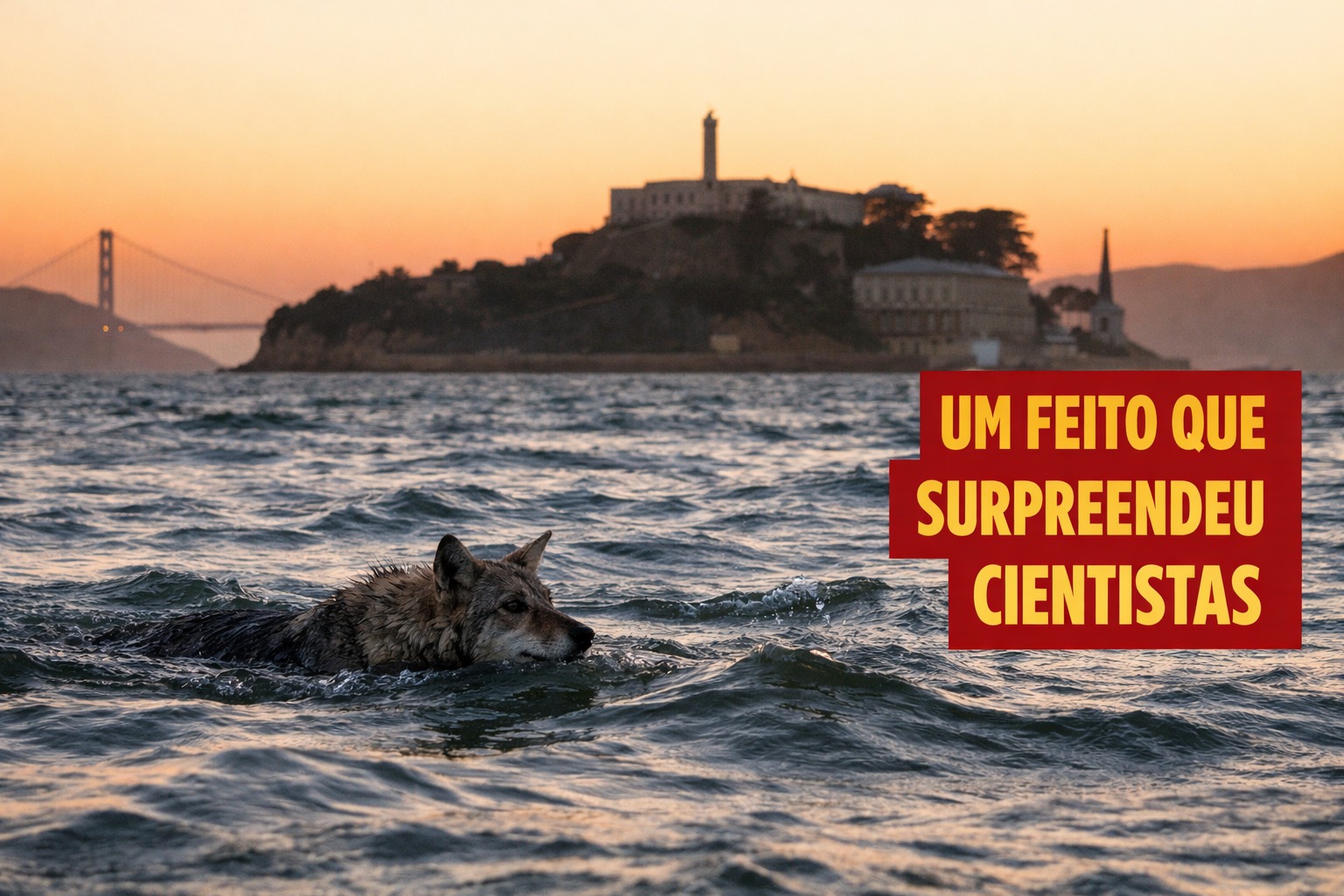
Rare Record Shows Coyote Crossing More Than 1.6 Kilometers to Alcatraz, Facing Intense Currents and Freezing Waters, Challenging Historical Limits of the Island Considered Inaccessible Even for Experienced Humans
In the past, prisoners tried to escape from Alcatraz by crossing San Francisco Bay. On January 11, a coyote surprised experts by swimming to the island, facing cold currents, a distance greater than 1.6 kilometers, and a scenario historically considered impassable.
An Unprecedented Record in the Recent History of the Island
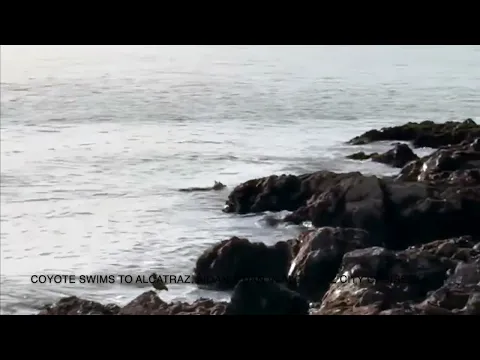
Videos shared on social media show the coyote swimming toward the southern tip of Alcatraz Island at sunset, before reaching the rocky shore, visibly exhausted.
The images reveal the animal trembling as it exits the water, indicating extreme effort during the crossing, a situation never recorded before by the biologists who monitor the island.
-
In Somaliland’s Desert, Greenhouse Uses Sun and Seawater to Grow Lettuce, Cucumbers, and Tomatoes Without Rain: 1-Hectare Project Cools Crops, Desalinates Water, and Converts Brine into Commercial Salt

-
Trump Unveils $400 Million Boeing 747 Donated by Qatar as Temporary Air Force One Amid Boeing Delays, Sparking Debate on National Security, Costs, and Foreign Influence
-
Chinese Company Unveils Robotic Toilet That Comes to You, Featuring Lidar Sensors, Voice Command, Bidet, Hot Air Drying, UV Light, and Self-Cleaning Waste Disposal
-
Rotterdam Develops Floodable Square to Absorb Nearly 2 Million Liters of Rainwater, Doubling as Sports, Theater, and Leisure Space When Dry to Combat Urban Flooding



According to Stanley Gehrt, a professor of wildlife ecology at Ohio State University, the scenes caused immediate surprise upon analysis.
“There is a reason why people have difficulty making this crossing by swimming,” Gehrt said in an interview with Live Science, highlighting the strength of the local currents.

How the Video Reached Environmental Authorities
The videos were recorded by an unidentified visitor who was at Alcatraz on January 11 and noticed the animal already in the water.
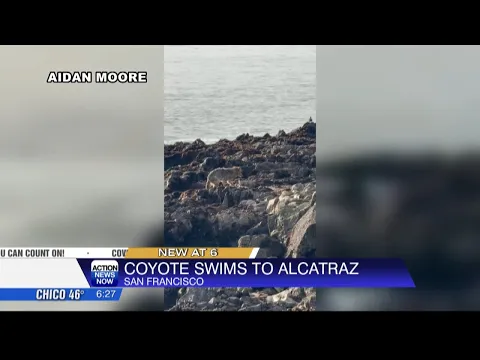
The footage was shared with Aidan Moore, a visitor relations staff member at Alcatraz City Cruises, who immediately alerted the park rangers.
The episode was reported by the San Francisco news site SFGATE, which confirmed the unprecedented nature of the record with local authorities.
Julian Espinoza, a spokesperson for the Golden Gate National Recreation Area, told SFGATE that there has never been a similar observation at Alcatraz.
The Capacity of Coyotes as Swimmers
Coyotes are known for their intelligence and versatility, including the ability to swim when necessary for movement or escape.
Gehrt reported having observed coyotes crossing lakes in the Chicago area during research for the Urban Coyote Research Project.
In lacustrine environments, they typically swim only a few hundred meters, usually in calm waters without intense currents.
The conditions around Alcatraz are entirely different, as the island is in a cold estuary, with strong currents and rapid variations.
Why Alcatraz Has Always Been Considered Inaccessible
The combination of cold waters, strong currents, and distance from the mainland made Alcatraz a strategic location for the former maximum-security prison.
It is presumed that some prisoners may have drowned trying to escape, facing over 1.6 kilometers of crossing without adequate protection.
Today, recreational swimmers cross the bay only in wetsuits, with specific training and guidance from experienced guides.
Gehrt assessed that the coyote appeared to have swum for a long time, unlike other animals observed in shorter crossings.
Hypotheses About the Origin of the Crossing
There is no information on the exact point where the coyote began the crossing, as the videos start with the animal already swimming.
Gehrt stated that the condition of the coyote upon exiting the water indicates a difficult journey, possibly much beyond what is usual for the species.
Another factor considered was the existence of unusual currents in the bay, reported by the captain of a tourist boat.
According to SFGATE, these currents may have been intensified by runoff from recent storms in the region.
Comparisons with Other Records in the Bay
Coyotes have already been filmed swimming to Angel Island, which has been inhabited by coyotes since 2017, as reported by KCRA 3.
Angel Island is closer to the mainland than Alcatraz, making the crossing significantly less risky for the animals.
Even so, a coyote coming from Angel Island would need to swim a greater distance to reach Alcatraz than coming from the south.
This comparison reinforces the exceptional nature of the record recently observed in San Francisco Bay.
Dispersal, Territory, and Urban Behavior
Gehrt explained that coyotes do not always enter the water by choice, as they may do so to escape from humans or other territorial coyotes.
There is also the possibility of motivation from opportunities, such as access to new territories and untapped food sources.
Historically, coyotes inhabited prairies and deserts of central and western North America before the 19th century.
Human expansion, with logging, agriculture, and predator elimination, facilitated the expansion of their habitats.
The Adaptation of Coyotes to Cities
With urban advancement, coyotes have become common in large cities, including San Francisco, thanks to their flexible diet.
They often occupy fragments of wooded areas, urban parks, and golf courses, where they find shelter and food.
Conservation scientist Christine Wilkinson analyzed the case in an interview with SFGATE.
Wilkinson suggested that the coyote was likely trying to establish its own territory, a common behavior among young individuals.
Possible Origin and Risks Avoided
Wilkinson suspects that the animal came from the Coit Tower area, on the mainland south of Alcatraz, where there is little green space.
Land dispersal southward would require crossing Interstate 280, increasing the risk of fatal accidents.
In light of this, entering the water may have seemed a less dangerous option, despite the extreme conditions of the bay.
According to Wilkinson, January still falls within the period of searching for new territories, especially during mating season.
Current Situation and Resilience of the Species
There have been no new reports of coyote sightings following its arrival on the island, according to information passed to SFGATE.
Wilkinson described the animal as “quite weak,” but highlighted the remarkable resilience of coyotes in adverse situations.
She noted that Alcatraz offers available food sources, such as eggs, chicks, rats, and mice, sufficient for initial survival.
Coyotes live in small family groups, but solitary individuals between 6 months and 2 years often disperse naturally.
Gehrt has documented a coyote traveling more than 240 km in southern Ohio, even crossing the Ohio River during this process.
For the researcher, the episode at Alcatraz demonstrates the animal’s ability to overcome extreme challenges and explore rare opportunities, even in environments historically considered unreachable.
With information from Live Science.


-

1 person reacted to this.