Portuguese
  Spanish


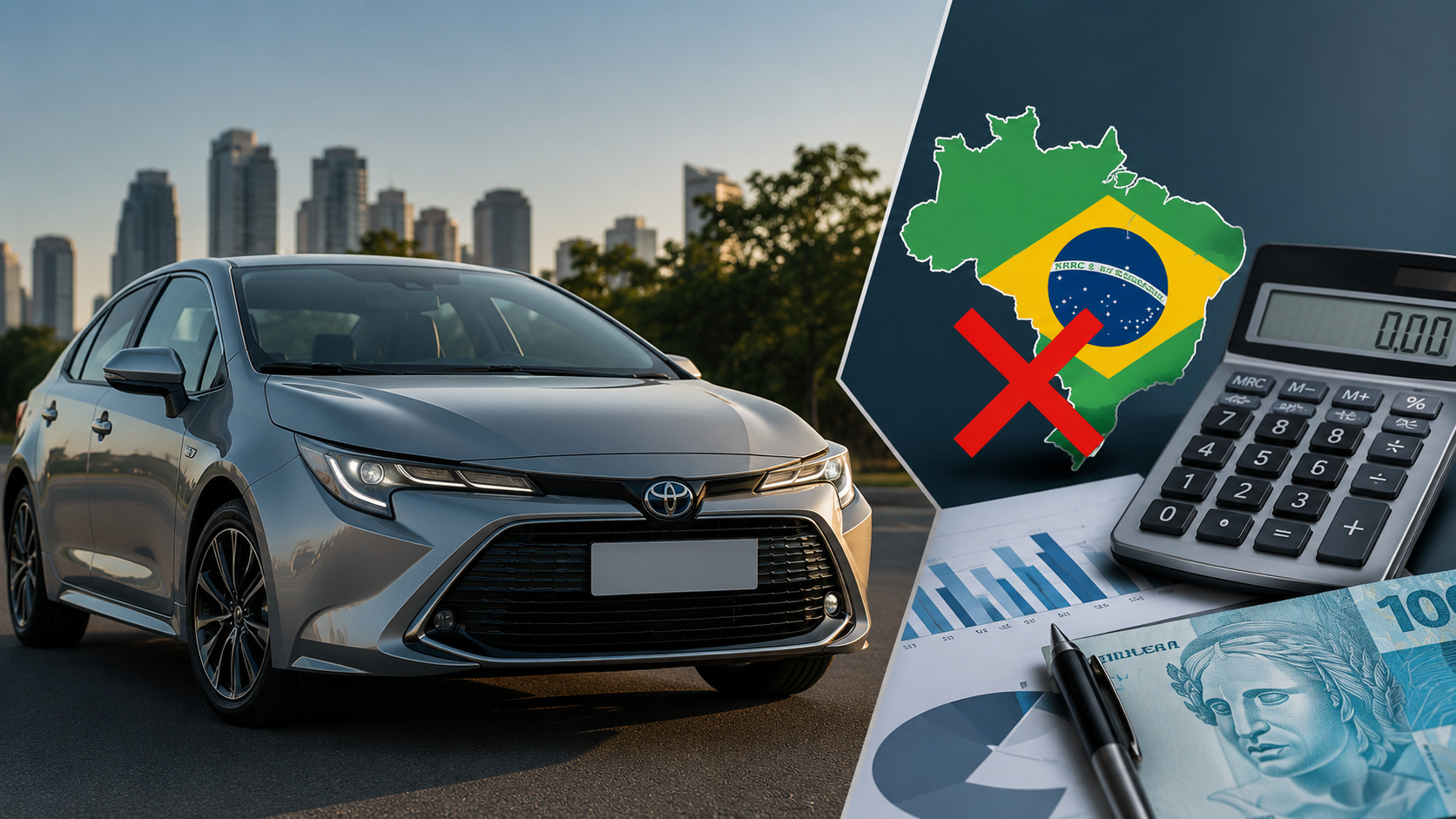

Toyota Corolla of R$ 171 thousand could cost close to R$ 96 thousand without taxes, in a simulation that shows the tax burden in Brazil.
The Toyota Corolla remains one of the most desired mid-size sedans in Brazil, but the current price already places the model in a territory that many consumers have come to see as inaccessible. In 2026, the Corolla XEi 2.0 CVT entered the Brazilian market with an official price of R$ 171,590, a value that brings the sedan closer to categories that previously seemed distant from the average middle-class car.
But how much of this value actually belongs to the car? And how much comes from the tax burden embedded in the final price? In an editorial simulation based on an approximate tax burden of 35% on the final value, the Corolla XEi could drop to something close to R$ 111.5 thousand without the tax share and the version GLi (2.0 Flex) for less than R$ 97 thousand. The calculation does not represent an official price without taxes, but it helps to measure the impact of taxation on the Brazilian automotive market.
Toyota Corolla XEi 2026 costs R$ 171,590 and already enters the range of mid-size SUVs in Brazil
The Corolla XEi 2026 is equipped with a 2.0 Dynamic Force flex engine, capable of delivering up to 175 hp and about 21.3 kgfm of torque, combined with a CVT automatic transmission that simulates 10 gears.
-
1983 Chevrolet Runs Over 100,000 km Without Gasoline, Powered by Wood Chips, Reaches 125 km/h in Airport Test

-
Workshop Converts Giant Tractor Tire Tricycle into a Three-Wheel Drive Hybrid with 36,000-Watt Electric Motor Capable of Climbing Hills

-
Sales of Brazil’s Cheapest Electric Car Halted Before First Deliveries: E-Motors Suspends Emova Easy Due to Import Tax Increase and Rising Freight Costs

-
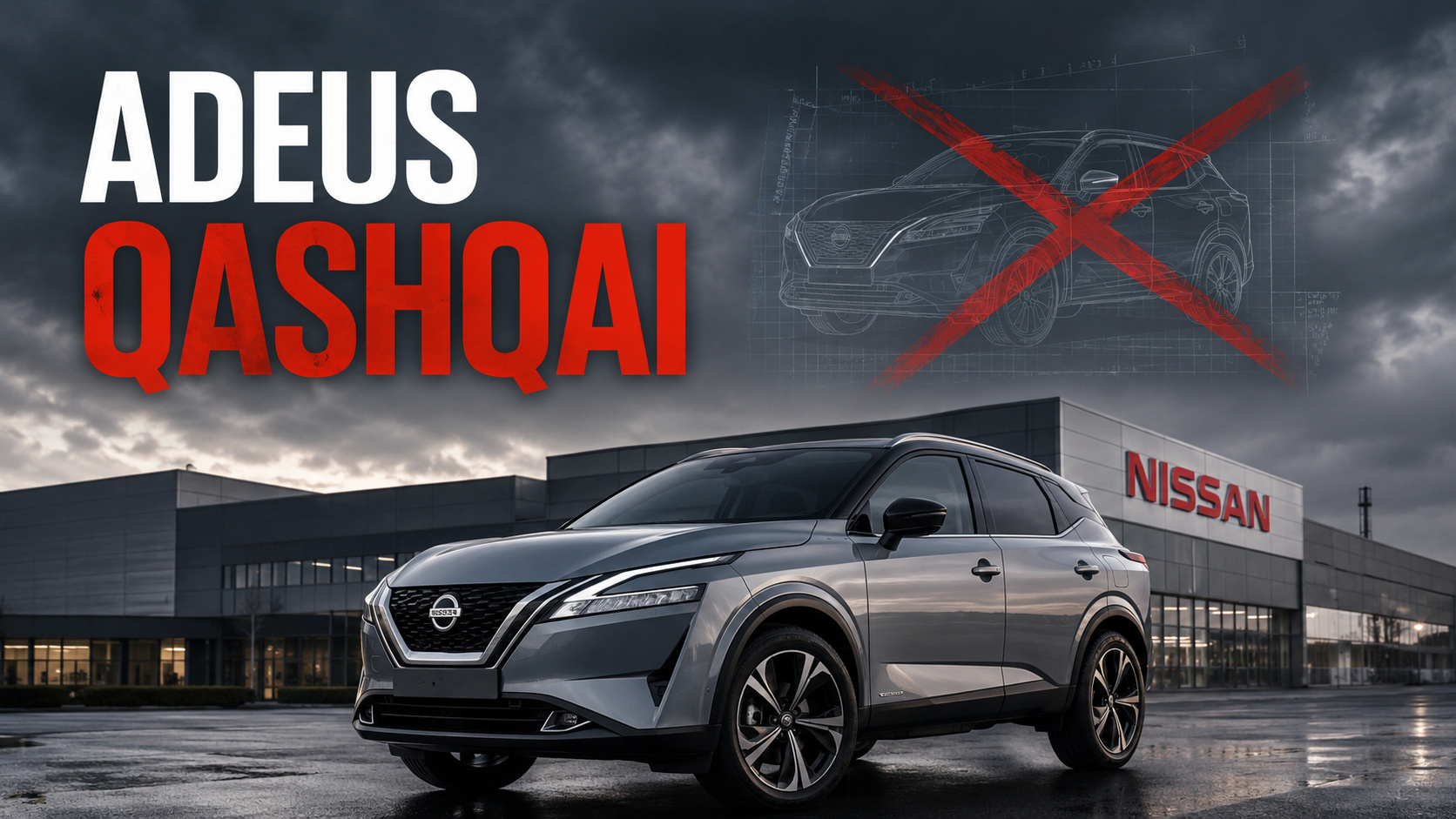
Nissan Discontinues Qashqai SUV Amid Cost-Cutting, Chinese Competition, and Product Line Review



In addition to the mechanical set, the sedan offers a wide range of equipment, including a 10-inch multimedia center, a 12.3-inch digital panel, Toyota Safety Sense package with autonomous braking and electronic driving assistance.


Even so, the most striking data continues to be the price. The Corolla has long ceased to occupy only the position of a “rational” mid-size sedan and has started to compete financially with top-of-the-line compact SUVs and even some entry-level mid-size SUVs.
Simulation shows Corolla close to R$ 96 thousand without estimated tax burden
To estimate how much the Corolla could cost without taxes, the calculation used in this guideline considers an approximate tax burden of 35% embedded in the final price of the vehicle. This percentage is not fixed and may vary according to engine type, category, state, tax incentives, and the composition of the final price.
Entities and experts in the automotive sector point out that the tax burden on automobiles in Brazil can vary from about 30% to almost 50%, depending on the model and configuration.

Unlike diesel pickups like the Hilux, passenger sedans (especially hybrid models) have a slightly different tax structure in Brazil. For the Toyota Corolla, the tax burden varies depending on the engine type:
- Flex Versions (2.0 Engine): Have an estimated tax burden between 38% and 40% of the final price (IPI around 11%, in addition to ICMS, PIS, and COFINS).
- Hybrid Versions (1.8 Engine + Electric): Have a tax benefit for being considered more sustainable (with reduced IPI, around 7%), resulting in a lower tax burden of approximately 30% to 33%.
Using the official average values from Toyota for the 2026 line, see how the estimated price of the sedan would look without this tax bite:
Estimated Prices of Corolla 2026 (With vs. Without Tax)
| Corolla Sedan Version | Current Average Price | Estimated Price Without Tax |
| GLi (2.0 Flex) | ~R$ 158,490 | ~R$ 96,678 (less ~39%) |
| XEi (2.0 Flex) | ~R$ 174,990 | ~R$ 106,743 (less ~39%) |
| Altis Premium (2.0 Flex) | ~R$ 203,790 | ~R$ 124,311 (less ~39%) |
| Altis Hybrid (1.8 Hybrid) | ~R$ 191,890 | ~R$ 130,485 (less ~32%) |
| Altis Premium Hybrid | ~R$ 199,990 | ~R$ 135,993 (less ~32%) |
⚠️ Note: As with the Hilux, this calculation directly removes the official rates passed on to the consumer in the showroom price. If taxes were reduced, the real pricing would also depend on how the manufacturer adjusts its profit margins on the vehicles.
Simulation does not mean that Corolla would be officially sold for R$ 96,000
This point is important. The calculation does not mean that Toyota would sell the Corolla exactly for this value without taxes. The price of a car involves several components beyond taxes.
The calculation includes industrial costs, freight, logistics, imported parts, manufacturer’s margin, dealership margin, financial expenses, commercial campaigns, and operational costs. Additionally, part of the taxation is cumulative throughout the production chain.
In other words, the value of about R$ 111,000 serves as an approximate simulation to show the weight of taxation within the final price paid by the Brazilian consumer.
Corolla shows how the mid-size sedan became distant from the middle class
The psychological impact may be greater than the technical one. For many years, the Corolla was considered a symbol of the reliable and relatively attainable mid-size sedan for the Brazilian urban middle class.

Today, a Corolla XEi 2026 of R$ 171,000 already falls into a price range that requires high income, heavy financing, or constant automotive asset exchange to remain accessible.
When the simulation shows a Corolla close to R$ 96,000 without a significant part of the tax burden, the contrast becomes more evident: the problem is not just that the car has become more sophisticated, but also the increasing weight of costs and taxes on the final consumer.
Mid-size sedan gained technology, safety, and efficiency, but also became much more expensive
The current Corolla is far from being a simple sedan. The model has evolved in safety, onboard technology, energy efficiency, and electronic package.
The Toyota Safety Sense includes adaptive cruise control, lane-keeping system, autonomous braking, and frontal collision alert. The sedan also offers electronic brake, induction charger, digital panel, and multiple airbags.
Even so, the feeling among part of the public is that the average car has ceased to be an intermediate product and has come to occupy the space of an aspirational good.
Brazil has one of the heaviest automotive tax burdens in the world
The Brazilian automotive sector has been dealing with a complex tax structure for decades. The final price of a car includes taxes such as IPI, ICMS, PIS, Cofins, and IPVA, in addition to indirect taxes spread throughout the production and distribution chain.
Depending on the vehicle category, engine type, and origin of parts, the share of taxes in the final price can vary significantly. This helps explain why cars considered “medium” in Brazil often cost much more than their equivalents in larger markets.
The Corolla ends up serving as a perfect example because it is a well-known, desired car historically associated with the Brazilian middle class.