Portuguese
  Spanish


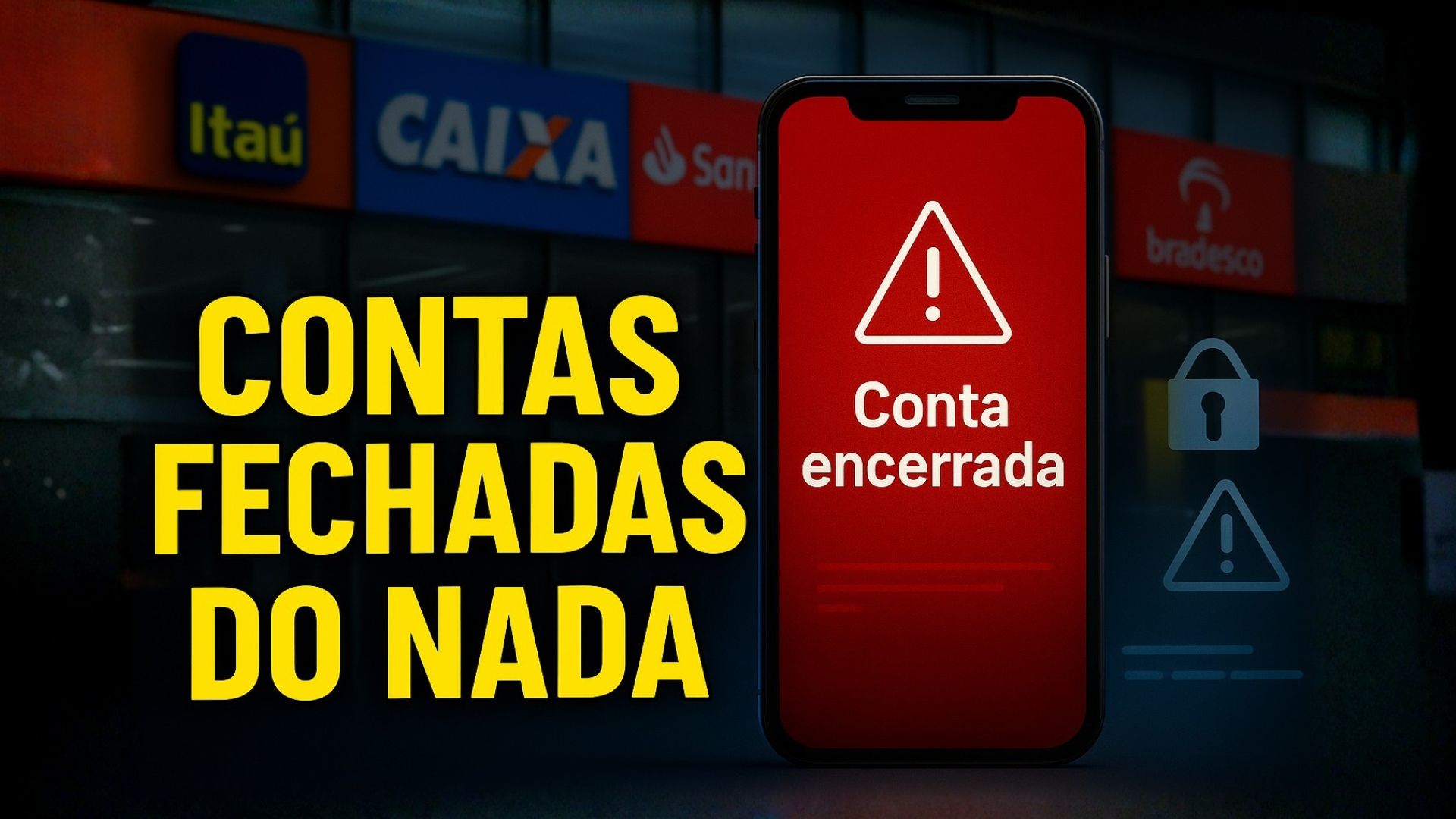


Recent Changes in Brazilian Banks Intensify Account Monitoring and Expand the Adoption of Preventive Measures, Affecting Clients of Large Institutions and Strengthening Internal Financial Security Practices in the Country.
Clients of banks such as Itaú, Caixa Econômica Federal, Santander, Banco do Brasil and Bradesco have been dealing, since the end of October 2025, with significant changes in their internal account monitoring procedures.
The Brazilian Federation of Banks (Febraban) has enacted a new self-regulation that advises the closure of accounts classified by institutions as suspected of involvement in fraud, money laundering, or unauthorized operations linked to online betting.
According to Febraban, the initiative aims to standardize preventive practices and provide greater agility in identifying accounts used in illicit schemes.
-
Family Quietly Transforms Old Sawmill into $700 Million Business, Opens 25 Stores in Two Years Across 22 Brazilian States

-
Couple Sold Their Home to Save Business, Now Run Platform Handling $180 Million Monthly and Managing Over 51 Million Listings
-
Brazil’s 2026 Tax Refund: Record 9.58 Million Filers in Largest Payout Ever, But a Key Detail on Priority Recipients Draws Nationwide Attention

-
Itaú Alters Hybrid Work Model, Increasing Office Days from 2028, Prompting Employees to Adjust to New Routine




The rules also comply with parameters set by the Central Bank, which has reinforced guidelines to reduce operational risks within the banking system.
The expansion of control mechanisms occurs in a context of increased financial crimes.
According to data released by the sector, there has been an increase in reports involving digital scams, atypical transactions via Pix, and unauthorized betting networks.
This scenario has motivated banks to adopt stricter monitoring criteria.
Stricter Rules for Suspicious Accounts
The new self-regulation requires participating institutions to adopt procedures capable of identifying accounts linked to fraud, including so-called shell accounts and dummy accounts.
Febraban defines a shell account as one that is opened legitimately but used for illicit purposes with the account holder’s knowledge.
A dummy account, on the other hand, is created without the consent of the person whose data was used, a practice often associated with document forgery and personal information leaks.
Banking security experts explain that these accounts are considered enablers for moving funds derived from criminal activities.
Transactions incompatible with the economic profile, accumulation of transactions from various origins in a short period, and links with accounts already identified as high-risk are among the criteria frequently used to trigger blocks or closures.
The self-regulation also stipulates that the bank inform the client about the termination of the relationship and internally document the technical reasons for the decision, allowing for subsequent audits.
The procedure must comply with the current regulations of the Central Bank.
Control Over Accounts Linked to Unauthorized Betting
Another point covered in the regulation concerns accounts associated with sports betting and online gaming companies that lack authorization from the Secretariat of Prizes and Betting (SPA), an agency of the Ministry of Finance responsible for regulating the sector.
Banks must close accounts of operators not listed on the official authorized list.
According to professionals monitoring market regulation, some sites use intermediary accounts to process deposits and withdrawals, creating parallel structures to formal payment methods.
The self-regulation advises that accounts acting as support for this type of operation should also be terminated.
Information Sharing Between Financial Institutions
Participating financial institutions in the mechanism may share, within regulatory limits, information about accounts closed due to suspected fraud.
According to sector analysts, this practice reduces the likelihood that an individual involved in irregularities can open a new account at another institution to continue operating.
Relevant information may be sent to the Central Bank, which has its own systems for preventing money laundering and monitoring irregular conduct.
The integration between banks and regulators is cited by experts as one of the main ways to reduce vulnerabilities in the financial system.
Impacts for Customers Unrelated to Irregularities
Although the focus of the new measures is on combating fraud, ordinary clients may notice greater rigor in verification mechanisms.
In some cases, transactions deemed out of the ordinary may trigger requests for proof of the origin of funds or temporary blocks for review.
Risk prevention professionals advise clients to avoid granting access to their accounts to third parties, as this behavior may be interpreted as incompatible with the client’s profile.
The same applies to lending Pix keys, cards, or passwords.
In cases of blocking or closure, experts recommend that clients immediately contact customer service, register a protocol, and escalate the matter to the ombudsman if necessary.
Internal analysis can clarify any inconsistencies or confirm indications that led the bank to take the measure.