Portuguese
  Spanish


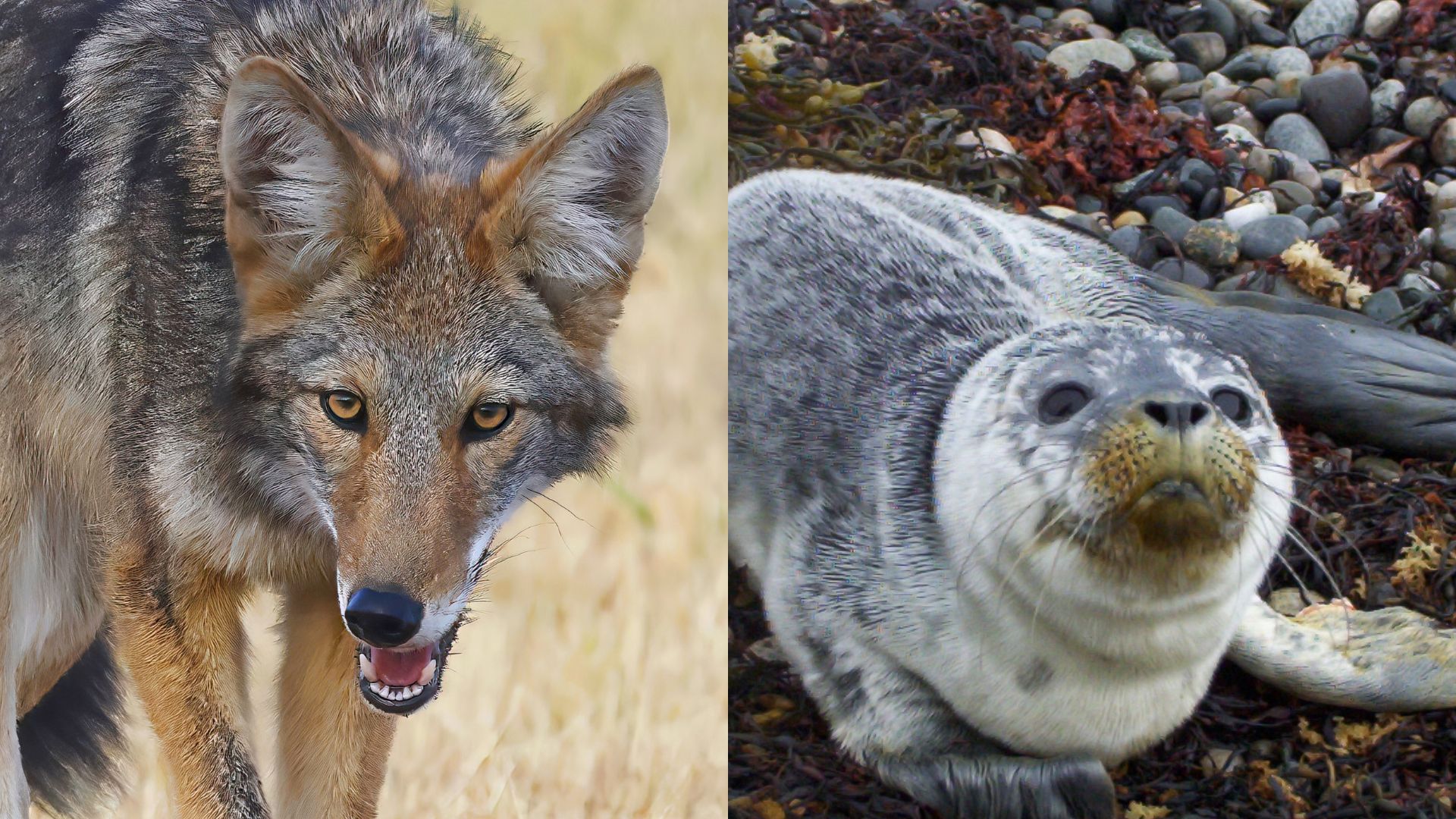

Common Beach Scene in California Gains Unexpected Detail with Camera Footage Showing Coyotes Capturing Seal Pups and Taking Prey to the Dunes, in Behavior Documented by Researchers That Helps Explain How Terrestrial Predators Can Exploit Marine Resources.
A typical beach scene on the northern California coast gained an unexpected element when researchers confirmed, with video footage, that coyotes began capturing harbor seal pups in resting areas on the sand and taking their prey to the dune vegetation.
The discovery documents a rare but verifiable case of a terrestrial predator exploiting a high-energy marine resource along the coastline, with repeated behavior and consistent signs at the site.
Where the Behavior Was Recorded on the Coast of California
Verification came from motion-activated camera traps set up at MacKerricher State Beach, in Mendocino County, an area where harbor seals use sandbanks and sections of beach as breeding and resting areas.
-
Brazilian Airport to Receive $2.8 Million Investment, Completion Expected Within a Year

-
UN Warns of AI’s Environmental Impact and Calls for Greater Corporate Transparency

-
Former Atacadão Employee Turns Online Cake-Baking Lessons into a Confectionery Brand with Factory, Store, Delivery, and Nearly $400,000 in Revenue
-
Brazilian Startup Sells Nearly 9 Million Surprise Bags of Near-Expiry Food, Prevents Thousands of Tons of Waste, Aiming for $42 Million Revenue by 2026




The study, led by researchers affiliated with the University of California, Santa Cruz, describes direct records of coyotes removing pups from the sandy area and carrying them into the dunes, during low-light hours, such as late evening and early morning.
Study Published in Ecology and Video Evidence


The work was published in the journal Ecology, from the Ecological Society of America, and details the method used to confirm that it involved predation, rather than just opportunistic scavenging.
To obtain robust evidence, the team combined videos captured by cameras with field investigations the following day, assessing tracks, drag marks, and characteristics observed at the locations where the pups were found.
The central aim of the article was to establish, based on empirical evidence, a predation pattern that had been suspected by local monitors following repeated occurrences of dead pups at similar points in the dunes.
How the Cameras Recorded the Predation of Seal Pups
The monitoring strategy used “trail cameras,” fixed to wood and programmed to record short videos when triggered.
The authors report that, in April and May 2023, one to two cameras were positioned, totaling 16 “trap-nights,” and, in April and May 2024, two to four cameras were employed, totaling 48 “trap-nights.”
Throughout this effort, the researchers documented three episodes in which coyotes dragged seal pups into the dune vegetation and fed on-site, with recordings occurring between 11 PM and 5 AM.
Repeated Pattern in the Dunes and Historical Occurrences
What made the case particularly relevant was the consistency of the observed pattern.
The article reports that an unusual type of pup mortality had been noted at that point on the coast since 2016, with annual reports of suspicious cases and dozens of occurrences accumulated by 2024.
Rather than being randomly dispersed, the pups were found in a small area of dune vegetation, with recurring indications of removal from the sand origin site to a more sheltered consumption point.
This repetition reinforced the hypothesis of a terrestrial predator using the dunes as cover to reduce disturbance risk and take advantage of the prey for a longer duration.
Size of the Pups and Predator-Prey Relationship
To qualify the profile of the prey, the authors estimated the standard length of the pups during necropsies and field inspections, as direct measurement was not always possible.
The estimated average described in the study was about 80.6 centimeters, based on dozens of records, and the authors associate this size with very young pups, still in the early weeks of life.

The work also highlights the scale relationship between predator and prey, noting that coyotes in the western United States typically have body masses ranging from 10 to 14 kilograms, while even a young seal pup represents a bulky food source, rich in fat and potentially sufficient to sustain the animal longer than small, scattered terrestrial prey.
When Attacks Concentrate During the Pup Season
The study also describes that most of the recorded and suspected predation events at MacKerricher concentrate at the beginning of the pup birth season.
The analysis indicates that a significant portion of occurrences happens within the first 20 days of the monitored “pupping season” at that location, between mid-April and early May, when vulnerability is highest and the pups’ mobility on the sand is still limited.
This temporal concentration offers an important lens to understand why the behavior may become feasible: when many pups are gathered, the likelihood of encounters increases, and the search cost for the predator decreases.
Coyote Dietary Plasticity and Marine Resources
While the case has drawn attention for the unusual association between coyote and seal, the research frames the behavior within the high dietary plasticity of the coyote.
The article notes that in coastal ecosystems, the species is already known to consume a variety of marine resources, such as seabirds, intertidal invertebrates, fish, and marine mammal carcasses brought in by the tide.
The difference, however, is that the active capturing of pups at a coastal colony, documented with video and corroborated by field evidence, creates a clear record of predation rather than just scavenging.
Records in Other Locations and Signs in Marin County
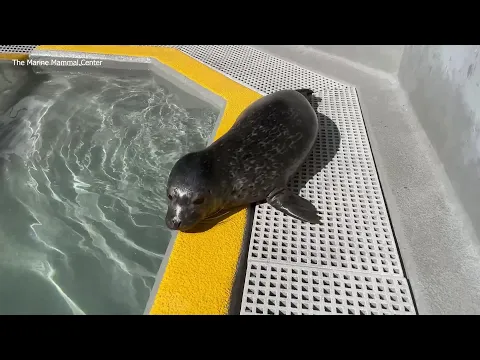
In addition to the focus on MacKerricher, the authors sought indications of a broader geographical scale through records obtained from colony monitors, naturalists, and wildlife photographers.
The article reports four independent observations of successful hunting in two locations in Marin County, in coastal pond environments and exposed sandbanks where seals cluster out of the water.
In these situations, observers reported coyotes approaching aggregations of seals at the edge of sandbanks and causing the group to disperse towards the water, capturing pups on land or in shallow water.
Beach as Opportunity Corridor for Terrestrial Predators
The picture described by the research also helps understand why the coastal strip may become an opportunity corridor for terrestrial predators.
Beaches, estuaries, and ponds form meeting zones between resources from two worlds, and the presence of concentrated prey, predictable by seasonality, creates conditions for an adaptable animal to learn routes, timing, and approach points.
The study does not portray the phenomenon as an isolated anomaly but as a natural interaction among native species in a coastal scenario where predator access is possible.
Public Perception and Scientific Method in Wildlife Observation
At the same time, detailed documentation tends to influence public perception of what is “normal” in nature, especially when it involves seal pups seen as charismatic.
The article and the associated institutional communication emphasize that the observed behavior is part of real ecological relationships and that confirmation by the scientific method is essential to separate impressions from evidence, including in environments with high human circulation and recreational wildlife observation.