Portuguese
  Spanish


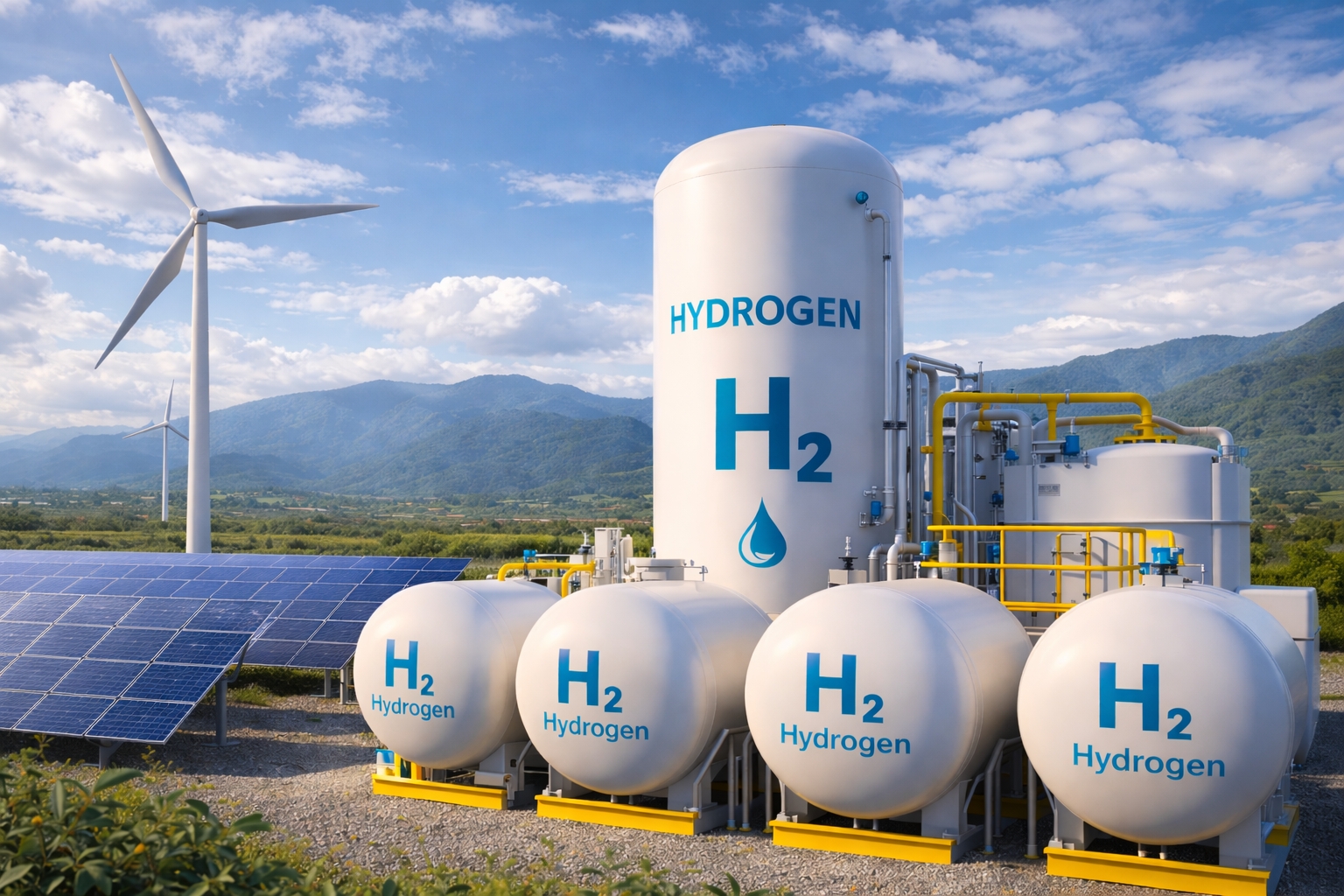


Green Hydrogen in Colombia: Production, Hubs, and Projects That Put the Neighboring Country Ahead in the Global Energy Transition
Green hydrogen is gaining prominence in Colombia as a fuel of the future, produced from renewable sources, aiming to reduce emissions and drive clean mobility. Since March 2022, Ecopetrol has started producing this fuel in the country, using solar energy and electrolyzers to turn water into hydrogen, offering a sustainable and low-impact alternative. Interest is growing as the country seeks to establish itself as a regional leader in the energy transition and attract investments in innovation and technology.
What Is Green Hydrogen and Why It Matters for Colombia and the World
Green hydrogen is defined by the Energy Transition Law 2099 of 2021 as hydrogen produced exclusively from Non-Conventional Renewable Energy Sources (NCRES), such as solar, wind, geothermal, small hydropower plants, biomass, and tidal energy.
Unlike gray hydrogen, derived from fossil fuels, its production generates minimal greenhouse gas emissions, making it strategic for decarbonizing the economy and achieving global carbon reduction goals.
-
She spent 73 years breathing inside an iron lung, survived the aftereffects of polio, and became the last woman in the United States dependent on the equipment before dying at 78 years old.

-
Brazilian students created a $1 filter using pine bark, cotton, and 3D-printed parts to clean cassava wastewater, reduce the toxicity of a hazardous waste, and transform contaminated water into biofertilizer.

-
Astronaut from Artemis II steps down after mission to the Moon and decision surprises after a record of 406,771 km, a historic 10-day journey, and an unprecedented achievement for Canada.

-
A fossil kept for years in a small museum in Montreal concealed 450-million-year-old soft tissue, a discovery that has only happened once before in history.


In the Colombian context, green hydrogen is seen as a key element for clean mobility, with vehicles capable of traveling over a thousand kilometers on a single charge and refueling in as little as fifteen minutes.
Additionally, the fuel can be used in industry, electricity generation, and public transport, offering multiple sustainable solutions.
Where Green Hydrogen Is Produced in Colombia

Colombia already has several green hydrogen hubs in operation and development. The first pilot project was installed at the Cartagena Refinery, using a 50-kilowatt PEM electrolyzer composed of 270 solar panels.
This project marked the beginning of green hydrogen production by the state-owned business group and served as a laboratory to test technologies and processes before expanding production on a large scale.
Another relevant hub is located in Medellín, considered one of the first in Latin America. It focuses on research, development, and innovation initiatives, aiming to create a complete value chain for hydrogen, from production to final consumption.
According to the Hydrogen Chamber Andi-Naturgas, in a publication by the newspaper La República, as of October 2023, the country had 28 projects, seven of which were in testing phases, mainly focusing on mobility, including hydrogen-powered buses and specialized fueling stations.
Potential and Perspectives of Colombia in the Global Hydrogen Market
Colombia has enormous potential to become a reference in green hydrogen. Its privileged geographic location, combined with favorable regulatory policies, tax incentives, and investment plans, creates ideal conditions to attract capital and technology.
According to consultancy KPMG, the country currently ranks fourth in green hydrogen production, with ambitious goals to reach up to 20 megatons per year by 2030.
The Colombian government is betting on international cooperation to accelerate the adoption of green hydrogen, including technology transfer, project financing, and opening export routes.
At the same time, there are R&D policies aligned with industrial policy, allowing Colombia to build a robust and competitive domestic market capable of generating jobs and consolidating its position in the global scenario.
Why Colombia Can Lead the Energy Transition in Latin America
With production hubs operating, regulatory incentives, and ambitious goals, Colombia is well-positioned to become a regional leader in clean energy. Green hydrogen is not just a technological solution, but a strategic opportunity to diversify the energy matrix, reduce dependence on fossil fuels, and boost sustainable economic development.
The country is moving towards a future in which transportation, industry, and power generation benefit from an efficient, clean, and rapidly refillable fuel, placing Colombia at the forefront of the global race for green hydrogen.