






 Portuguese
  Spanish


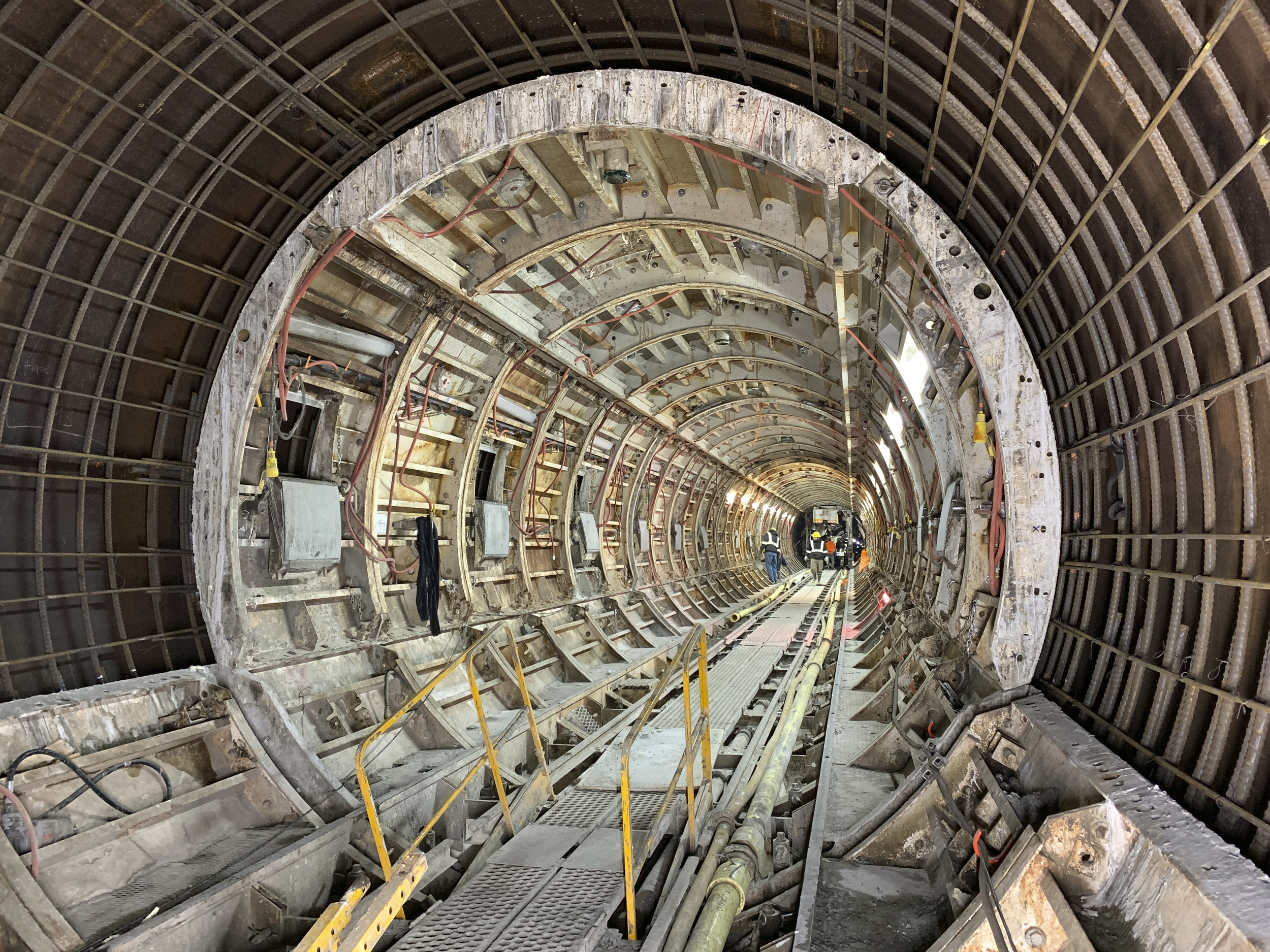


The Delaware Aqueduct Is the Longest Continuous Tunnel in the World, at 137 Km, Carrying 1 Billion Gallons of Water Per Day to New York.
New York is often remembered for its skyscrapers, subways, and financial energy. However, one of its most extraordinary feats is not above ground, but rather hidden hundreds of meters deep: a continuous tunnel approximately 137 km long with the capacity to carry about 1 billion gallons (3.78 billion liters) of water per day. Few people realize that this work has become one of the most impressive water systems ever built and an emblematic case of engineering applied to urban survival.
The New York That Grew and Needed Water on an Industrial Scale
In the early 20th century, the city was growing at a breathtaking pace, and the demand for water exceeded any projection. The first alerts of a water crisis arose, an unthinkable situation for a metropolis that would grow to over 8 million residents in the following decades.
It was in this context that the Delaware Aqueduct began to be designed, around the 1930s, as part of an even larger water collection system in the Catskill mountains.
-
U.S. City Builds Tiny Home Village on Water Company Land to House 136 Homeless People: Inside the Social Housing Units

-
Woman Turns Shipping Container into Home, Embraces Rural Life to Cut Monthly Expenses to Just Over $330
-
France Revamps 530 Social Housing Units with Large Balconies and Glass Facades Without Demolishing Existing Buildings

-
Facing high rent, couple transforms parents’ garage into a fully functional apartment, creating a complete home at a fraction of the market cost.






The geography was hostile: crystalline rock, deep rivers, and a valley prone to seepage. Nonetheless, the engineers decided that the tunnel should traverse underground, remaining protected from the weather, extreme events, and, most importantly, surface contamination.
Subterranean Engineering Beneath the Hudson Valley
The most delicate technical challenge of the work was crossing the Hudson River Valley, a complex geological stretch, permeable and subject to hydrostatic pressure. Nevertheless, the tunnel was constructed at depths ranging from about 300 to 400 meters below the surface, using controlled drilling and blasting at a time when modern tunnel boring machines did not yet exist.
This stretch, now known as the Hudson Valley Section, became historically important not only for its hydraulic viability but also for revealing the limitations of concrete applied under high water pressure— a problem that would resurface decades later.
A System That Silently Supplies Millions
What makes the Delaware Aqueduct so critical is its invisible scale. It connects reservoirs like Cannonsville, Pepacton, and Neversink, all in the Catskills region, delivering treated water to over 13 million people in the city and metropolitan area, a population larger than many countries.
During the height of summer or in drought scenarios, this infrastructure prevents supply collapse. It is, literally, a subterranean umbilical cord supporting one of the most densely populated metropolises on the planet.
Leaks, Repairs, and an Engineering Challenge in the 21st Century
Although robust, the aqueduct showed flaws over time. In the mid-1990s, technicians confirmed leaks in the section between the cities of Newburgh and Wawarsing, with estimates ranging from 38 to 150 million liters per day lost through seepage, a problem few imagined a tunnel of that scale would face.
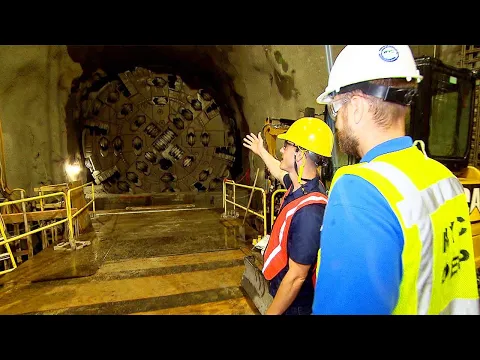
The solution would not be simple: to construct a subterranean by-pass to circumvent the problematic area without interrupting the supply. This project, named the Delaware Aqueduct Bypass Tunnel, involves about 3 kilometers in length and ranks among the most complex subterranean works of the 21st century in the U.S.
The tunneling machine used was a pressurized machine capable of boring under the Hudson without allowing for collapses, and the system was designed to enter into operation with a smooth transition, without shutting off the city’s main water source.
A Little-Talked-About but Gigantic Work
The Delaware Aqueduct rarely appears in reports about infrastructure or tourism, but its impact is colossal. Without it, New York would not have been able to:
• Expand vertically with safety
• Maintain strict sanitary standards
• Support extraordinary urban densities
• Feed industries, hospitals, and essential services
The World Health Organization has highlighted that cities with safe water supply grow more and have higher public health indices. New York is an example, and this subterranean tunnel is one of the pillars of that success.
What the Delaware Aqueduct Teaches Us About Future Cities
The story of this work reveals three critical points for any modern metropolis:
- Invisible infrastructure matters more than urban glamour.
- Water is the most strategic infrastructure in the world.
- Subterranean works are inevitable for megacities.
In a planet faced with climate change, cyclical droughts, accelerated urbanization, and competition for resources, the solution created in the 1930s remains relevant in 2026 and indicates paths for countries facing severe water crises, such as South Africa, India, Chile, and regions of the Brazilian Semi-Arid.
In the End, a Tunnel That Tells the Story of Urban Survival
While skyscrapers shine and photographs show only the surface of New York, the true technical triumph lies hidden hundreds of meters below ground, silently pushing water to millions of people, every day, without pause.
Perhaps the greatest paradox is this: the longest continuous tunnel in the world was not made for tourists but to disappear, ensuring that the city never had to think about a water crisis.
The question that remains is simple: how many other cities in the world will be willing to invest in invisible infrastructure before the lack of water makes it all too late?








