






 Portuguese
  Spanish


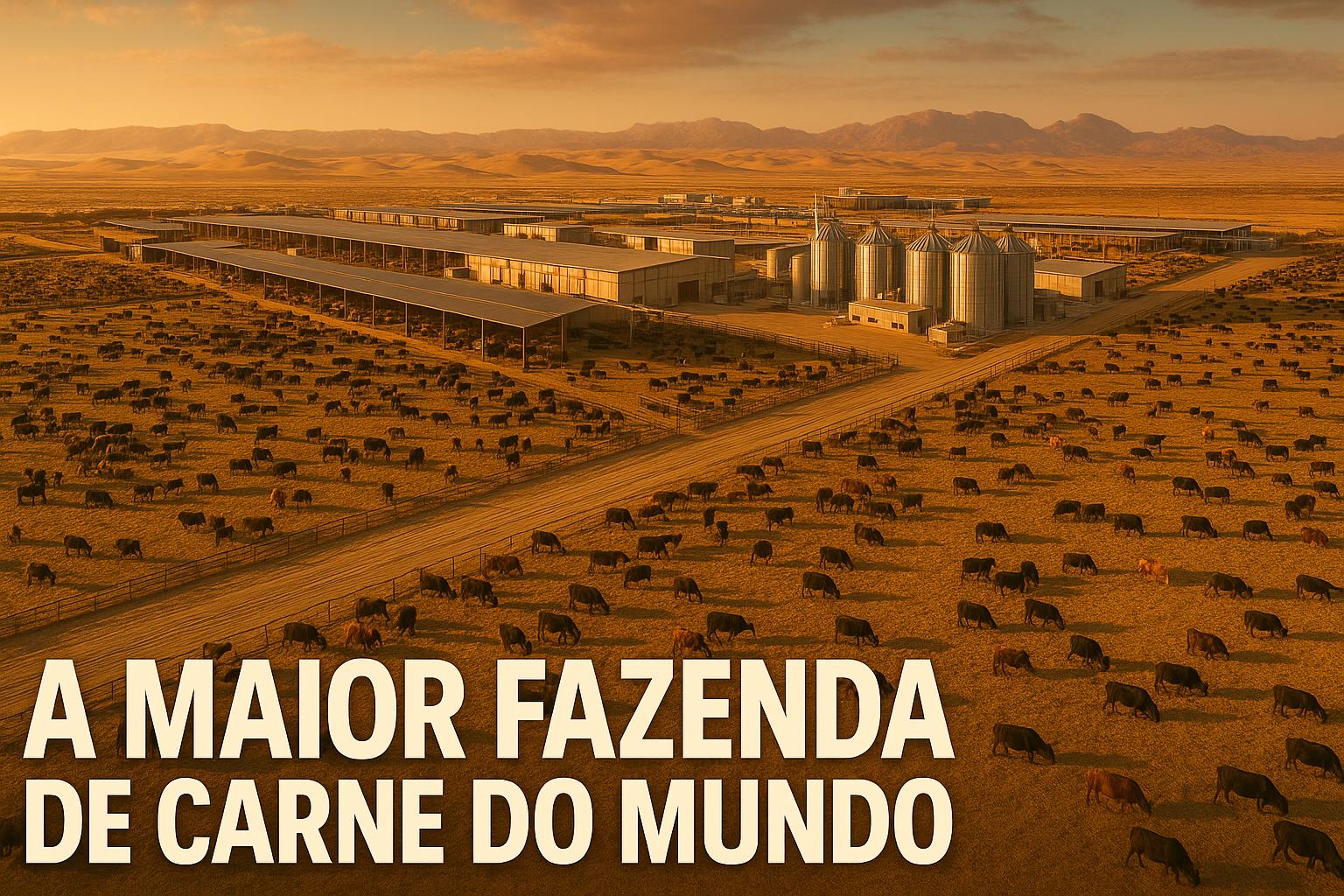


With 23 Thousand Km² and Up to 10 Thousand Heads of Cattle, Anna Creek Station Is the Largest Cattle Station in the World, Surpassing the Size of Countries Like Israel and El Salvador.
In the heart of the Australian desert lies a rural property so vast that it seems endless. It spans 23,677 square kilometers, an area larger than countries like Israel, El Salvador, or Kuwait, and more than three times the size of São Paulo</strong. This immense expanse defines Anna Creek Station, recognized as the largest cattle station in the world or the largest beef farm globally, a colossus of livestock farming that symbolizes the strength and resilience of the Australian agribusiness in one of the most inhospitable environments on the planet.
Located in the state of South Australia, Anna Creek was founded in 1863, during the height of British colonization, when cattlemen ventured into arid areas in search of new productive frontiers. The farm is so remote that access is only possible via dirt roads that cross hundreds of kilometers of desert, and for much of the year, the main mode of transport is by plane.
An Empire in the Australian Desert
Today, the farm belongs to the Williams Cattle Company, one of the largest agribusiness groups in Australia. The size of the property impresses not only by its territorial dimension but also by the logistical challenge of maintaining livestock operations in one of the driest locations on the planet.
-
Brazilian Farmers Develop Wheeled Metal Lever to Ease Cassava Harvesting Without Heavy Machinery

-
Study of Brazil’s Tietê River Finds 25 Pesticides in Water, Including Cancer-Linked Substance Near Source
-
Young Entrepreneur Expands from 50 to 1,400 Chickens, Proving “Happy Hens” Can Be a Viable Business
-
Small Farm in Brazil’s Minas Gerais Produces 403 Liters of Milk Daily, Sets Benchmark for Rural Producers


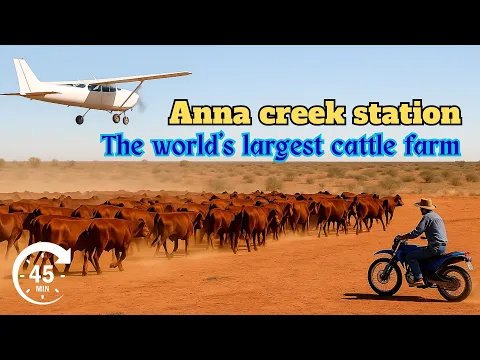

The region of Anna Creek Station is characterized by extreme temperatures, scarce rainfall, and vast plains of sand and rock. Therefore, the cattle are raised extensively, dispersed over immense natural pastures, where each animal has access to more than 2 km² of area for grazing. During dry periods, herds are reduced to prevent the collapse of ecosystems and conserve water resources.
Even with these limitations, the farm maintains an average of 6 to 10 thousand heads of cattle, depending on climatic conditions. The herd is primarily composed of Santa Gertrudis cattle, known for their heat and drought resistance — a crucial adaptation for survival in the Australian outback.
An Operation Larger Than Entire Cities
Within Anna Creek Station, there are residential villages, workshops, hangars, fuel depots, and landing strips. The property operates almost like a self-sufficient town, with its own infrastructure for radio communication, vehicle maintenance, and supplies.
Staff live in isolated accommodations and work long shifts, managing the cattle spread across dozens of paddocks and management points over hundreds of kilometers.
The logistics are so complex that the company uses helicopters and light planes to locate the herd, perform management tasks, and transport supplies and equipment.

The water supply, in turn, relies on deep underground wells and solar-powered pumping systems, one of the few viable alternatives amid the aridity of the desert.
A Historical Legacy of Pioneering
The history of Anna Creek is linked to the very formation of Australian cattle ranching. In the 19th century, British settlers brought cattle to explore the vast lands of the outback, and many of these properties became legendary. However, Anna Creek has always stood out for its scale and perseverance.
It once belonged to the S. Kidman & Co., founded by the legendary businessman Sir Sidney Kidman, known as “the cattle king” in Australia. At the height of his empire in the early 20th century, Kidman controlled more than 260 thousand km² of land — almost the size of Italy. Anna Creek was one of the jewels of his cattle crown.
In 2016, after decades of negotiations, the property was acquired by Williams Cattle Company, which maintains the traditional management model while incorporating modern tracking, irrigation, and environmental monitoring technologies.
The Engineering Behind the Success
The production at Anna Creek is not solely based on beef. The farm also serves as an open-air laboratory for sustainable management in arid regions, with studies on breed adaptation, soil recovery, and ecological balance in extreme environments.
The use of technology is essential. Drones, sensors, and climate monitoring software help identify degraded areas, map the herd, and plan grazing rotations. This approach has led Anna Creek to be internationally recognized as a model of integrated large-scale management, balancing production and preservation.
The success of the farm also reinforces Australia’s role as one of the world’s largest agribusiness powers. The country exports about 70% of all the meat it produces, with strong markets in Japan, China, and the Middle East, and maintains strict animal traceability standards — something that makes Australian beef one of the most valued in the world.
A Monument to World Livestock Farming
More than just a farm, Anna Creek Station is a symbol of humanity’s ability to transform extreme environments into productive centers. The combination of centuries-old tradition, technology, and respect for the environment makes it a unique example of modern agro-engineering.
While Brazil dominates the global scene in volume and export, Australia holds the record in land area. Together, the two nations set the pace for global livestock farming.
From above, Anna Creek appears as a green patch amidst a sea of reddish sand — a living proof that Australian agriculture knows no bounds.






Grande.Mas tem um brasileiro criando **** na Austrália…….No Brasil se juntar todos os gados supera 10 .000 cabeças
Um monumento 🤣🤣🤣!!
Só se for um monumento ao colonialismo predador inglês que matou e desalojou milhões de pessoas do povo originário da Austrália !