






 Portuguese
  Spanish


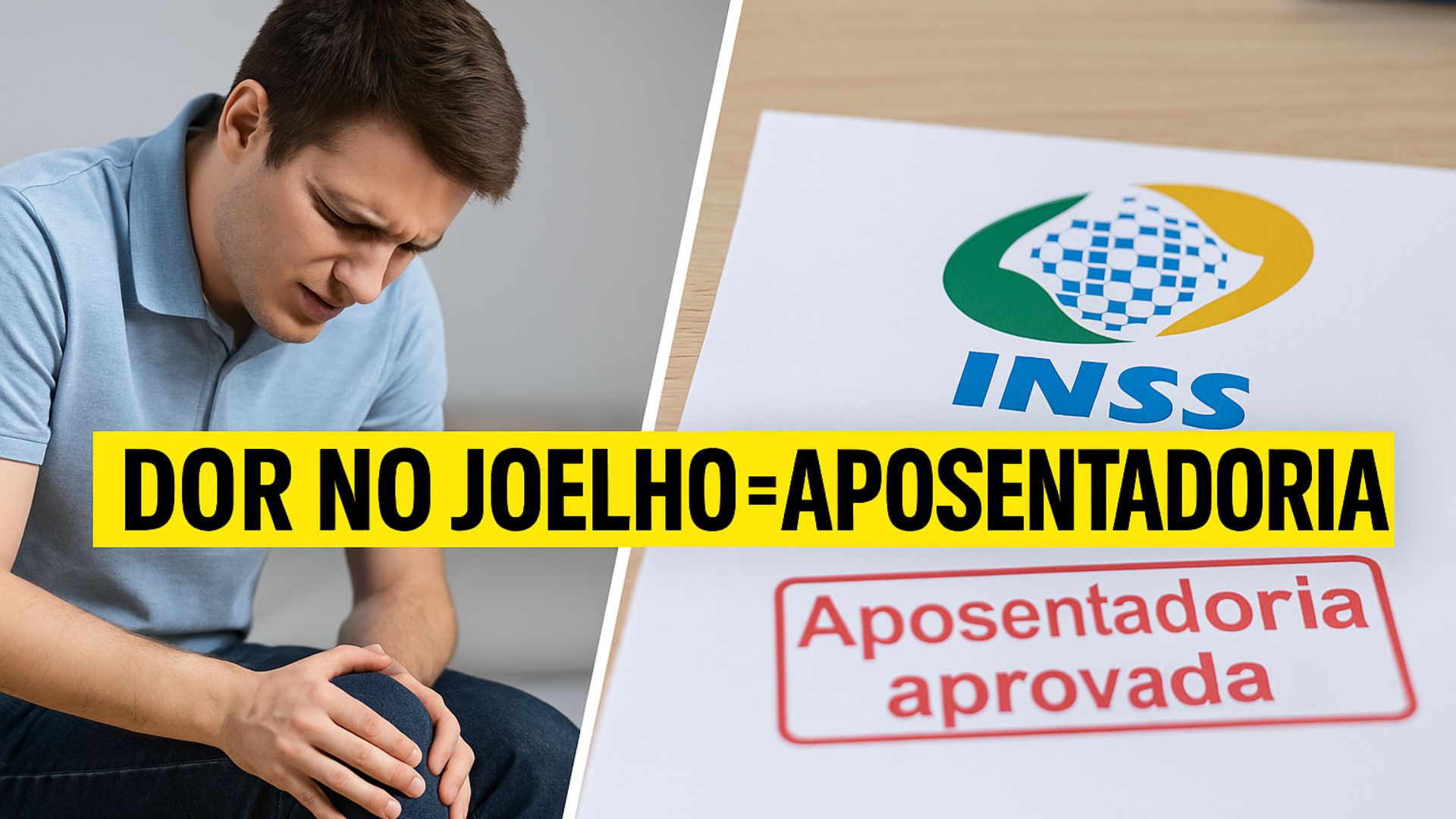
Men With Knee Sequelae Can Retire Earlier If They Prove Mild Disability, According to Supplementary Law 142, Which Guarantees Retirement Without Minimum Age for Those Who Fulfill Reduced Contribution Time to the INSS.
The wear on knees is one of the most common causes of absences and functional limitations among workers who spend years in activities that require physical effort.
When these sequelae reduce the ability to move or perform at work, the social security legislation provides differentiated retirement rules.
Under Supplementary Law 142, men can retire with 33 years of contribution, with no minimum age, if the disability is recognized as mild after a medical and social evaluation by the INSS.
-
Detran RJ starts requiring a toxicological test for those obtaining their first driver’s license in the car and motorcycle category starting June 29; see who will be affected.

-
Florida takes TikTok to court and accuses the Chinese giant ByteDance of ignoring the law that bars minors under 14, while parents and authorities demand more protection for children on social networks.
-
Chamber approves constitutional amendment reducing the age of criminal responsibility from 18 to 16 years; what now?

-
Justice confirms that old debts in tax executions that have been stalled for more than 15 years can no longer be collected through judicial or administrative means.


Origin and Objective of Supplementary Law 142
The regulation, in effect since 2013, created the retirement for persons with disabilities modality in the General Social Security System.
It reduces the necessary contribution time for those who prove long-term impairment — physical, mental, intellectual, or sensory — which, in interaction with barriers, limits full participation in society.
Recognition depends on medical and social assessment, which classifies the degree of disability as severe, moderate, or mild. This classification defines the minimum required contribution time.
Contribution Time and Minimum Waiting Period Required by the INSS
For men, Supplementary Law 142 establishes 25 years of contribution in cases of severe disability, 29 years for moderate, and 33 years for mild.
For women, the deadlines are 20, 24, and 28 years, respectively.
There is no minimum age in this modality. The central requirement is the contribution time during which the disability existed.
It is also necessary to fulfill a minimum of 180 monthly contributions, according to INSS regulations.
Knee Injury: When Is There a Right to Retirement
Surgeries and knee injuries, such as ligament rupture, advanced osteoarthritis, or prosthesis placement, do not automatically guarantee the right to retirement as a person with a disability.
According to the INSS, what determines recognition is the permanent functional impact.
Factors such as difficulty walking, squatting, climbing and descending stairs, standing for long periods, or performing physical effort are evaluated.
Only when limitations are enduring and affect work performance is it possible to qualify as a disability, according to the expert criteria.
How the INSS Assessment Works
The analysis is biopsychosocial, conducted by a medical examiner and a social worker. The examination considers reports, imaging tests, medical reports, and the insured’s professional history.
The result classifies the worker into one of three degrees of disability and can be reviewed if the condition evolves.
Experts in social security law recommend that the documentation be always current and detailed, describing the onset of limitation and its functional consequences.
Calculation and Value of the Social Security Benefit
The value of retirement for people with disabilities is calculated according to Article 8 of Supplementary Law 142.
In cases of contribution time, the monthly income corresponds to 100% of the benefit salary, with the pension factor applied only if it increases the amount.
In the age-based modality, the calculation is 70% of the benefit salary, plus 1% for each year of contribution, up to a maximum of 100%.
The salary average and the date of meeting the requirements also influence the final result.
Benefit Can Reach the INSS Ceiling
The social security ceiling in 2025 is R$ 8,157.41, according to official INSS data.
In practice, the benefit can reach this amount when the insured contributes for long periods based on salaries close to the ceiling.
The exact amount depends on the average of the contributions recorded in the system.
How to Request Retirement in Meu INSS
The request must be made through the Meu INSS application or website, in the “Retirement for Persons with Disabilities by Contribution Time” option.
Before requesting, specialists recommend gathering complete medical and occupational documentation, including:
- orthopedic reports and physiotherapy reports;
- imaging tests;
- records with CID and description of limitations;
- proof of links, such as CNIS, CTPS, and contribution receipts;
- Professional Profile for Social Security (PPP), if available.
During the process, the insured is called for medical and social assessments.
The clarity of reports and the objective demonstration of restrictions can reduce the risk of denial.
Cases Where the 33-Year Rule Does Not Apply
The rule of 33 years of contribution does not apply when:
- the assessment does not recognize the disability;
- the limitation is temporary or reversible;
- the duration of disability is shorter than required;
- the insured does not meet the minimum waiting period.
According to social security lawyers, the main cause of denial is the lack of consistent evidence regarding the functional limitation and the time it existed.
Experts’ Tips for Knee Limitation Cases
Professionals in the field recommend that reports describe the range of motion, the stability of the knee, and the ability for physical and labor activities.
Physiotherapy reports with standardized functional scales, such as WOMAC or KOOS, help quantify the limitation.
It is also important to present records of adaptations in the work environment, such as changes in function, reduced workload, or need for breaks, as these elements reinforce the functional impact of the disability.
Status of Those With Long Contribution Time
Workers with a long history of contributions and knee sequelae recognized as a disability can anticipate retirement, provided the degree of limitation is proven in assessments.
According to experts, it is ideal to conduct a social security simulation before the request, to calculate the total time with and without disability and estimate the benefit amount.
This type of planning tends to avoid delays and administrative appeals.
Supplementary Law 142 is considered one of the main norms of social security inclusion by allowing people with permanent limitations to access more adequate retirement conditions.
Have you checked if your contribution time and medical reports allow you to qualify under this rule?





-

-

-

-

-

-

55 people reacted to this.