Portuguese
  Spanish


Global Meat Prices Hit Records In August, Driven By Strong Demand In The USA And China And Decline Of Herds In Producing Countries
According to information released by the portal Bloomberg Línea, global beef prices reached a new record in August, marking the continuation of a rise that began the previous month.
The index from the Food and Agriculture Organization (FAO), which tracks sector values, surpassed the mark set in July.
This movement occurs because American and Chinese demand continues at an accelerated pace, while the global cattle supply faces limitations.
-
Brazil’s BNDES Funded Metro and Steel Plant Projects in Venezuela with Brazilian Support

-
Abandoned Building in Brazil to Become Biotechnology Unit with $10 Million Investment, Bridging Science, Industry, and Public Health
-
Company Offering “Stones to Diamonds” Scheme Sells Ruined Italian Homes to Brazilians for 1 Euro, Disappears with Promised Renovations, Leaving Buyers in Debt to Italian Tax Authorities Until 2028 Without Property

-
Plastic Packaging Drives Santa Catarina Industry to 230% Growth, Aiming for R$ 500 Million by 2030 Amid Sector Crisis, with New Gearless Line Expanding in Southern Brazil to Compete in South America



This combination of intense demand and declining herds is already directly reflected in consumers’ wallets.
In the United Kingdom, beef prices in July were almost 25% higher than recorded the previous year, putting pressure on inflation.
The trend shows that the impacts of scarcity cross borders and affect economies of different sizes.
Cattle producers in various regions are under strong pressure. Climate changes and diseases have been reducing production.
In the United States, the herd is at its lowest level in decades. In Brazil, the largest global exporter, volatile weather increases the difficulties in rebuilding the herd, which compromises supply regularity.
Therefore, supplying countries face additional obstacles to meet a heated market.
The FAO report indicates that strong American demand has pushed prices in Australia. China, on the other hand, has maintained its imports from Brazil at high levels, even in the face of reduced sales to the United States after the implementation of higher tariffs.
Moreover, the situation reveals that international trade movements remain decisive for the price direction.
Another factor weighing on supply is the cost of dairy products. With the rising prices of butter and cheese, there is less incentive to cull dairy cows, further reducing the availability of meat.
FAO economist Monika Tothova highlighted this link, stating that high dairy product prices lead producers to keep cattle in the dairy sector instead of sending them for slaughter.
More On Beef: Trump Tariffs Are Making Brazil Swim In Asia — And Did This Redirect Open A More Favorable Path?
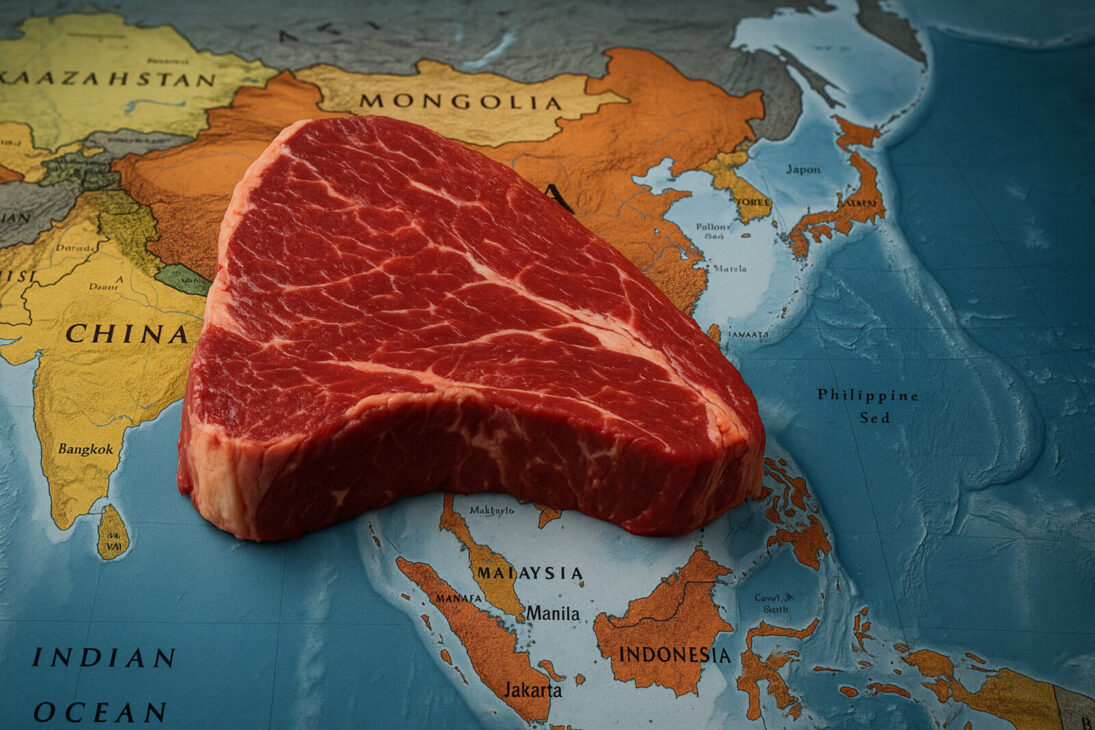
Throughout 2025, Brazil made significant advances in Southeast Asia. After opening markets for Vietnam and the Philippines, the country also gained access to Indonesia, according to a report from Agrifatto sent to its subscribers.
“With the opening of the Indonesian market for beef exports, Brazil reinforces its presence in one of the most dynamic regions in the world in terms of economic growth and demand for animal protein,” highlighted the consultancy.
Strategic Growing Market
Indonesia appears as a central piece in this strategy. The country is the fourth most populous country in the world, with approximately 285 million inhabitants in 2024, and offers great consumption potential.
“Beef consumption in the country has been growing in recent years, driven by rising income levels and the expansion of the urban middle class,” emphasized Agrifatto.
Together, Vietnam, the Philippines, and Indonesia have more than 500 million people, which further expands opportunities for Brazilian beef.
Projections For The Next Decade
The consultancy projects that by 2035, Brazilian beef exports to the three markets could reach 800,000 tons. This would represent a significant advance compared to current shipments.
In addition, Agrifatto predicts that Brazil could export 114,000 tons just to Indonesia by 2035. This number shows why the region is considered one of the most promising for the expansion of national livestock farming.
By 2025, the expectation is for an immediate increase in exported volumes, consolidating entry into Indonesia as a fundamental step.
Competition And Brazil’s Position
The most important thing is to understand the competitive landscape. Currently, India holds the lead in supplying animal proteins to Indonesia, with a 48% share over the last five years.
Next is Australia, with 36%. Brazil ranks third, with a 5% share.
Therefore, expanding access opens up opportunities to change this situation and reinforce Brazil’s role as a major global supplier.
With information from Portal DBO.