





 Portuguese
  English
  Spanish
  4 min of reading
  0 comments


Toyota Invests US$ 3.3 Billion in an AI System That Promises to Revolutionize Automotive Safety by Preventing Accidents. Find Out How This Technology Can Transform the Driving Experience!
The automaker Toyota, one of the leaders in the global automotive industry, and the Japanese telecommunications giant Nippon Telegraph and Telephone (NTT) announced a new joint project to develop an advanced autonomous driving system using artificial intelligence to predict and prevent accidents.
With an estimated investment of 500 billion yen (approximately US$ 3.3 billion), the companies aim to launch a functional system by 2028, with the expectation of providing the technology to other vehicle manufacturers as well. The technology will skillfully prevent accidents.
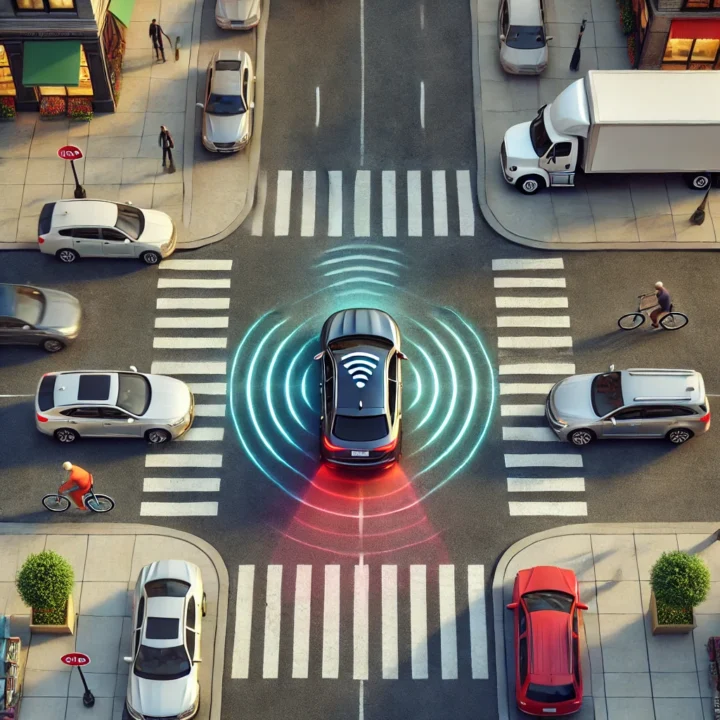
Advancement in Level 4 and 5 Autonomous Driving by Toyota
The partnership aims to develop software for autonomous vehicles that achieve Level 4 and 5 autonomy. Level 5 is the most advanced, where the vehicle operates without any human intervention, while Level 4 requires minimal intervention.
-
Brazil gets its first ultra-fast 480 kW charger for electric cars, serving up to four vehicles at the same time and promising a charge from 10% to 80% in about 15 minutes.

-
Forget the Toyota Hilux: with a 2.0 turbo engine and 475 hp, the new BYD Shark Performance tows 3,500 kg, accelerates in 5.5 seconds, and addresses historical criticism, but loses load capacity and surprises even medium pickup truck owners.

-
New Honda City with a hybrid engine of up to 126 hp features a sporty RS look, 10-inch screen, 360° camera, new wheels, and a price equivalent to R$ 129,000 before the official debut in Brazil in August.
-
No automatic car: Renault Niagara 2027 will have a manual version for work, 1.3 turbo flex engine with up to 163 hp, 4×4 options, EDC transmission in the expensive versions, six airbags, and ADAS package to compete with Fiat Toro in Brazil.


Currently, Japan allows the operation of Level 4 vehicles, paving the way for innovations like this proposal from Toyota and NTT.
To achieve this goal, the technology will be powered by cameras and sensors in the vehicles, which will collect data about the environment and driving conditions.
This data will be replicated in a virtual space, allowing AI units to perform real-time analysis. If the possibility of an accident is detected, the system will act automatically, controlling the steering and brakes.
Use of AI in the Automotive Industry, Far Beyond Accident Prevention
The use of AI in autonomous driving brings a series of benefits and changes to the automotive industry.
The ability to predict and prevent accidents can drastically reduce the number of accidents caused by human error, as well as provide more efficient driving, optimizing routes and saving fuel.
The expectation is that, with the popularization of this technology, autonomous vehicles will become common on the roads, transforming urban mobility.
In addition to Toyota, other companies like Tesla, BMW, Audi, and Mercedes-Benz are also heavily investing in AI to enhance their vehicles and make them increasingly autonomous.
Tesla, for example, is known for its advanced autonomous driving system, while BMW stands out for assistance systems that learn user preferences, automatically adjusting car settings to increase driver comfort.
Data Transmission with Cutting-Edge Technology
For the efficient operation of the autonomous system, a high-speed data transmission process with a large storage capacity will be necessary.
The solution will be supported by NTT’s IOWN (Innovative Optical and Wireless Network) technology, which uses light signals instead of electrical signals, providing faster and more efficient communication. This innovation will be essential for the system to react quickly to traffic conditions and predict risks in real-time.
Market Impact and Future Projections
Today, most available autonomous vehicles operate at Level 2 autonomy, which corresponds to advanced driver assistance but still requires the driver to remain in control. With advancements in autonomy levels to Level 4 and eventually Level 5, the market is expected to expand significantly.
S&P Global estimates that by 2030, around 50 million new vehicles – more than half of the global market – will be Level 2, while Level 4 vehicles are expected to reach about 5 million by 2035.
In addition to safety benefits, artificial intelligence has revolutionized the relationship between drivers and vehicles, offering a more personalized and connected experience. Today, AI-equipped cars can learn their drivers’ driving habits, adjusting settings for greater comfort and even identifying mechanical issues preventively, alerting the owner about maintenance needs before a larger problem occurs.
This closer connection between the vehicle and the driver increases user satisfaction and contributes to a longer lifespan for the car.
Companies at the Forefront of Innovation with AI
Globally renowned brands such as Tesla, BMW, Audi, and Mercedes-Benz have been investing heavily in artificial intelligence to enhance the safety, performance, and personalization of their vehicles. Tesla, for instance, is known for its autonomous driving system and regular software updates that continuously improve car performance.
BMW has digital assistants that understand driver preferences, while Audi and Mercedes-Benz invest in technologies that include fatigue detection and emergency braking systems.
Toyota, for its part, maintains a focus on sustainability, investing in robotics and electric cars to reduce environmental impact and provide a more efficient driving experience. Over the past few years, Toyota has collaborated with technology companies like NTT to develop smarter, more efficient, and safer vehicles.
In addition to investing in AI, the automaker is also looking to innovate in connectivity infrastructure, such as integrating 5G technology and smart city projects, which provide more connected and eco-friendly mobility.
This partnership between automakers and technology companies could redefine the future of transportation, bringing not only safety and personalization but also a more harmonious integration between the car and its surrounding environment.






Be the first to react!