






 Portuguese
  Spanish


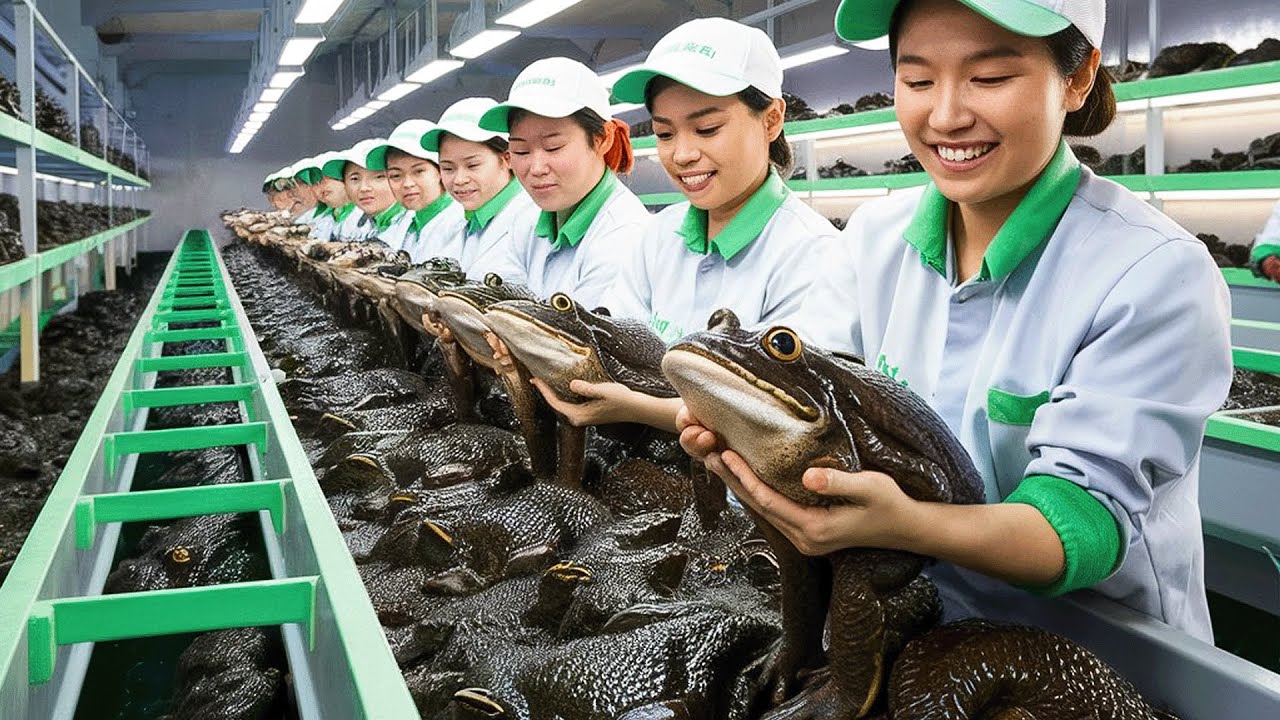


With Over 1 Million Tons Produced Annually, Frog Farming in China Grows with Continuous Management, Accelerated Reproduction, and Strong Domestic Demand.
In 2024 and 2025, studies published on international scientific platforms, such as Rapid Communications in Aquaculture, drew global market attention by revealing that China has surpassed the mark of 1 million tons of bullfrog produced annually, consolidating one of the most peculiar and surprising animal protein chains on the Asian continent. This scale of frog farming in China places the country at the forefront of frog farming, a sector that has grown supported by simple techniques, continuous production, and biological adaptation, elements that have transformed the frog into a profitable product for domestic consumption and, increasingly, for neighboring markets.
In several provinces such as Guangdong, Fujian, Hunan, and Guangxi—industrial tanks, dug ponds, and climate-controlled structures form production networks that operate almost uninterrupted throughout the year.
The strength of the sector does not come from ultramodern megafactories, but from thousands of standardized units, capable of multiplying frogs at an accelerated pace by using technical knowledge developed locally over decades.
-
Researchers Turn Discarded Mango Pits into Hydrogel That Absorbs 400% of Its Weight in Water, Offering Agricultural Solution for Droughts and Waste Reuse

-
Flower strips in Brazilian farms become pest control strategy, attracting predator insects and reducing the need for chemical pesticides.

-
Yara acquires Texas ammonia plant for $1.3 billion, boosting global fertilizer competition with 1.3 million tons annual capacity
-
At 35, Lawyer Leaves Corporate Career to Turn 1-Hectare Farm into Organic Supplier for Schools in Southern Brazil


Why China Dominates Frog Farming: Climate, Demand, and Productive Adaptation
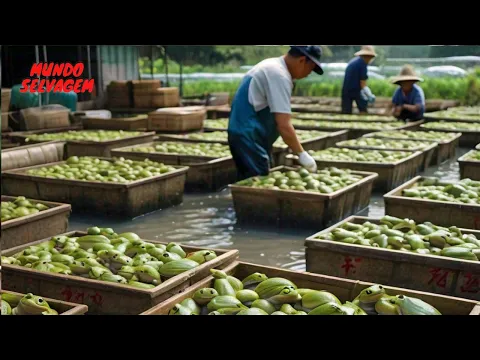

China possesses characteristics that favor large-scale frog farming:
- Warm climate in southern regions, ideal for the continuous breeding of the bullfrog (Lithobates catesbeianus), a species originally from the United States that has adapted well to the Chinese environment.
- High domestic demand, as frog legs are considered traditional delicacies in various regional cuisines.
- Ability to standardize management, with thousands of small and medium farms operating under similar protocols.
- Accelerated growth cycle, allowing for multiple harvests annually.
In addition, the bullfrog presents economic advantages that have attracted producers: rapid development, efficient feed utilization, and high feed conversion rates.
With relatively low installation costs—dug tanks, canvas ponds, shading, and basic water flow control, the sector has expanded in a decentralized manner, keeping pace with the accelerated rhythm of local gastronomy.
How Industrial Farms Work: Dense Tanks, Running Water, and Continuous Cycles
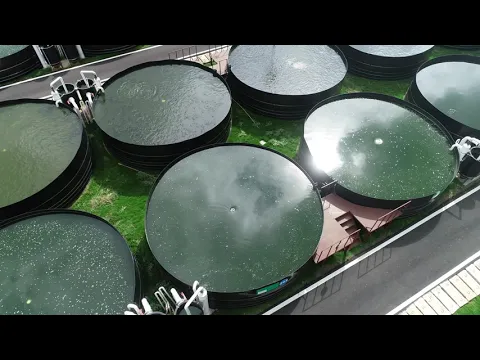
The Chinese model of frog farming combines traditional techniques with low-cost technological adjustments. Tanks, which can be made from concrete, reinforced canvas, or excavated in the ground, are organized into batches separated by age, ensuring better growth control.
System of Tanks with Running Water
The water, slightly renewed throughout the day, maintains stable temperature and oxygenation. This reduces mortality and accelerates the fattening rate.
High Density with Strict Management
Tanks can hold thousands of frogs per cycle, provided there is control over:
- water quality,
- temperature,
- feeding,
- and cleaning.
This balance allows for herd multiplication without resorting to complex systems.
Standardized Feeding
Frogs receive high-protein feed, often adapted from formulations used in fish farming.
Staggered Harvest
As frogs reach the ideal weight in just a few months, farms operate in cycles:
- while one batch grows,
- another is being harvested,
- and a third group is in its early phase.
This continuous rotation system keeps production units active throughout the year, without seasonality.
The Economic Impact: A Chain That Became Giant
The production of 1 million tons annually is not just an impressive number — it reveals a chain that moves:
- feed factories,
- independent producers,
- specialized slaughterhouses,
- regional distributors,
- restaurants and markets across various provinces.
Chinese studies estimate that the sector already exceeds tens of billions of yuan in annual value, driven primarily by domestic consumption.
Although part of the production is aimed at international markets, such as Thailand, South Korea, and Malaysia, the sector’s focus is to meet the internal appetite for traditional dishes made with frog legs, considered a delicacy in various provincial cuisines.

Moreover, the frog has become a competitive protein alternative for regions facing resource scarcity, as frog farming requires relatively little land and can be installed near urban areas.
Simple Technology, Giant Results
One of the most notable characteristics of Chinese farms is the adoption of low-cost technological solutions that enhance productivity without increasing operational costs. These solutions include:
- handcrafted shading systems;
- water circulation pumps;
- mobile dividers to organize batches;
- simplified drainage;
- management techniques derived from fish farming.
It is practical engineering that combines local knowledge, accessible materials, and continuous observation of frog behavior. Instead of relying on automated systems or sophisticated infrastructure, the Chinese industry is sustained by the sum of thousands of efficient units, which together form a productive powerhouse.
Challenges and Environmental Debates
Despite the impressive scale, the sector faces challenges such as:
- the need for better sanitary control,
- risk of diseases in dense environments,
- environmental concerns regarding the use of bullfrogs, a species considered invasive in several countries.
Chinese institutions have been working on best practice guides to reduce these risks, but the debate over the ecological impact remains alive.
The Frog That Became an Industrial Giant
What started as traditional farming on small properties has transformed into one of the most robust protein chains on the Asian continent.
The combination of:
- continuous production,
- simple management,
- accelerated reproduction,
- and massive domestic demand,
has allowed China to transform frog farming into a gigantic business, surprising analysts and repositioning the frog not only as a culinary curiosity, but as a pillar of the country’s food economy.









Assim que a China age tentando acabar com a produção de carne bovina no mundo
Tudo muito **** coisa ****
No Brasil tem como fazer uma criação. Tem notícia de custo de produção e de venda. Questões ambientais.