






 Portuguese
  Spanish
  4 min of reading
  0 comments


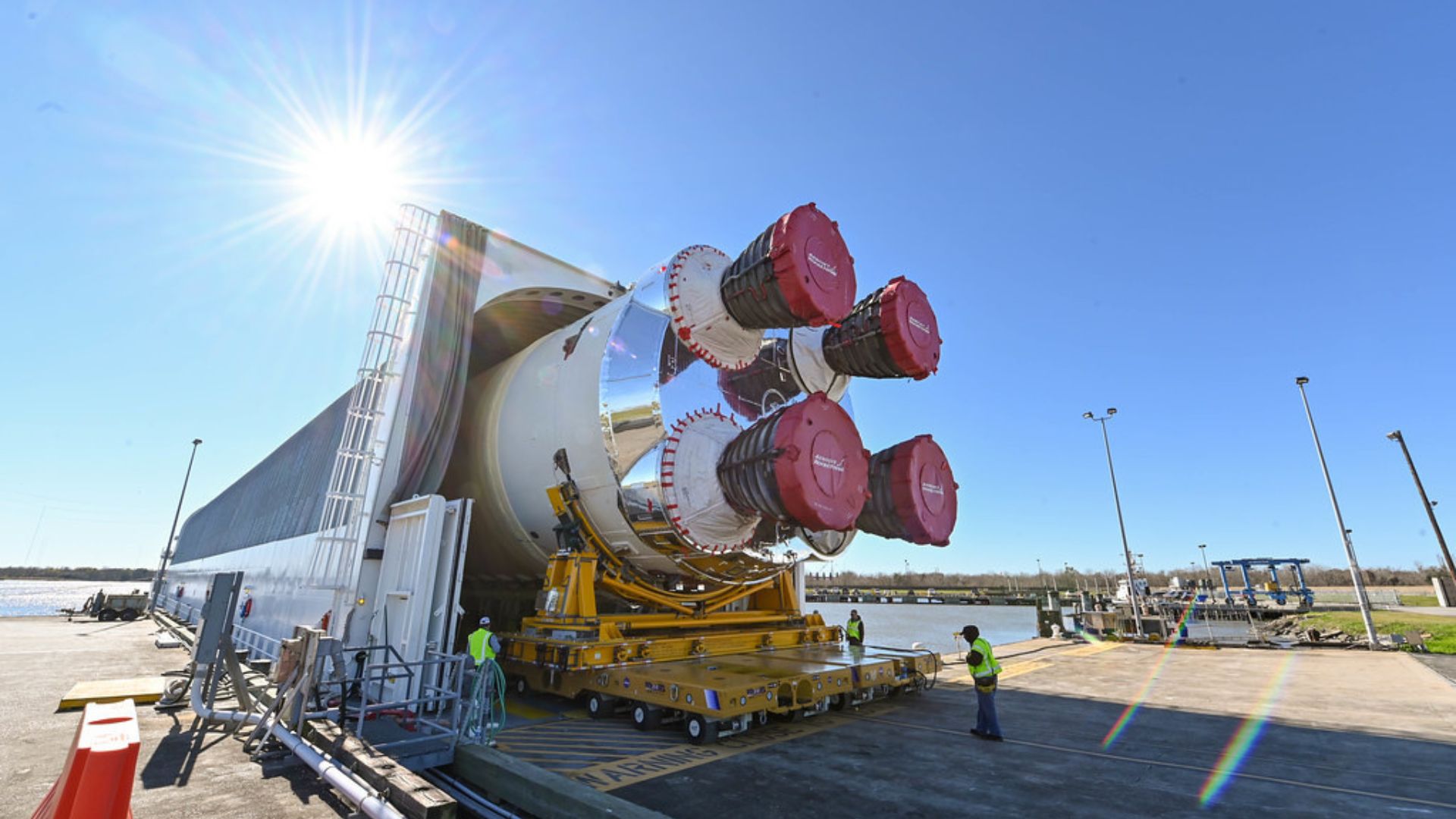
Behind the Artemis Program Includes Towed Barge That Transports the SLS Core Stage Through Rivers and Coastlines, Measuring Nearly 100 Meters, Modified Deck and Own Power Generation, Connecting Manufacturing, Testing and Final Assembly Before the Rocket Appears at the Launch Complex.
A little-visible stage supports the arrival of the Space Launch System (SLS) rocket at the launch complex: the transport of the core stage, the central stage that houses critical tanks and systems, carried by the Pegasus barge, a towed floating platform without its own engines, maintained by NASA.
Based on the infrastructure associated with the Michoud Assembly Facility in the New Orleans area, the Pegasus functions as a dedicated cargo deck for large and sensitive components, operating with tugs and support vessels to carry out routes between factories, testing centers, and final assembly.
Although public attention focuses on the rocket, the agency describes the Pegasus as a direct part of Artemis logistics, which conducts lunar missions, by connecting production in Michoud to testing at the Stennis Space Center and integration at the Kennedy Space Center.
-
An 84-year-old mother wakes up before midnight in Japan, keeps a family bakery open for 55 years, and sells cheap handmade bread; the shop in Fukuoka produces up to 400 units a day with the help of her son.

-
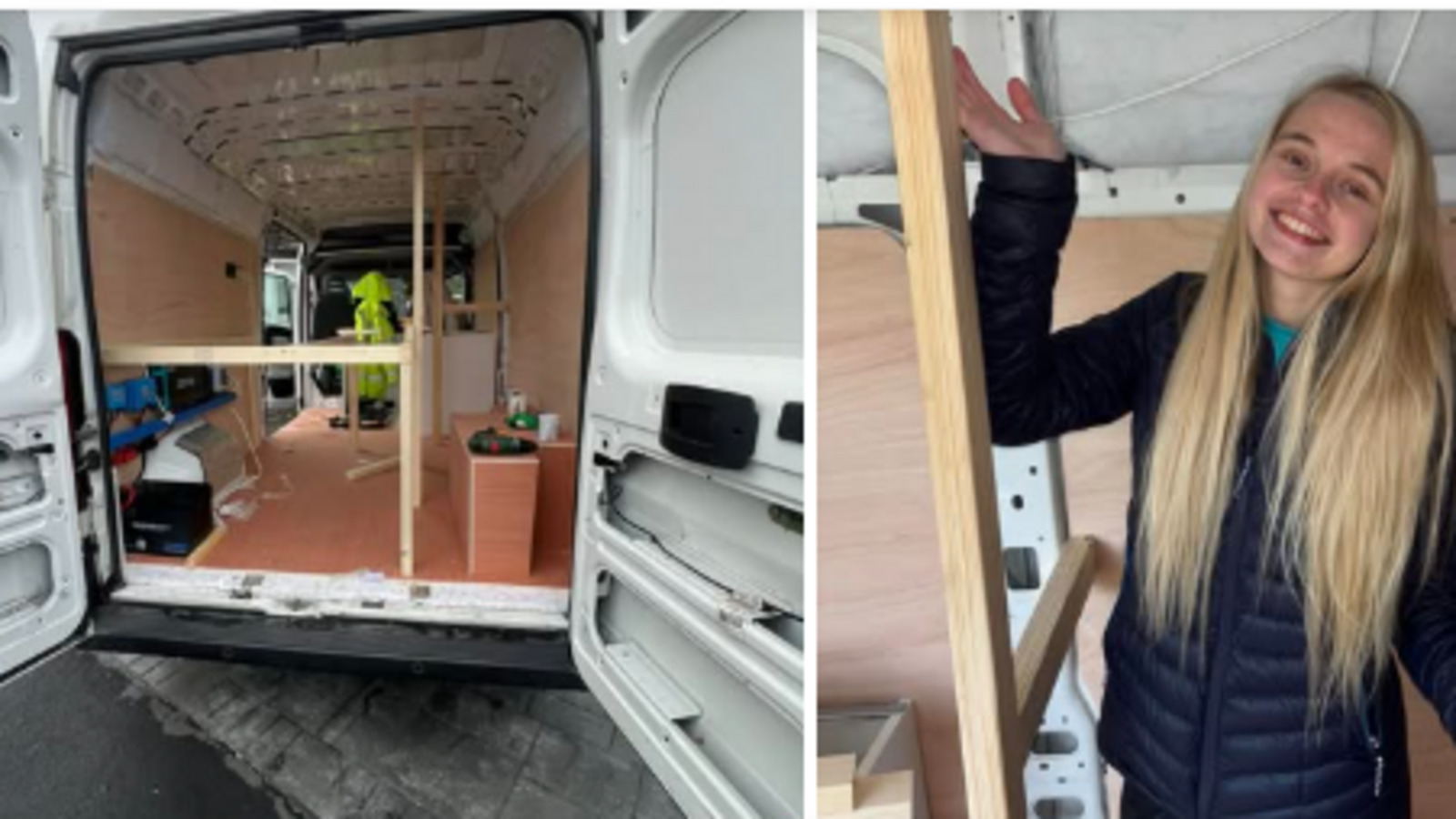
Tired of seeing her salary disappear with the mortgage, a 24-year-old sells her £125,000 house, buys a van for £13,000, invests £6,000, transforms the vehicle into a home, and decides to live on the roads of Europe.

-
As the polar cold wave freezes the South this week, archaeology reminds us how the Kaingang dug underground houses on the Santa Catarina plateau to survive frosts millennia ago.

-
Federal Police involved in the case to identify the person responsible for hacking the Civil Defense system, which sent ten false alerts, frightened residents of different capitals, and turned messages about real risks into notifications with “misanthropy” and even alien attacks.




The Engine-less Pegasus Barge and Transport of the SLS Core Stage

According to technical sheets published by NASA, the Pegasus does not have installed engines for propulsion and needs to be moved by tugs, a choice prioritizing stability and predictability in transporting cargo that cannot suffer deformation or damage during the crossing.
The size explains why the vessel attracts attention even outside the launch news: it measures 310 feet in length, equivalent to 94.4 meters, and 50 feet in width, about 15.24 meters, dimensions designed to accommodate long structures.
On deck, the usable area is smaller than the total length but remains ample by industrial logistics standards, with 240 feet in length, 36 feet in width, and 41 feet in usable height, space designed for securing and accommodating the core stage.
Michoud–Stennis–Kennedy Route in Artemis Program Logistics

On the route described by the agency itself, the core stage can leave Michoud heading to the Stennis Space Center in Mississippi, where testing occurs, before proceeding to the Kennedy Space Center in Florida for vehicle integration in the Vehicle Assembly Building (VAB).
NASA also provides time references to plan the movement: the journey from Michoud to Stennis takes approximately one day, while the leg from Stennis to Kennedy can last about six days, depending on the operational conditions of the trip.
Although these timelines are presented as estimates, records from previous missions show that the movement can vary, and the arrival of the first core stage at Kennedy, for example, was described by specialized vehicles as a nearly five-day journey from Stennis.
200 kW Generators and Electric Support During the Crossing

To support operations during the journey, NASA’s technical documentation states that the Pegasus has three 200-kilowatt generators, responsible for providing energy on board, a resource linked to support needs and routines for transporting the hardware.
This detail reinforces that the barge functions as an active logistics platform, not just as a “hull” for cargo, as the trip involves monitoring, safety procedures, and careful preparation to maintain the integrity of a central rocket component.
On the other hand, the lack of its own propulsion keeps the Pegasus dependent on tugs and detailed navigation coordination through rivers and coastal stretches, which helps explain why Artemis scheduling includes steps that begin long before the countdown.
Expansion of the Pegasus to Accommodate the SLS Core Stage
The barge underwent adaptations to meet the SLS, and NASA records in its sheets and reference materials that the Pegasus was extended from 260 feet to 310 feet, an adjustment made to accommodate the core stage, whose length exceeds loads associated with previous programs.

In detailing the vessel’s role, the agency also highlights that the Pegasus was designed to transport the “flight-ready” core stage to Stennis for testing and then to Kennedy, where integration with other elements of the SLS occurs before the final movement to the launch complex.
In this flow, the core stage arrives at the VAB to join with other SLS components and, when applicable to the mission profile, with the Orion spacecraft, following the logic of an industrial chain in which transport, inspection, and assembly need to operate in the same rhythm.
While the rocket concentrates the technological showcase, the Pegasus highlights a pragmatic side of the lunar program: moving a gigantic structure by water, with stability and coordinated timelines, so that the hardware arrives intact at the starting point and is ready for testing and integration.


-

-

-

-

-

-

35 people reacted to this.