





 Portuguese
  English
  Spanish
  4 min of reading
  0 comments


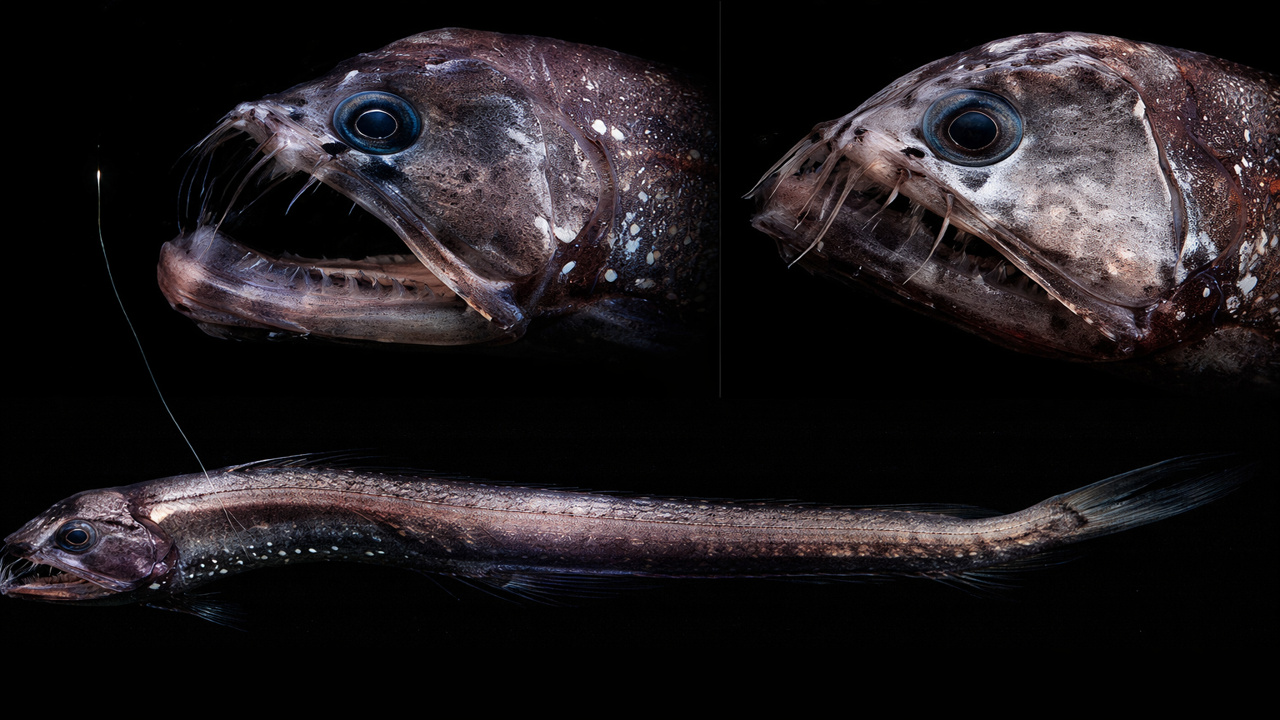
With Teeth So Long They Don’t Fit In The Mouth, Articulated Jaw And Bioluminescence To Attract Prey, The Viperfish Is An Extreme Predator Of The Ocean Depths.
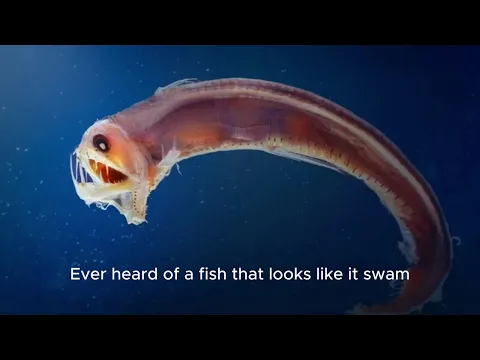
In the dark and cold zones of the open ocean, where sunlight barely whispers and pressure can exceed hundreds of atmospheres, lives a predator that seems straight out of a biological nightmare. The viperfish (Chauliodus spp.) is one of the most unusual creatures of the deep sea: its teeth are so long they can’t fit inside its own mouth, its jaw can open at extreme angles, and its attacks come without warning from within the abyssal darkness.
A Predator Adapted To Eternal Darkness
The viperfish inhabits the mesopelagic and bathypelagic zones of the oceans — bands that range from about 200 to over 2,000 meters deep, where sunlight practically does not reach. These regions, known as the “twilight zone” and “midnight zone,” require radical adaptations: intense cold, food scarcity, and fierce competition for every meal.
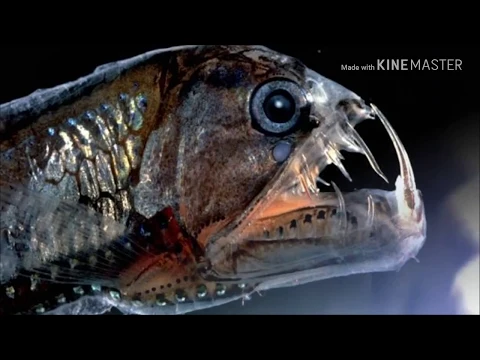

Despite its relatively modest size, typically up to ~30 cm in length — the viperfish occupies a prominent ecological role as a swift and specialized predator.
-
Forget the common mining dust: BHP combines 150,000 native plants, windbreak curtains, and real-time monitoring to reduce particles in Port Hedland, where iron ore stockpiles face strong winds and even cyclone-ready systems during port operations.

-
Scientists discover that tires are releasing invisible microplastics into city air, raising concerns about what we breathe every day.

-
Scientists have discovered a hidden underwater “portal” beneath the largest glacier in East Antarctica, capable of carrying warm water to the ice base; Totten drains a colossal basin with the potential to raise sea levels by more than 3.5 meters.
-
For the first time in history, scientists are observing the Pacific crust tearing on the ocean floor and revealing the birth of an underwater tectonic division.




Jaws That Challenge Typical Anatomy
Its most impressive feature is its mouth and teeth. Species of the genus Chauliodus have a highly flexible articulated lower jaw, allowing the fish to open its mouth at extremely wide angles, sometimes even complicating the fold of its own skull to accommodate the opening.
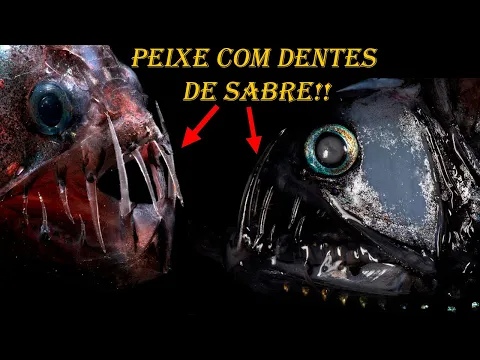
The teeth, long and sharp like fangs, are fixed to the bone and form a kind of cage when the mouth is closed, turning the capture into a lethal trap.
These teeth are so disproportionate that, if aligned with force in a closed skull, they could pierce vital areas; thus, the fish uses them as sharp spears to snag and retain prey while swallowing its meal whole.
Sneak Attack Strategy
The viperfish does not frantically chase its prey in long runs — it relies on patience and a calculated ambush technique.
By remaining relatively still in the water, it uses the shine of bioluminescent photophores along its body and in the first dorsal fin’s ray to attract curious victims in the deep darkness.
When something irresistible approaches, often small fish like lanternfish (myctophids) or crustaceans — it opens its jaw with extraordinary speed, projecting it forward and capturing its prey with the enormous curved teeth.
Eating Beyond Its Own “Capacity”
The physics of the jaws is not mere spectacle; it is functional. The viperfish can swallow prey that reaches more than 60% of its own length, thanks to the combination of its articulated jaw, expandable stomach, and effective grasping technique.
This type of biological engineering is vital in an environment where meals can be scarce; by managing to capture and ingest substantial food when the opportunity arises, it reduces the need to constantly search for food, saving energy in a habitat where every calorie counts.
Life Under Pressure: Adaptation To The Extreme
Life in the depths imposes challenges beyond hunting. The viperfish exhibits typical adaptations of abyssal fish: a slender and gelatinous body that facilitates buoyancy in deep waters, photophores that help confuse predators, and ultra-dark camouflage that reduces light reflection, making it nearly invisible even in the limited reach of the glow of other bioluminescent creatures.
Additionally, its less rigid skeletal structure and low body density allow it to withstand high hydrostatic pressures without damage, something essential for a life that may alternate between different depths throughout the day or night.
While being an enhanced predator, the viperfish also serves as prey for larger predators — larger abyssal fishes and some cephalopods may feed on smaller or juvenile individuals.
It thus acts as an interchangeable link in deep food webs, helping to control populations of smaller fish while simultaneously providing energy for top species.
A Predator That Never Sees The Sun
The viperfish is a clear reminder that animal life can adapt in surprising ways to the most extreme conditions. Its body is a set of evolutionary solutions for a world without light, where hunger is constant and every meal is an opportunity that may take days to repeat.
With its mobile jaw, horrifyingly long teeth, and dark ambush technique, it is not just a strange fish — it is a predatory efficiency machine, refined over millions of years in the abyssal depths of the ocean.





-

-

2 people reacted to this.