






 Portuguese
  Spanish
 4 min of reading
  0 comments


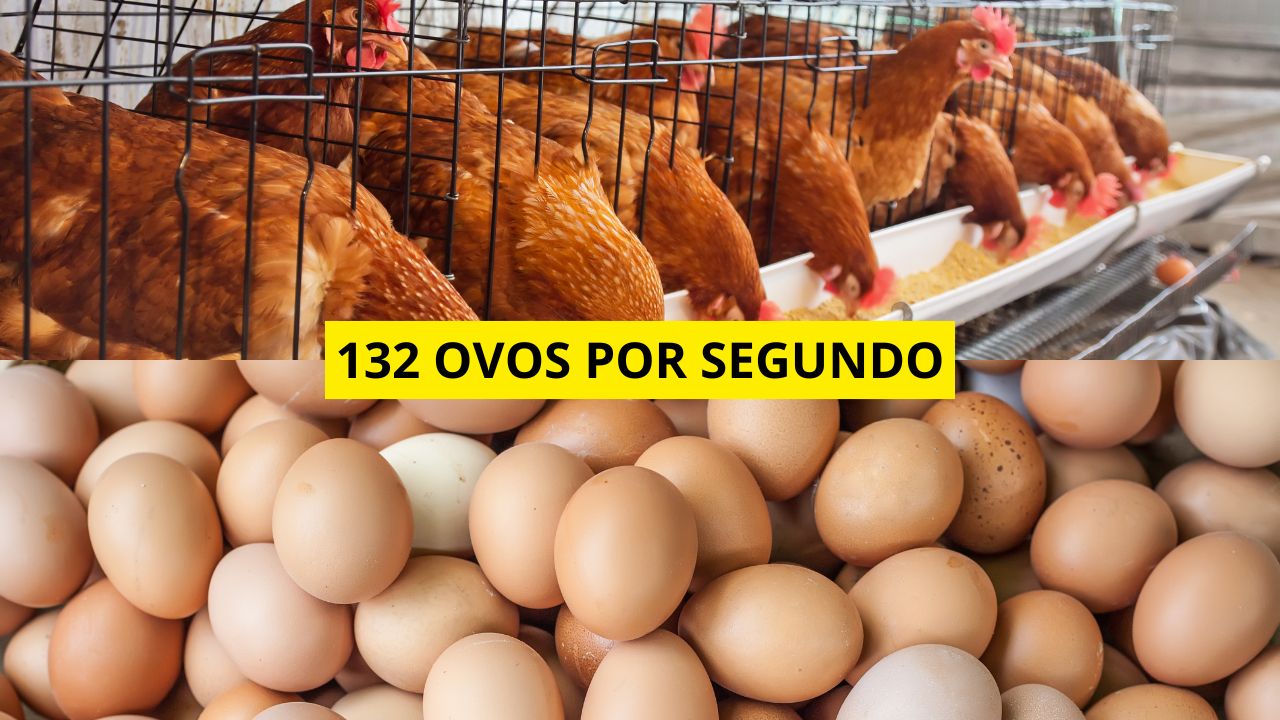
The Story of the City That Became the Egg Capital by Producing 132 Eggs Per Second. Discover How This Egg Production Changed the Economy, Technology, and Egg Market in Brazil.
According to information from Compre Rural, in the municipality of Santa Maria de Jetibá (ES), known as the “egg capital,” egg production exceeds 132 eggs per second, according to recent data from the sector. With approximately 41,000 inhabitants and around 20 million laying hens, the city has reached a mark of 4.16 billion eggs per year — and this volume has made it stand out in the Brazilian poultry market.
The transformation happened over decades, combining tradition, technology, and strategic choices, and the reason is clear: to take advantage of the climate, terrain, and history to develop an efficient and recognized egg production chain.
Monumental Scale Production and the Role of Eggs
In Santa Maria de Jetibá, the volume of eggs is impressive: there are 4.16 billion per year, which is equivalent to the previously mentioned 132 eggs per second.
-
After nearly 200 years of history, Stanley’s iconic factory shuts down operations in the USA, eliminates 300 jobs, and reveals a change that is transforming the tool industry.

-
Country making its World Cup debut has only 61 m³ of water per person per year, suffers from scarcity, and is betting on a megaproject to draw water from the Red Sea to the capital.

-
Former truck driver wakes up at 2 a.m., fills 28 thermos bottles with coffee, and sells them in Anhanguera traffic without charging at the moment, trusting that drivers will pay later via Pix.

-
A R$ 2 part turned into a R$ 120 service, and cell phone repair has become one of the most profitable businesses in Brazil, with an entrepreneur who has already trained 5,000 technicians after finding the course unsatisfactory.



This scale of production highlights the importance of eggs as a central product of the local economy, reinforcing the nickname “egg capital.”
Furthermore, the production chain is not limited to the sale of eggs themselves but involves producing families, logistics, genetics, and technology — factors that have allowed for this level of prominence in the sector.
Geographical, Historical, and Structural Factors That Boosted the Egg Capital
The mountainous region of Espírito Santo has proven to be particularly suitable for laying poultry farming.
With altitudes around 700 meters and a mild climate, thermal stress on hens is lower — which improves feed conversion and the quality of the eggs produced.
However, the development was not spontaneous: European immigrants introduced poultry farming about 60 years ago, allowing techniques to be adapted locally and forming a concentrated egg production culture.
Technology, Innovation, and Sustainability in the Egg Chain
Part of the success of the “egg capital” lies in the use of technology and good management practices. For example, automated barns with climate control, scheduled feeding, and strict biosecurity help increase productivity and the quality of the eggs.
Additionally, the use of waste treatment systems, water utilization, and good environmental practices consolidate the production chain as a model.
All of this helps explain why the eggs produced there have competitiveness and scale.
Economic Impact of Eggs for the City and for Brazil
Eggs are not just food: in the “egg capital,” this chain represents more than 30% of the local economy, considering the entire agroindustry involving inputs, processing, and distribution.
At the national level, Brazil already produces about 1,800 eggs per second — and this growth is reflected in per capita consumption, which jumped from 120 eggs in 2007 to 269 eggs in 2024.
Thus, eggs play a central role both locally and in the food landscape of Brazil.
Challenges That the Egg Chain of the Egg Capital Faces
Despite the prominence, producing eggs on a large scale is not without obstacles.
Among the challenges are high input costs (such as corn and soybeans), complex logistics for transport and refrigeration, as well as sanitary risks that can quickly affect the production chain.
Additionally, sustainability requires continuous investments for efficient management, and the availability of skilled labor also proves to be a bottleneck.
The Trajectory of the Egg Capital in National Scope
From a small municipality, Santa Maria de Jetibá has become a national reference in egg production — not only by volume but also by the management model adopted.
The city integrates the entire chain: genetics of birds, nutrition, processing, logistics, and distribution.
This prominence makes it an example of how community, technology, and strategic vision can transform a locality into a significant egg production hub.
In summary, the eggs produced in this city represent more than mere products: they symbolize an economic and social transformation.
By becoming the true “egg capital,” Santa Maria de Jetibá shows that with planning, investment, and innovation, it is possible to elevate a modest municipality to the top of the egg production chain.
Meanwhile, challenges persist — but the trajectory illustrates that eggs have much to say about productivity, the rural landscape, and the food future in Brazil.
Source: Compre Rural





-

-

-

-

-

27 people reacted to this.