Portuguese
  Spanish


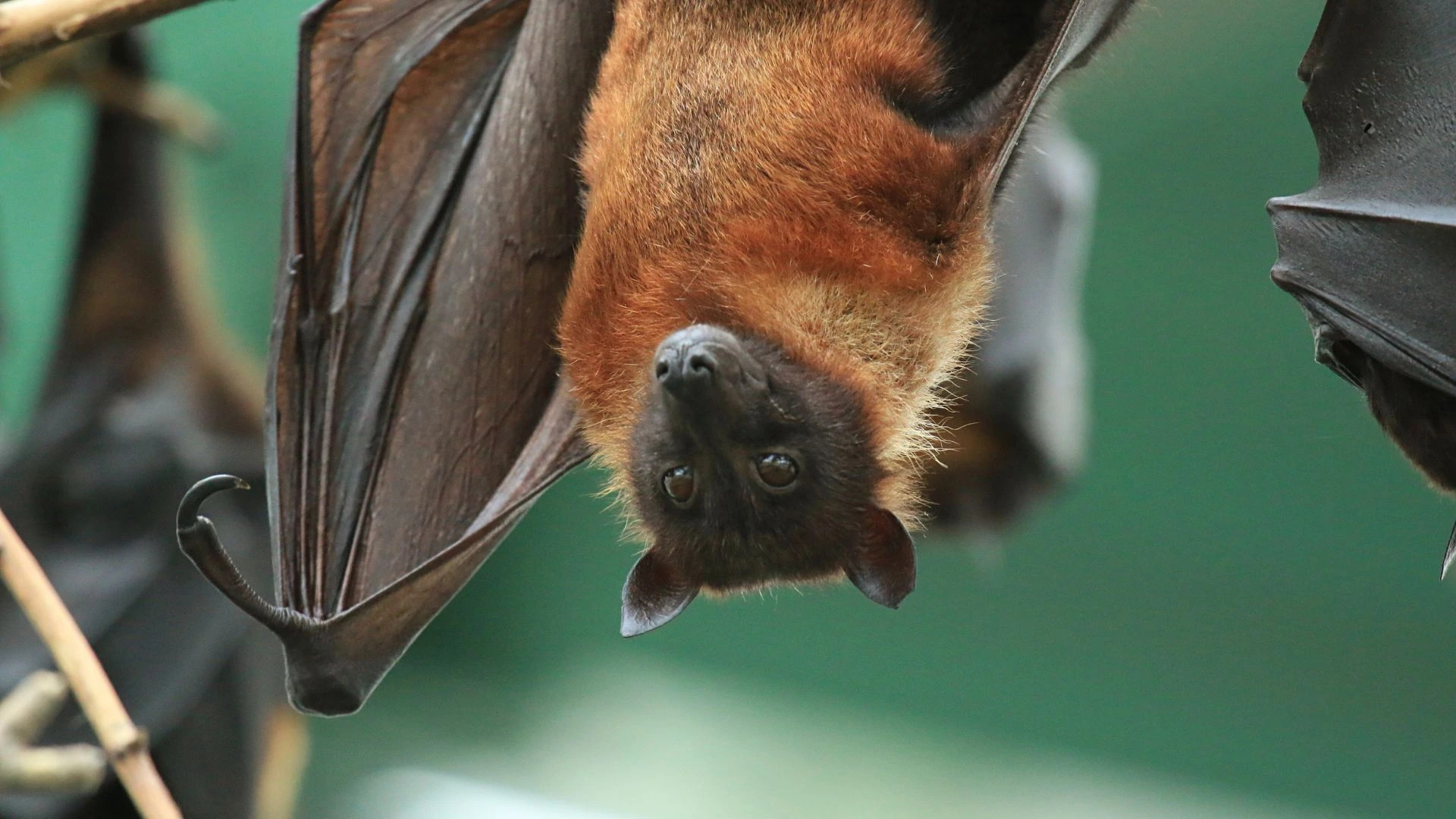


Flying Fox Is a Reservoir of the Nipah Virus; Expert Explains Recent Outbreaks in Asia, the Role of Giant Bats, and Why Brazil Monitors the Sanitary Alert. Check How to Recognize the Bat.
The reappearance of the Nipah virus in international news has reignited a debate that goes far beyond isolated outbreaks in Asia. At the center of this discussion is the flying fox, the common name for bats of the genus Pteropus, large frugivorous animals crucial for the ecological balance of tropical forests. With a wingspan that can approach two meters, these species draw attention not only for their size but also for their role as natural reservoirs of the virus, one of the deadliest ever identified among known zoonoses.
Although the topic generates concern, experts emphasize that understanding the role of bats is essential to avoid misinformation and misguided reactions, especially when the issue reaches countries outside the virus’s circulation area, such as Brazil.
The flying fox does not deliberately transmit the virus nor shows symptoms. Nipah circulates in these bats silently, potentially being eliminated in secretions and bodily fluids. Human infection occurs, historically, through indirect contact, usually associated with environments where there is intense overlap between wildlife, livestock, and human habitation.
-
World Cup Ball Chip Uses Technology to Detect Invisible Touches, Confirms Offside, Secures Portugal’s Victory Over Croatia

-
36-Meter Hydrogen-Powered Superyacht Arrives in Brazil to Debut German Engines and Showcase Future of Clean Navigation

-
Indian Students from Jaipur Win Top Prize at World’s Largest Science Fair with EcoFog, an Affordable Mesh to Harvest Fog Water Without Energy

-
Italy Sinks Massive 11-Story Concrete Structures in the Ligurian Sea to Create a 6.2 km Barrier, Clearing the Way for 400-Meter Ships in Genoa




One of the Largest Bats in the World


The flying fox, the common name given to several species of the genus Pteropus, is among the largest bats in existence. Some individuals reach up to 2 meters in wingspan, with long wings, robust bodies, and weights that can exceed 1.5 kg.
Unlike the small bats commonly found in urban areas, its appearance resembles that of a small winged terrestrial mammal, with an elongated snout, large eyes, and extremely developed vision.
These bats primarily inhabit tropical and subtropical regions of Asia, Oceania, and parts of Africa, living in colonies that can gather thousands of individuals hanging from tall trees during the day.
Frugivorous Diet and Critical Ecological Role
The flying fox is exclusively frugivorous and nectarivorous. Its diet includes ripe fruits, flowers, and nectar, making it one of the main seed dispersers in tropical forests.
By feeding and flying for miles in a single night, these bats spread seeds over large areas, directly contributing to forest regeneration and the maintenance of biodiversity.
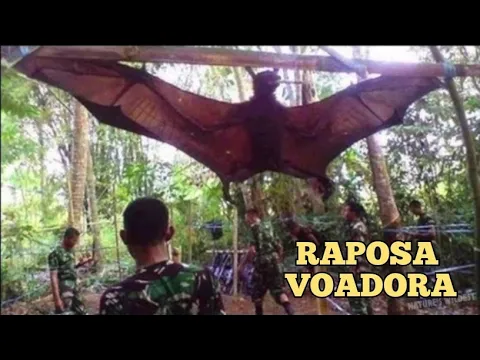
Ecological studies show that several tree species depend almost exclusively on these bats for efficient reproduction. Without them, the structure of the forest changes, biodiversity declines, and the recovery of degraded areas becomes much slower.
The Bat as a Natural Reservoir of the Nipah Virus
From a health perspective, the flying fox has gained worldwide attention for being the primary natural reservoir of the Nipah virus, a zoonotic pathogen with a high fatality rate in humans. The central point is that the bat does not get sick: the virus circulates asymptomatically in its body.
Transmission does not occur through attacks or casual contact. The risk arises when there is indirect contamination, such as bitten fruits, urine, or saliva left in the environment, especially in areas where humans, livestock, and bat colonies have come to coexist forcibly after deforestation and agricultural expansion.
Why Outbreaks Put the Bat on the Global Radar
Recent cases in India and other Asian countries have reignited the international alert because they show a recurring pattern: the problem is not the animal, but the loss of distance between natural ecosystems and human activities. Whenever forests are fragmented, bats seek food in agricultural or urban areas, increasing the chances of indirect contact.
Therefore, health authorities monitor the virus but also emphasize that eliminating or chasing bats does not reduce the risk — on the contrary, it can worsen it by disrupting colonies and increasing the dispersion of the pathogen.
How to Recognize a Flying Fox
Visually, the flying fox stands out easily. Its body is large, the wings are long and narrow, and its face resembles that of a small dog or fox, with large eyes and a well-defined expression. In flight, it is often confused with large birds due to its size and silent movement.
Despite its imposing appearance, it is a non-aggressive animal, essentially peaceful and vital for ecological balance.
What Experts Say About the Nipah Virus
According to international experts consulted by European scientific centers, the Nipah virus does not present a high capacity for sustained transmission among humans, which limits its spread on a large scale. In an analysis released by the Science Media Centre, researchers emphasize that the outbreaks recorded to date have been localized and controlled by swift public health measures.

In a recent positioning, the World Health Organization (WHO) reinforced this assessment. A spokesperson for the organization stated that, despite the severity of individual cases, “the risk of global spread of the Nipah virus is currently considered low, with no signs of spread beyond the affected regions”, highlighting that there are no indications of sustained community transmission outside Asia.
In Brazil, infectious disease specialists also adopt a technical and cautious stance. In interviews with the national press, experts explained that there have been no records of the Nipah virus in Brazilian territory, neither in humans nor in bats. According to them, the introduction of the virus would require an extremely specific epidemiological chain, making the scenario highly unlikely in the current context.
Why Brazil Monitors the Alert, Even Without Cases
The Brazilian monitoring does not mean an imminent risk. It reflects a strategy of preventive health surveillance, common in an increasingly connected world. Experts remind us that Brazil is home to a vast diversity of bats, but species of the genus Pteropus do not belong to the local fauna, which further reduces the possibility of natural circulation of the virus.
Still, authorities and researchers monitor the topic for a central reason: understanding how outbreaks arise on other continents helps anticipate responses, strengthen surveillance systems, and improve laboratory protocols for emerging diseases.
This monitoring is seen as part of a global preparation effort, not as a reaction to a concrete threat.
The Real Risk Is Not with the Bat, But in the Relationship with the Environment
A point highlighted by experts is that the bat is not the problem. The risk arises when urban expansion, deforestation, and agricultural intensification create artificial contact zones between humans, domestic animals, and wildlife. It was this type of scenario that favored previous outbreaks of Nipah in Southeast Asia.
Pursuing or eliminating bats, researchers warn, can increase the risk, by stressing animal populations and enhancing viral dispersion. Science points precisely in the opposite direction: conservation, monitoring, and reducing unnecessary contacts.
An Alert That Is Scientific, Not Alarmist
The flying fox has become a symbol of a larger debate on zoonoses, ecology, and global health. The Nipah virus remains rare, geographically restricted, and difficult to transmit, but its high lethality means that any reappearance generates immediate attention.
As the WHO summarized, monitoring is not alarming. It is understanding, anticipating, and responding based on evidence. For Brazil, the alert serves as a reminder that human health, wildlife, and the environment are deeply connected and that qualified information is the best tool to prevent both outbreaks and panic.