






 Portuguese
  Spanish


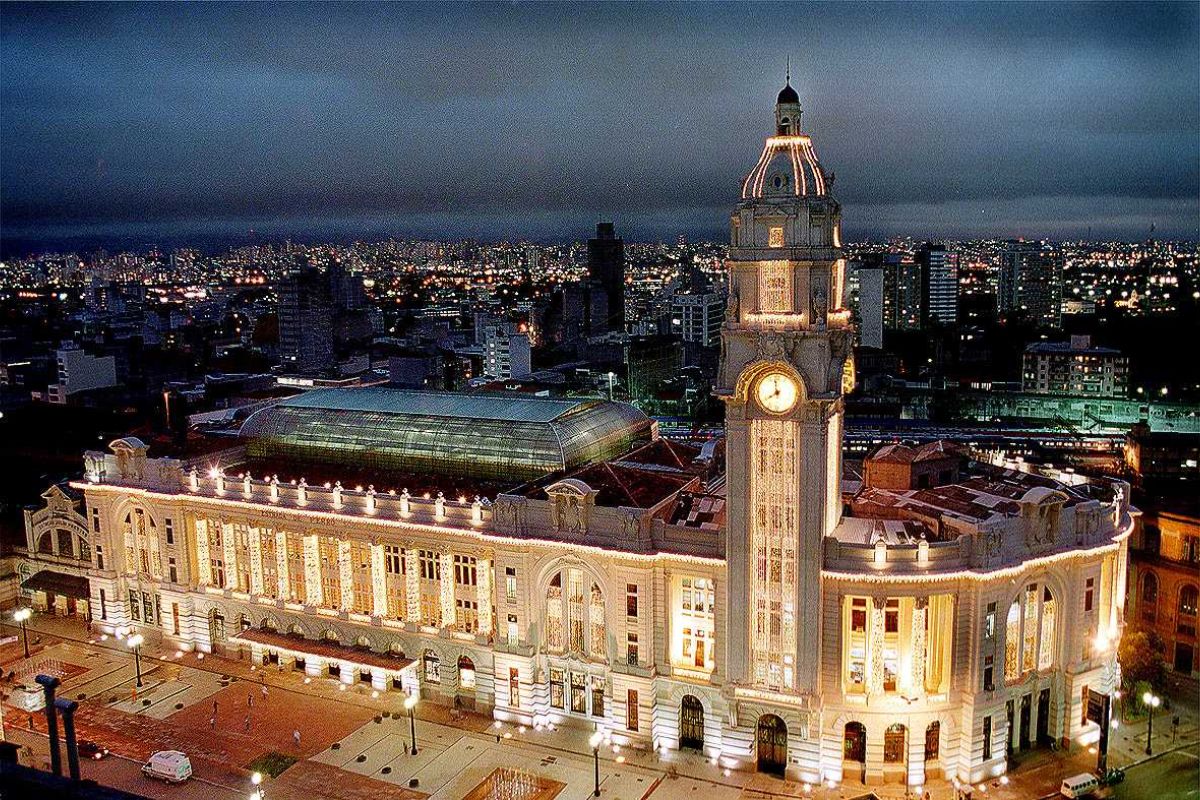

Unveiling The History And Function Of The Victorian Engineering Gem That Became One Of The Greatest Symbols Of The Paulista Capital.
Many see it, but few know the secrets of its engineering. We dived into the history and mechanics of the clock at Estação da Luz to understand how this extraordinary machine, manufactured in London in 1899, survived the test of time, a major fire, and continues to operate with precision, being one of the most iconic tourist spots in SP.
For the millions of passengers who cross downtown São Paulo every day, it is a constant reference on the horizon. The tower of Estação da Luz, with its imposing clock, is more than an architectural landmark; it has been the guardian of the city’s time for over a century. But while its hands mark the bustling routine of the metropolis, inside, a 19th-century machine works at its own pace, powered by pendulums, weights, and gears from a bygone era.
Does The Clock At Estação Da Luz Still Work With The Original Machinery?
Yes, and that is the most impressive part of its story. Despite the major fire that hit the station and the Museum of the Portuguese Language in 2015, the clock’s machinery, protected high in the tower, survived with minimal damage and was completely restored. The machine that marks the hours today is the same one installed in 1901, made by the renowned English company Dimbleby & Son.
-
Nigerian Housing Crisis Addressed with Innovative Solution: Architect Builds Solar-Powered Modular Homes from Recycled Waste in Just 4 Hours for Low-Income Families

-
Mushrooms, orange peels, and agricultural waste are being turned into insulation panels for construction, replacing conventional materials with grown rather than manufactured walls.

-
House Built with 1.5 Tons of Recycled Plastic Completed in 10 Days in India, Transforming a Waste Picker’s Life and Tackling Urban Waste

-
Brightline to Connect Los Angeles and Las Vegas in Two Hours with the First U.S. Electric High-Speed Train, a $12 Billion Project Aiming to Reduce Road Traffic




The heart of the system is a classic example of the finest mechanical watchmaking. It operates based on a 4-meter long pendulum system, whose constant and precise oscillation regulates the speed of the gears. All the force to move the gigantic hands comes from a set of weights that, while slowly descending through the tower, transfer their energy to the mechanism.
Who Winds The Clock?
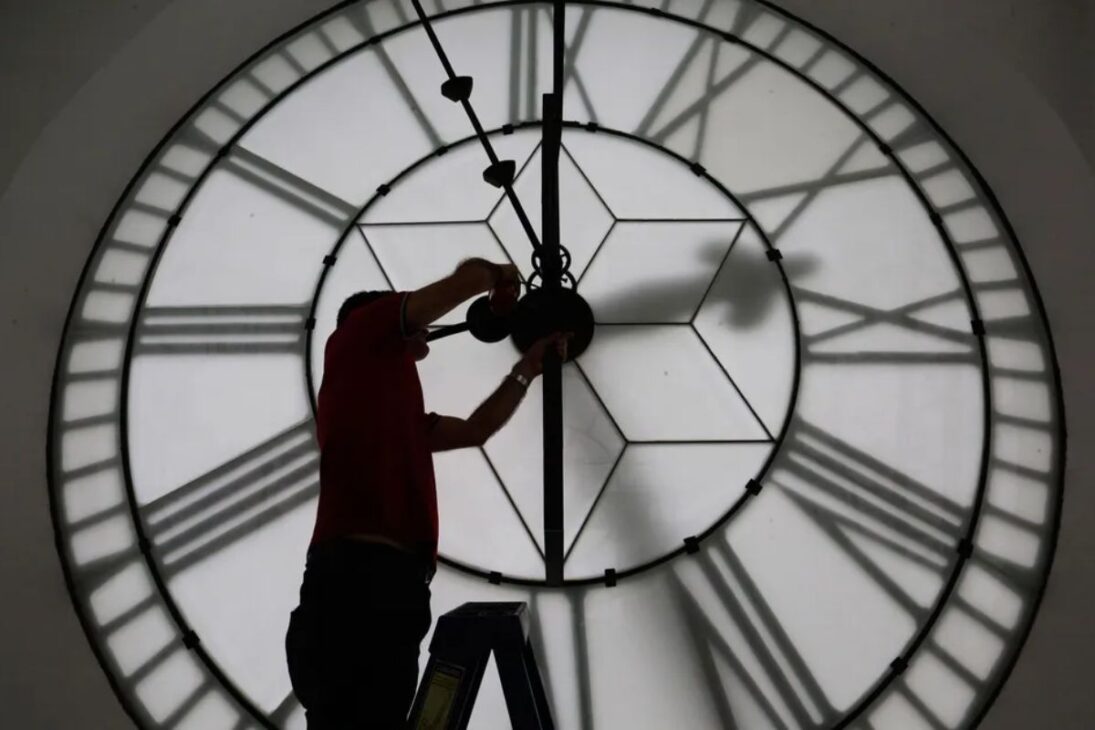
Originally, the clock needed to be manually “wound.” Once a week, a clockmaker would climb to the top of the tower to raise the heavy counterweights back to their initial position, a task that ensured the machine would run for another seven days. It was a ritual that kept São Paulo’s time moving for decades.
Today, the process has been modernized to ensure accuracy and reduce the need for human intervention. The original weight system has been preserved, but an electric motor has been installed to lift them automatically. A maintenance and engineering team from CPTM is responsible for caring for this gem of the history of Estação da Luz, performing periodic inspections and lubrications to ensure that the century-old machine continues to operate perfectly.
How Tall Is The Clock Tower In São Paulo?
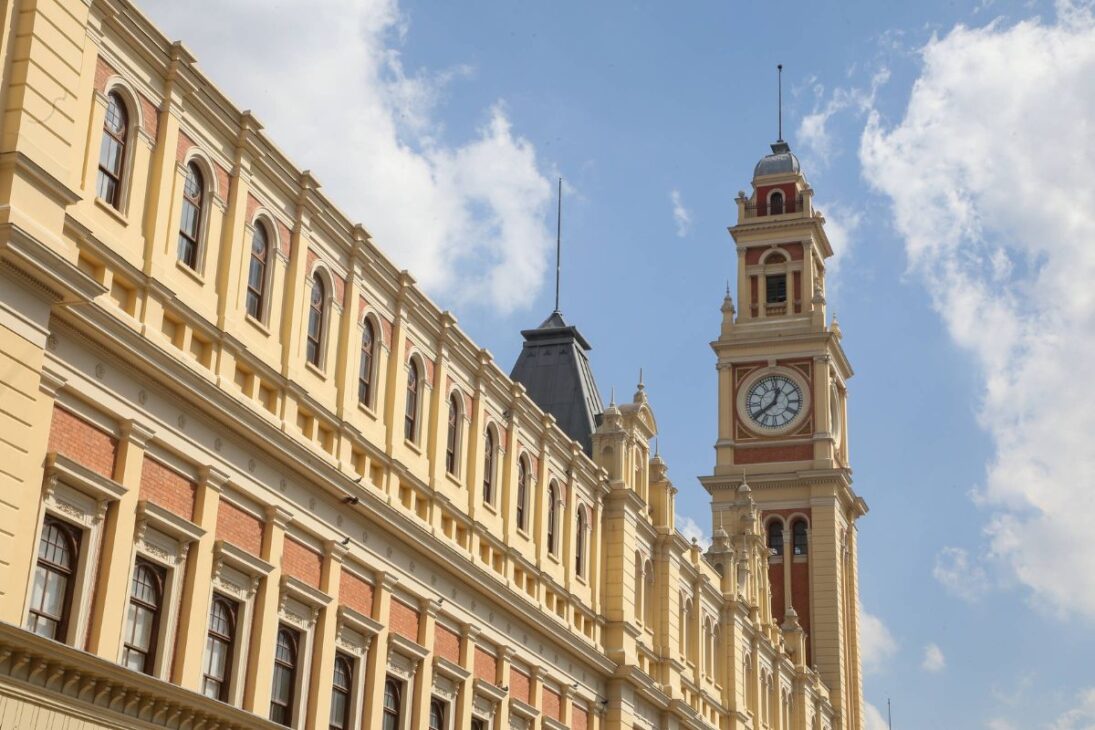
The tower that houses the clock is one of the tallest and most visible points in the city’s historical center. The height of the Estação da Luz tower is 50 meters, equivalent to a building of approximately 16 floors. Its structure was inspired by the architecture of Victorian train stations in England, and the clock was designed to be seen from afar, serving as the main time reference for citizens at a time when wristwatches were not common.
The four clock faces, one for each side of the tower, have a diameter of 6 meters, a monumental scale that required a robust internal mechanism to move its heavy copper hands.
Is The Clock The “Big Ben” Of São Paulo?
The comparison is inevitable, and the nickname “Paulista Big Ben” is often used to refer to the clock. The inspiration is clear: the clock tower in São Paulo was built by the same civil engineering company that constructed the Flinders Street station in Melbourne, Australia, and follows the same architectural style as the Palace of Westminster in London, where the original Big Ben is located.
Although it is smaller in scale, the function and symbolic importance are the same. Both were created to be high-precision public clocks, symbols of industrial power and punctuality in the Victorian era. The Paulista clock not only indicated the departure and arrival of coffee trains but dictated the rhythm of the whole city around it. Understanding how a tower clock like this works is to understand a piece of the history of São Paulo’s very urbanization.
What other building or historical monument in your city would you like to see a complete “X-ray” of its engineering and history?


