






 Portuguese
  Spanish


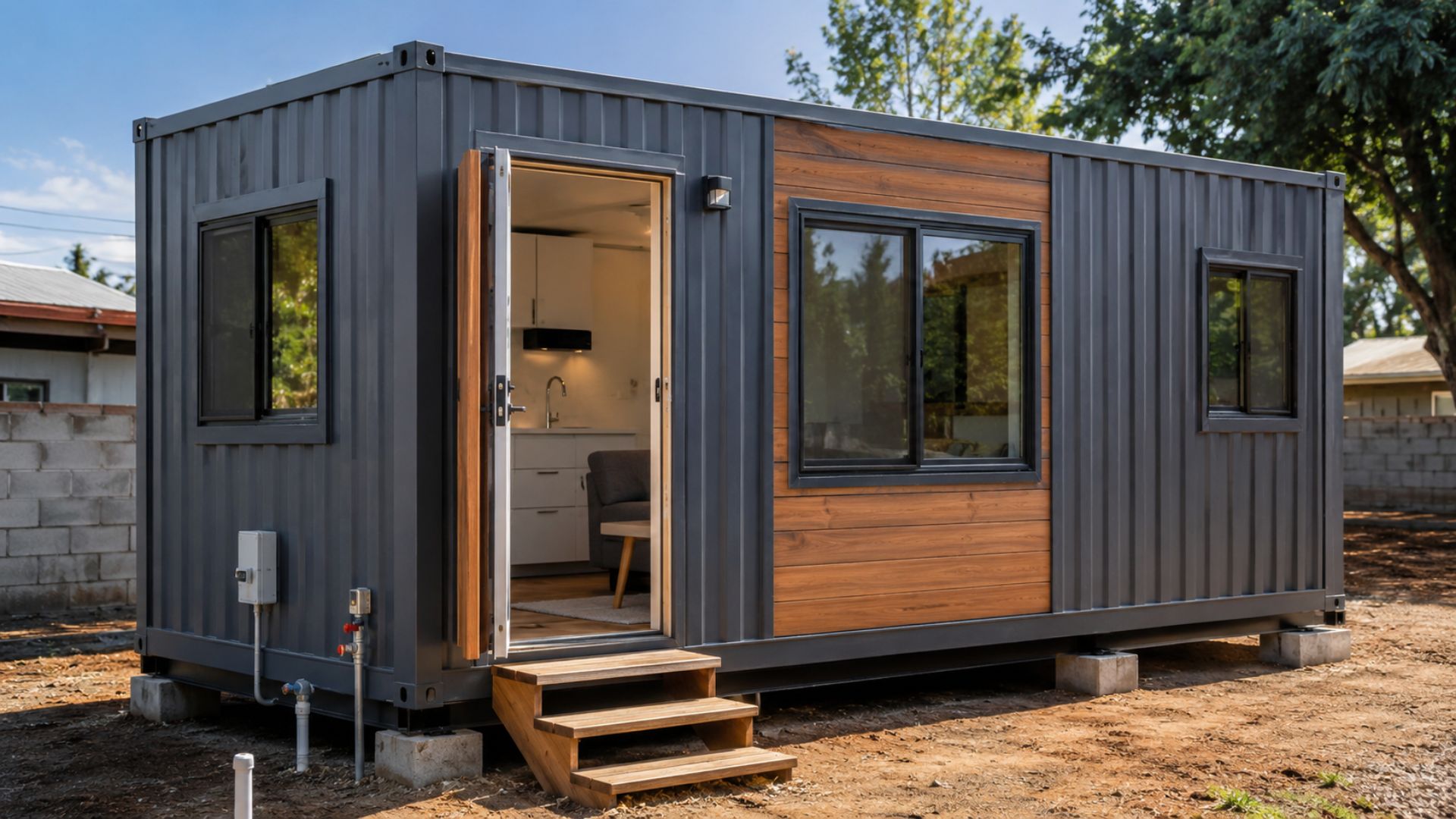

The company Adriel Azul Containers, from Boituva, in the interior of São Paulo, completed a standard project of approximately 30 square meters for the value of R$ 76.500. The client, coming from the capital, received the structure with electrical, plumbing, painting, doors and windows assembled, and only needed to connect water, electricity, and sewage.
The discussion about housing costs gained a practical example in the interior of São Paulo. The company Adriel Azul Containers delivered in Boituva, in the business’s own headquarters city, a container house with two bedrooms for the value of R$ 76.500, with all the constructive part resolved in the factory.
The buyer, identified as Elton, left São Paulo and moved to the unit in a residential development in the city. He received the ready-made property, with electrical, plumbing, painting, doors and windows installed, and only needed to arrange the connection of public services before starting to use the space.
How the land and the position of the container house turned out

The land chosen to receive the structure is 7 meters wide by 20 meters long, completely flat and already prepared for the arrival of the property. Before delivery, the owner took care of the basic infrastructure of the lot, with a wall, gate, sidewalk, electricity pole, and raft foundation, the concrete base that supports the unit.
-
Alert in Santa Catarina: the Anita Garibaldi Bridge on BR-101 is completely closed in both directions due to “structural risk,” and drivers are diverted to a 20 km/h detour that promises kilometer-long queues until July 20.

-
More than 6,000 trucks poured nearly 70,000 cubic meters of concrete without interruption for 72 hours to create the largest continuous concrete pour in history and erect a megaproject in Saudi Arabia.
-
28-meter, 156-ton titans traveled 20,000 km from China to the port of Santa Catarina: Portonave received 7 fully electric megacranes, part of a R$ 210 million package, to double container handling.
-
They exchanged the idea of a large house for a 35 m² warehouse, spent US$ 12,000 on the structure, and created a tiny house in Colorado with space to live and work.




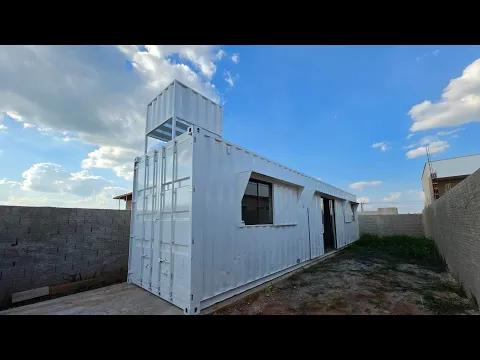
The positioning followed a simple municipal rule, very common in Brazilian subdivisions. The city hall requires a minimum setback of 4 meters between the front of the land and the facade, so the container house had to be set back from the street to respect this legal limit.
The leftover space in the front ended up becoming an extra area for the resident. It can receive a simple cover to store a bicycle, motorcycle, or become a future service area, preventing that piece of concrete from being without function in the daily life of the residence.
The original container door faced the street, kept welded for aesthetic and security reasons. This ensured the striking visual typical of this type of housing, without compromising the internal use of the property, as actual access occurs through the conventional doors included in the project.
Technical infrastructure resolved at the factory

One of the points that most surprises those who have never followed such a project is the level of preparation delivered by the company. The unit arrives at the land practically ready, with most of the installations completed and identified for immediate use.
Outside, the client already found a water meter stand, power point, conduit directed to the internal panel, and a sewage box connected to the street network. Each pipe and each outlet arrived at the land positioned near where the house would be placed, greatly facilitating the final connection stage.
The house also came with its own shelter for the gas cylinder, an external wall light, a bathroom window, and identified pipes for the washbasin, toilet, drain, and kitchen sink. The sewage was connected by an open trench on the land, following the subdivision guidelines.
The water tank was positioned in front of the unit, precisely to reduce the distance to the main connections. This type of prior planning is what allows the resident to move in within a few days, instead of waiting weeks as happens with traditional constructions.
The two-bedroom floor plan in just over 30 square meters

Inside, the project follows a standard model that the company repeats in other deliveries. The kitchen appears integrated with a small living room, a format that allows the resident to choose whether that space will be used as a dining room or a living room.
The kitchen was designed with a counter, space for a four-burner stove, refrigerator, and cabinets in the back to complement the use of space. The choice of two bedrooms, each 3 meters long, ended up slightly compressing the social area, a decision aligned with the client’s priority.
The bedrooms received laminate flooring, blindex windows, a dedicated electrical point for air conditioning, and LED lighting. The number of power outlets was reinforced, a detail often overlooked in small projects but which makes a difference in the routine of those who work from home or use many appliances.
The bathroom is at the end of the hallway, with white tiling, a corner shower, toilet, sink, and vinyl flooring. The ensemble completed a functional plan for up to three people, with the possibility of adaptation if the resident prefers to use one of the bedrooms as a TV room with a sofa bed, a common format in small houses.
The R$ 76,500 budget and what’s included
The full price of the project was R$ 76,500, a value that includes all construction and the company’s standard finish. This model is marketed as the best cost-benefit line, and the representative of Adriel Azul Containers emphasized that the price list is sensitive to variations in inputs.
Paint, plumbing, and steel remain high in the Brazilian market, which pressures the budget for this type of housing. The buyer receives the unit with electrical, plumbing, painting, doors, windows, and a circuit breaker panel already assembled and identified, item by item, without needing to hire additional professionals for these tasks.
The house also features security protections on the windows, which function as a lock when the resident is away. Some people also use this piece as an element to darken the environment, although the main purpose is protection against invasions.
What’s left for the client is to take care of the water, energy, and sewage connections, a step that depends on the local utility company and the progress of the paperwork. After that, it’s just a matter of moving in and starting to inhabit the property, a stage that usually happens in much shorter timeframes than conventional masonry constructions.
Possibility of expanding the project in the future
Those who opt for a container house usually think of expansions as part of the plan. In the case of Boituva, the land left considerable space behind the unit, an area that could, for example, receive a gourmet space in the future.
Expanding to the back of the lot requires specific logistics. As the rear area is more difficult to access, it is usually necessary to use a crane to position a new structure, the same equipment that was used to place the original unit on the foundation prepared by the client.
Another possibility is vertical growth, with the installation of a second container on top of the current one. This model is common in projects in this segment and allows for doubling the usable area without occupying more space on the land, creating extra bedrooms or leisure areas on the upper floor.
The subdivision street was described as suitable for receiving a crane, which enables any future expansion. The company itself indicated that it can use a truck-mounted crane (munck truck) to transport smaller containers, about 6 meters long, in other situations where the property gate allows the equipment to enter.
Remote negotiation and the boom of this format in Brazil
A curious detail of this specific project lies in how the deal was closed. Even though they lived in the same city as the factory, the client and company signed the contract, conducted inspections, and made the delivery remotely, without meeting in person until the move.
This relationship model shows how the segment has adapted to the digital habits of the last decade. Trust in videos, testimonials, and portfolios published on social media has become key to closing deals without in-person visits, especially when the client has been following the builder’s work for a long time as a follower.
The delivery in Boituva itself gains symbolic relevance in this logic. The city hosts the headquarters of Adriel Azul Containers, but even so, the client went through the entire process remotely, a sign of how this type of acquisition increasingly resembles an online purchase of an industrial product.
For those who follow the real estate market, this case illustrates a real alternative to the high costs of traditional masonry. It doesn’t replace all resident profiles, but it serves those looking for speed, budget predictability, and flexibility to move cities without losing years in construction.
And you, would you consider living in a two-bedroom container house for less than R$ 80,000, even knowing the space limitations and the adaptations necessary for this routine, different from a traditional masonry house?
Tell us in the comments if you believe this model can indeed become a large-scale housing alternative in Brazil, if you have already visited a similar project in your region, and what you would change in the floor plan delivered in Boituva. The discussion helps to understand how Brazilians are rethinking the way they live in times of expensive rent and high construction material costs.








Apparently designed in the tropics, yet no specific measures are indicated to prevent heating up, cooling of the unit, adaption to renewable energy such as solar panels, hot water storage and accumulation. Don’t make me think it’s just another one of many similar tiny container houses.