Portuguese
  Spanish


Structure in the Arizona Desert Reproduced Earth Ecosystems, Challenging a Group to Survive Isolated for Two Years and Revealing Unexpected Obstacles, Environmental Risks, and Scientific Discoveries with Impact for the Future of the Planet.
In the early 1990s, a group of eight volunteers completely isolated themselves from the world in a glass-encased laboratory in the middle of the Arizona desert, in the United States, with the goal of simulating life in a mini self-sustaining Earth.
The experiment, conducted between September 1991 and September 1993, became known as Biosphere 2 and sought to replicate the planet’s major ecological systems on a reduced scale, challenging the limits of human and ecological self-sufficiency under extreme confinement conditions.
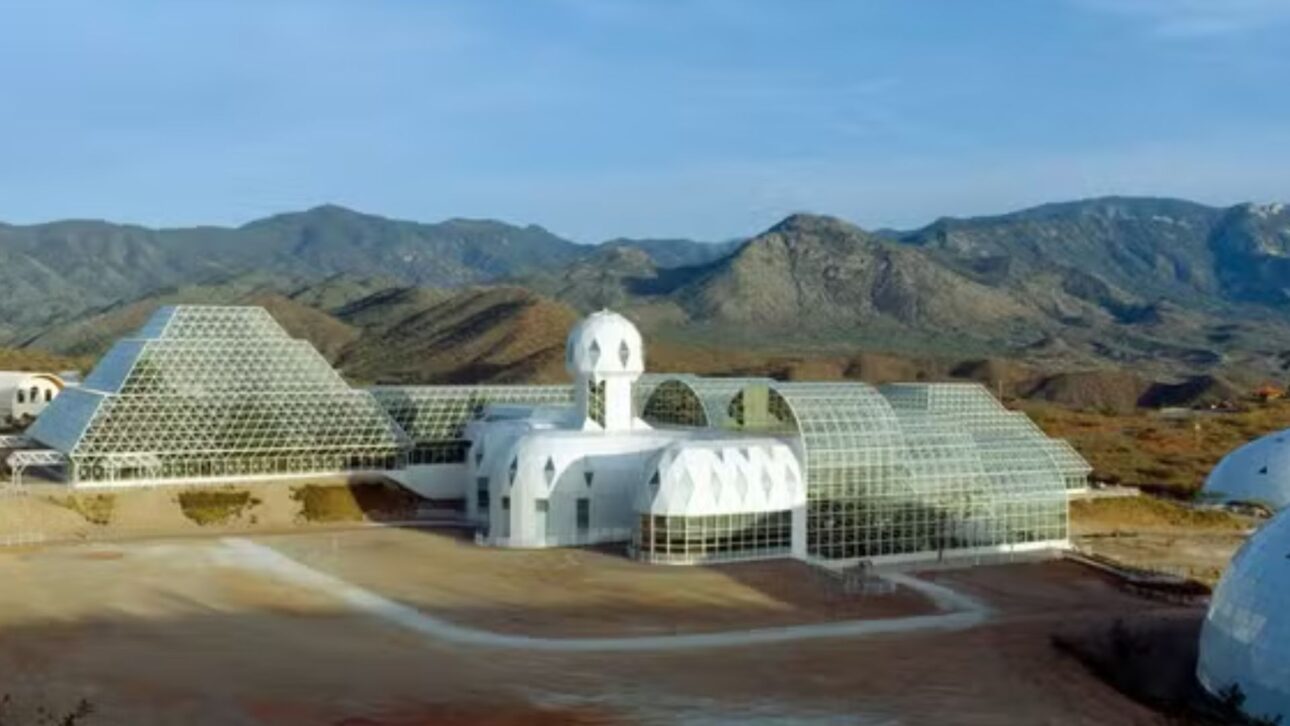
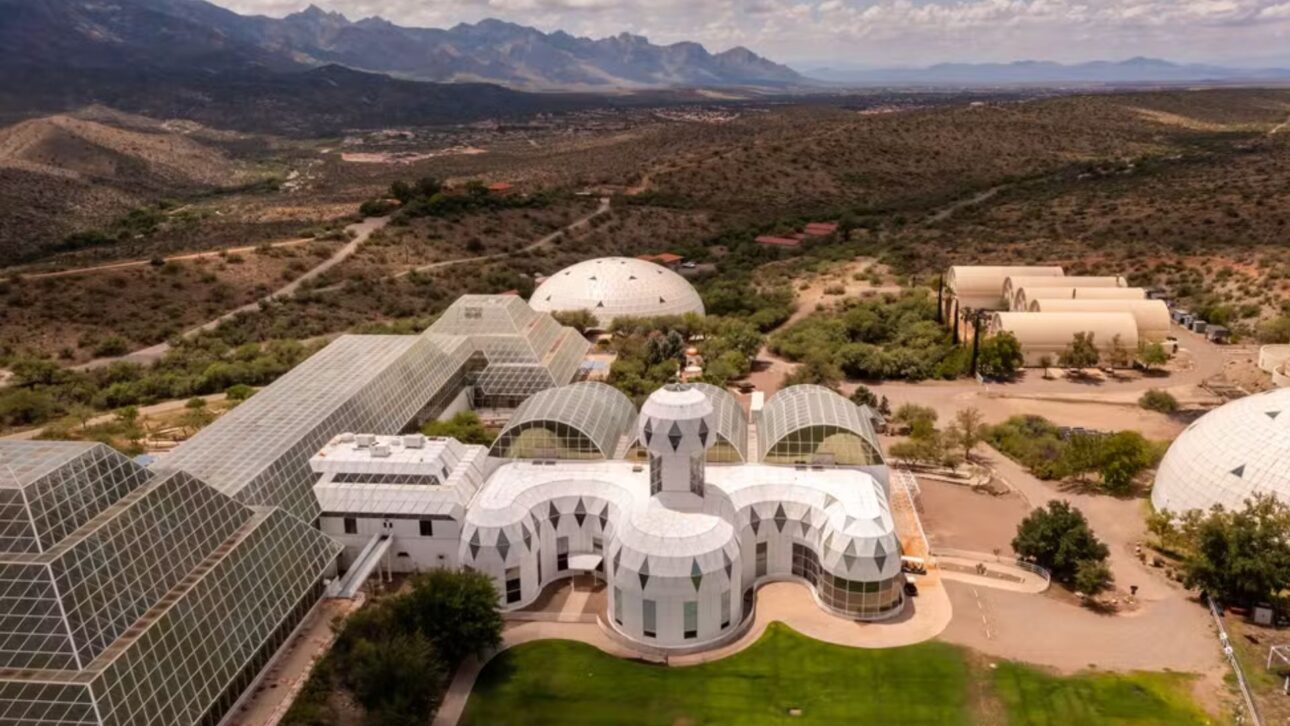
The chosen setting for this innovative project was a massive glass and steel structure, composed of pyramids, domes, and towers, covering an area of approximately 1.2 acres.
-
New Helmet Rule in Brazil Requires Inmetro Digital Seal and QR Code from July 1, 2026, But Existing Helmets Are Exempt — Here’s What Changes and How to Verify Authenticity

-
Son of a traveling salesman, John D. Rockefeller used the 1873 financial crisis to acquire competitors, build an empire with 100,000 employees, and become the world’s first billionaire.

-
12-Year-Old Takes the Wheel After Mother Faints, Prevents Highway Tragedy in Brazil, Impresses Rescuers
-
From Father to Daughters: Aline Leaves Career to Modernize Family’s Four-Decade-Old Artisanal Cachaça Business in Rural Brazil, Expanding Production with Her Sister




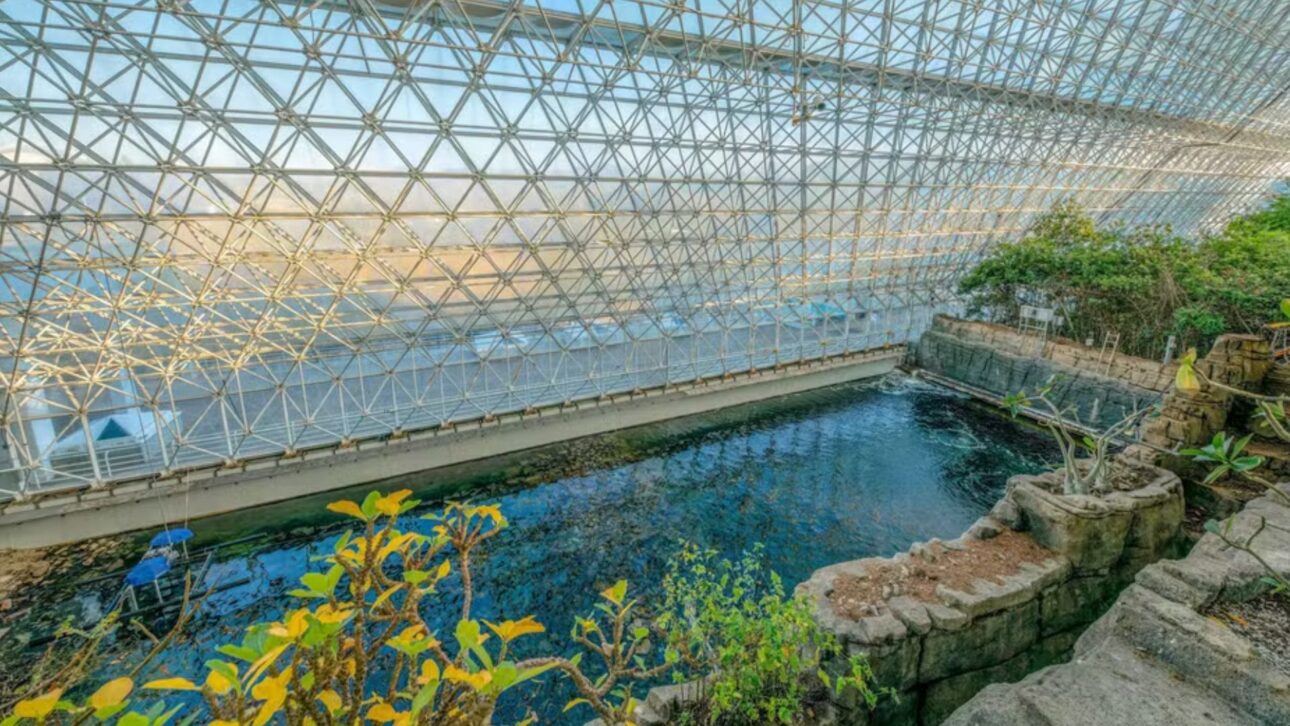
Within this complex, various ecosystems were created: rainforest with an artificial waterfall, savanna, mangrove swamp, fog desert, and even an ocean with a living coral reef, along with an agricultural field to sustain the participants.
The name Biosphere 2 refers to the planet Earth, considered the “Biosphere 1.”
The central proposal of the experiment was to understand how humans could survive in completely closed systems, where everything — from the air they breathe to the food produced and the water consumed — would depend entirely on the balanced functioning of the internal ecosystems.
This concept, fundamental for future long-duration space missions or potential colonies on other planets, proved to be more complex than any initial prediction.
Extreme Isolation in Biosphere 2
Right in the first weeks, serious and unexpected problems arose.
The main crisis involved the progressive drop in oxygen levels within Biosphere 2.
In just 16 months, the oxygen level dropped from 21% (normal sea level) to about 14%, similar to what is found at altitudes above 3,000 meters.
The residents began to suffer typical symptoms of altitude sickness, such as fatigue, difficulty performing simple tasks, and a constant feeling of weakness.
To reverse this situation, it was necessary to introduce supplemental oxygen into the system, which provoked public criticism and questions about the project’s viability as a model of total isolation.
While battling the lack of oxygen, the biospherics — as the eight participants came to be known — still needed to grow their own food, recycle wastewater, and manage all waste.
Caloric consumption, sometimes limited due to low agricultural production, led to significant weight loss among the residents, becoming a subject of study on caloric restriction.
In addition, the death of many animals introduced into the ecosystems — especially pollinators — threatened the reproduction of various plants.
The disappearance of bees and other essential insects for the life cycle of crops forced part of the manual pollination, highlighting the complexity of replicating natural processes in closed systems.
Environmental Crises and Scientific Investigations
External scientists were called to investigate the causes of the sudden drop in oxygen.
It was discovered that the rich soil, used to accelerate plant growth, favored the proliferation of fungi and bacteria that consumed oxygen and released carbon dioxide.
The number of mature plants, on the other hand, was still insufficient to compensate for this consumption.
Meanwhile, part of the CO₂ produced was absorbed by the complex’s concrete structures, acting as an unexpected “sink” for carbon dioxide.
The shortage of pollinators also sparked debates among experts.
One explanation points to an excess of aggressive ants that attacked other insects, while another hypothesis suggests that the absence of ultraviolet light, blocked by the glass, hindered the orientation of bees, whose vision depends on this light spectrum.
Other phenomena, such as the weakening of trees — likely caused by the absence of wind, important for strengthening the trunk — and difficulties in coral growth, were also subjects of research.
These findings contributed to the understanding of how artificial conditions can profoundly impact the balance of complex ecosystems.
Lessons for Science and the Future of Earth
Although the experiment was widely criticized at the time by experts and the media, many scholars currently argue that the lessons learned from Biosphere 2 are valuable for environmental science and the debate on planetary sustainability.
For Mark Nelson, one of the biospherics and founder of the Institute of Ecotechnics, the extreme isolation practically revealed the interdependence between humans and the functioning of natural ecosystems.
Researchers emphasize that the experience, despite its challenges and unforeseen circumstances, expanded knowledge about soil dynamics, carbon cycles, species relationships, and the difficulty of replicating the terrestrial environment anywhere else.
The high cost of maintaining closed artificial systems was also exposed: estimates indicate that if Biosphere 2 served as a model for space colonies, monthly costs would exceed US$ 82,000 per person, with no guarantee of full survival.
After the experiment ended in 1993, the project underwent different managements and was incorporated by the University of Arizona.
Currently, the facility houses advanced research on the impacts of climate change on closed ecosystems.
Recent studies analyze, for example, the response of tropical forests to extreme droughts and heat waves, as well as testing coral reef adaptation strategies in the face of increasing ocean acidity.
The Legacy of the Mini Earth for Sustainability
The experience of the eight participants from Biosphere 2, despite its setbacks, brought forth a central message: the challenges of building and maintaining an artificial “mini Earth” highlight the invaluable value of ecosystem services that the Earth itself naturally provides, without costs and with a complexity impossible to fully replicate.
The experiment, often labeled as a “failure,” became a reference for the need to protect and value Biosphere 1 — planet Earth.
Experts point out that the most powerful lesson lies in the realization that, outside the planet’s natural balance, human survival becomes a monumental challenge.
The case of Biosphere 2 serves as a warning about the importance of investing in sustainable and innovative solutions to preserve real ecosystems.
In light of advances in environmental research and the growing interest in private space missions, is humanity truly prepared to build self-sustaining systems far from Earth?
Or does the example of Biosphere 2 reinforce that the priority should be ensuring the survival of the “Biosphere 1,” our only confirmed home so far?