Portuguese
  Spanish


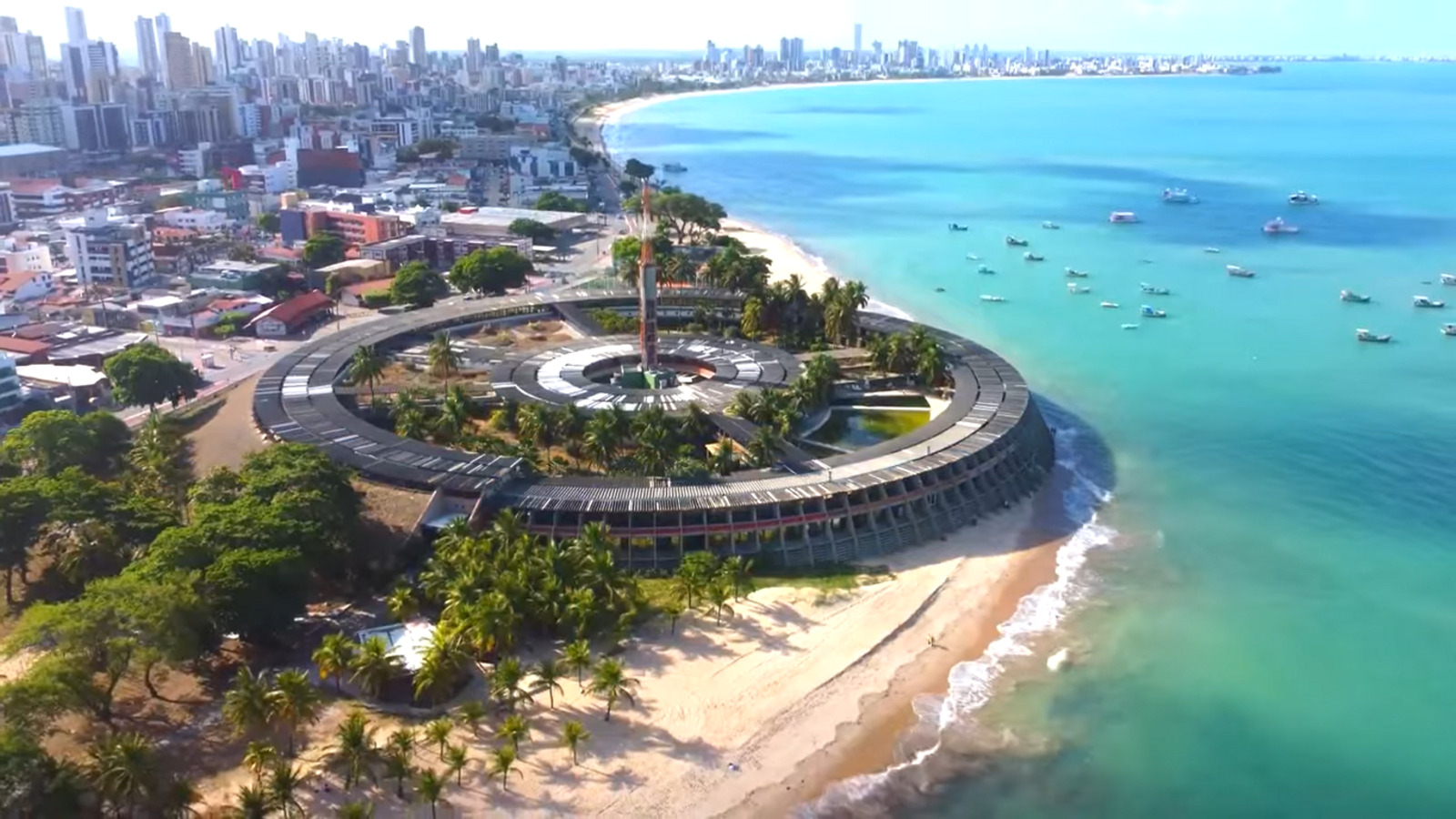


Inaugurated in 1971 and designed by Sérgio Bernardes, the Tambaú Hotel marked João Pessoa with its circular shape, direct integration with the beach, engineering challenges, historical heritage status, and reopening process
The Tambaú Hotel, a circular building inaugurated in 1971 in João Pessoa, gathered 170 apartments by the seaside, marked modernist architecture in the Northeast and became a tourist reference by combining view, ventilation, beach, and engineering in an unusual work.


Tambaú Hotel broke the standard of seaside hotels
Designed by architect Sérgio Bernardes, the hotel was born with a circular shape embedded in the sands of Tambaú beach.
The ring design moved the work away from the traditional model of common vertical towers in coastal areas.
-
61-Year-Old Brazilian Retiree Produces His Own Cooking Gas from Cow Manure, Goes a Year Without Buying a Cylinder, and Sells Surplus Biofertilizer

-
Ghana to Launch Public Library Offering Over 100 Air Quality Sensors for Community Use, with Plans to Expand Across West Africa

-
Desalination Program Transforms Brackish Water into Drinking Water in Brazil’s Semi-Arid Region, Benefiting 26,000 Residents with $2 Million Investment
-
Man Attempts to Measure Brazilian Sinkhole with Fishing Line, Loses Camera, Captures Mysterious Footage, Rekindling Debate on Hidden Underground Labyrinths



The proposal allowed all apartments to have views, either of the Atlantic Ocean or the internal gardens.
The circulation of the sea breeze was favored by the shape, reducing the dependence on air conditioning on a large scale.
The ramps and direct connection with the sand reinforced the integration between hotel, beach, and landscape. Historical architecture documents analyzed by IPHAEP point to the solution of burying the structure so that the sea touched the edges at high tide.

Engineering faced sand, sea spray, and tides
Building a hotel on dunes and in permanent contact with the action of the sea required complex solutions. The foundation had to deal with the instability of the sand, the advance of the tides, continuous erosion, and intense salinity in the coastal environment.
The concrete used in the construction had to withstand aggressive sea spray and the permanent effects of humidity. Structural containment was also decisive in keeping the building firm on terrain different from hotels separated from the beach by avenues or boardwalks.
While a standard seaside hotel usually has ventilation and light more concentrated in the front and side rooms, the ring of the Hotel Tambaú optimized these elements in 360 degrees, with a central tropical courtyard and pools.
Symbol boosted luxury tourism in Paraíba
The hotel helped boost the development of the Tambaú neighborhood and put João Pessoa on the luxury tourism map during the 1970s. Its presence transformed the waterfront into a visual reference for the capital of Paraíba.
Throughout its history, it hosted presidents, artists, events, international conventions, and visitors seeking the modernist seaside experience. The complex became a geographical reference point along the entire waterfront.
Among the central data of the work are the project signed by Sérgio Bernardes, the original capacity of 173 apartments, the circular shape with a central tropical courtyard and pools, as well as protection as a historical heritage.

Closure brought concern about degradation
After the crisis of the former managing network, the hotel was auctioned and closed its doors in the last decade. The closure of activities raised concerns about the degradation of the concrete structure, exposed to the saline environment and sea air.
The temporary abandonment of a complex of this size affected not only the local economy. It also raised an alert about the preservation of national architectural memory, as the building represents one of the well-known modernist works in the Northeast.
The ongoing revitalization seeks to recover pillars, modernize suites, and prepare for the reopening of the complex. The goal is to return the space to the Paraíba society as a tourist and cultural hub, without altering the curved lines conceived by Bernardes.

Legacy remains in the landscape of João Pessoa
The Hotel Tambaú shows that tropical architecture can be monumental without erasing the beach’s horizon line.
The work values winds, topography, integration with the sand, and a direct relationship between comfort, landscape, and architectural design.
For residents and tourists, the circular silhouette on Tambaú beach remains linked to the identity of João Pessoa. The concrete and glass building embraces the sea and continues as a pride of modernism in Paraíba.
With information from BMC News.