






 Portuguese
  Spanish
  3 min of reading
  0 comments


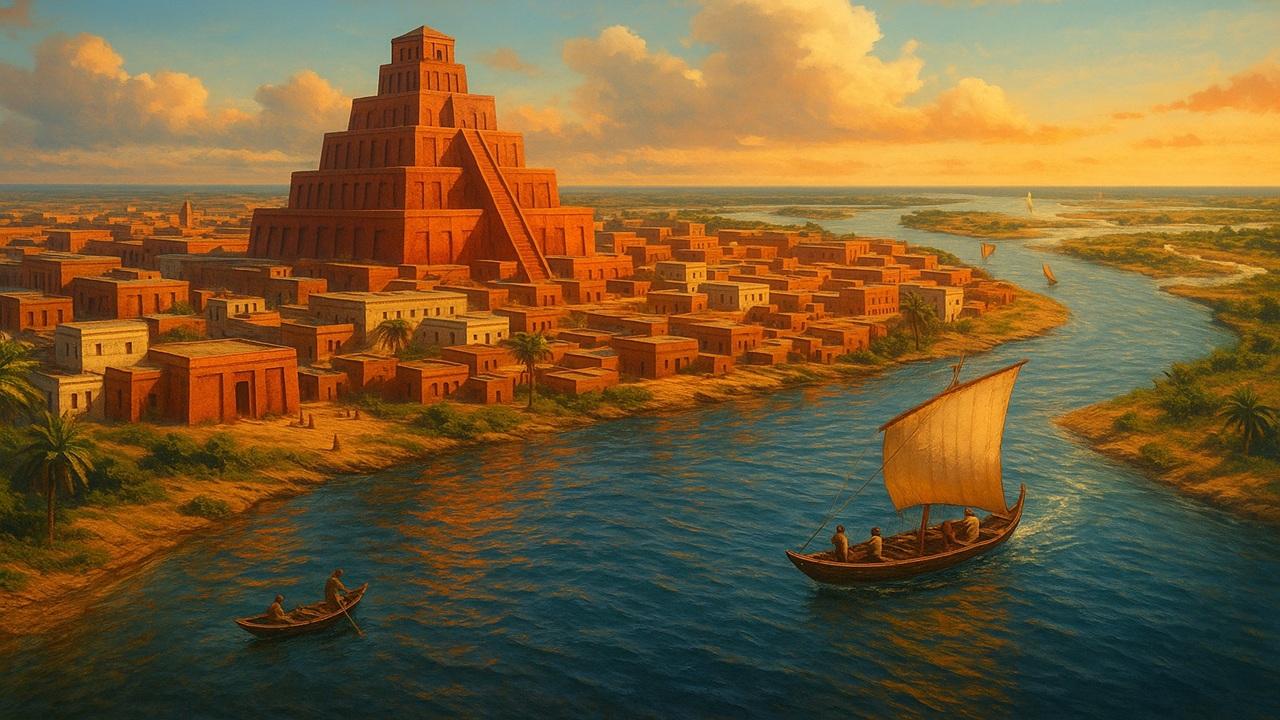
The Sumerian Rise Was Shaped by the Dynamics Between Rivers, Tides, and Deltas, Creating Unique Conditions That Allowed for the Emergence of the First Cities and a Complex Social Organization
Ancient Sumer grew in a landscape shaped by the continuous interaction between rivers and tides. The first network of city-states emerged about 5,000 years ago in southern Mesopotamia, supported by common cultural traditions and economic interests.
This urban set relied on an agricultural base formed by irrigation systems that sustained local production.
The consolidation of this structure resumed processes initiated at least a millennium earlier during the Uruk period, after the long predominance of Ubaid rural culture.
-
Helicopter Drops 180 Tons of Sand and Gravel on Swedish River to Revive Ecosystem Damaged by Decades of Exploitation

-
Brazilian Company Launches Retro Smartphone with 48 MP Camera, T9 Keyboard, and Privacy Features for Social Media-Free Use

-
Self-Taught Chinese Farmer Builds 5-Ton Submarine from Scrap, Launches It in Anhui River
-
Invisible Induction Technology Enables Wireless Power for Blenders, Coffee Makers, and Air Fryers, Reducing Countertop Cables





The combination of population growth, innovation, and professional specialization resulted in state models capable of integrating urban centers with their agricultural periphery.
Environmental Transformations That Shaped Urban Expansion
The region occupied by the Sumerians could only thrive thanks to constant access to the freshwater of the Euphrates and Tigris rivers. This advantage contrasts with the aridity of the area situated between the deserts of Arabia and Iran. Still, there remains debate over when large-scale irrigation became a common practice and how this water resource influenced social prosperity before this phase.
“Our findings show that Sumer was built, both literally and culturally, on the rhythms of water,” stated Dr. Liviu Giosan of the Woods Hole Oceanographic Institution. He noted that the cycles of tides and the morphodynamics of deltas were strongly present in Sumerian myths and daily activities.
Between 7,000 and 5,000 years ago, the Persian Gulf advanced further inland. Tides carried freshwater twice a day to the lower parts of rivers, creating favorable conditions for crops irrigated by short canals. This scenario allowed for productive agriculture without the need for large hydraulic works.
Crisis Caused by the Loss of Tides
As the deltas formed by river sediment deposits advanced, the influence of tides diminished. The blockage of this natural movement triggered an ecological and economic crisis. The social response required comprehensive interventions to control flooding and maintain irrigation, transforming the landscape and defining the Sumerian golden age.
“We tend to envision ancient landscapes as static,” observed Dr. Reed Goodman of Clemson University. For him, the Mesopotamian delta was marked by constant instability, requiring creative solutions and collective efforts that drove intensive agricultural practices.
Cultural Impacts and Social Reorganization
The study also analyzes the cultural implications of this aquatic base. Flood myths and religious traditions centered on water appear connected to the environments that shaped Sumerian life.
“The radical conclusions of this study become clear in what we are finding in Lagash,” said Dr. Holly Pittman, director of the Lagash Archaeological Project. She relates environmental changes to the formation of inequalities, political consolidation, and ideologies that characterized the first known urban society.
By combining ancient environmental data, new samples from the Lagash site, and satellite maps, researchers reconstructed the appearance of the Sumerian coast and analyzed how the population reacted to territorial transformations. Dr. Giosan emphasized that the discoveries highlight both opportunities and risks arising from intense environmental crises.
The study, published in the journal PLoS ONE, underscores that investigating material and mythological traces in an integrated manner allows for the bridging of legendary narratives with historical facts, revealing how ancient societies adapted to constantly changing landscapes.





-

-

-

-

-

-

16 people reacted to this.