






 Portuguese
  Spanish
  5 min of reading


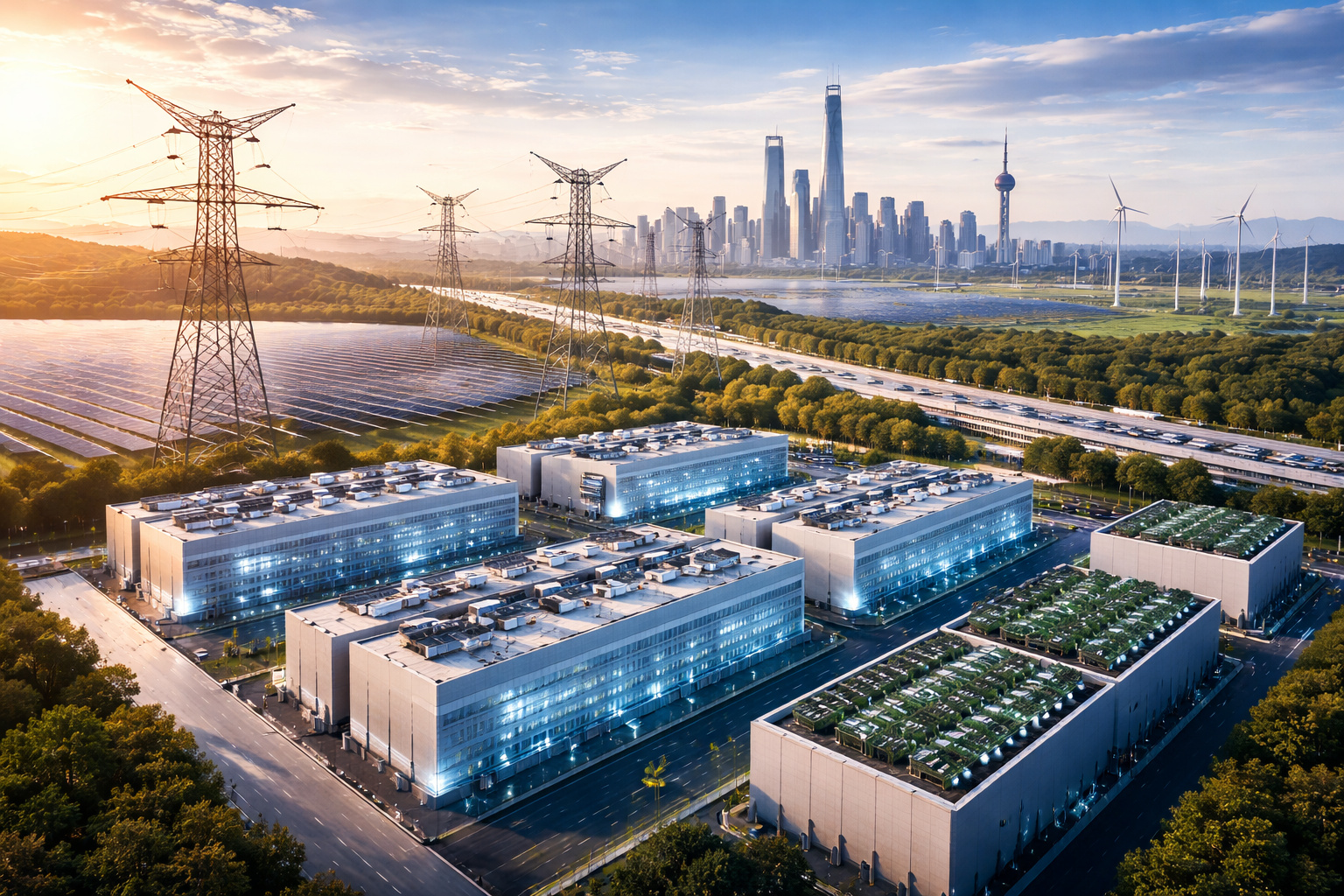
The Global Race for Leadership in Artificial Intelligence Is Not Decided by Algorithms or Semiconductors Alone.
Increasingly, energy infrastructure plays a central role in this technological clash. In this scenario, China emerges in a strategic position by aligning productive capacity, state planning, and abundant energy at competitive costs.
Over the past two decades, the country has built one of the largest and most robust energy infrastructures in the world. This movement, initially aimed at accelerated industrialization, now supports broader ambitions, including dominance in energy-intensive technologies such as artificial intelligence.
According to data released by the International Energy Agency, China currently accounts for over 30% of the global electricity generation. This volume not only ensures energy security but also provides a decisive competitive edge in energy-intensive digital sectors.
-
USP researcher creates thesis to attract international funds for the country’s electric energy sector

-
Trafigura receives authorization from ANEEL to trade electricity in Brazil and expands its operations in the largest energy market in Latin America.
-
Mobile solar panels promised to share space with corn crops, but the 20% to 25% shade reduced production by an average of 7.7% and opened a new dispute between energy and food.
-
More than 80 million kilometers of wires need to be replaced by 2040: the energy transition doesn’t just depend on panels and electric cars, but on a colossal race for copper, aluminum, transformers, and recycling of old cables.


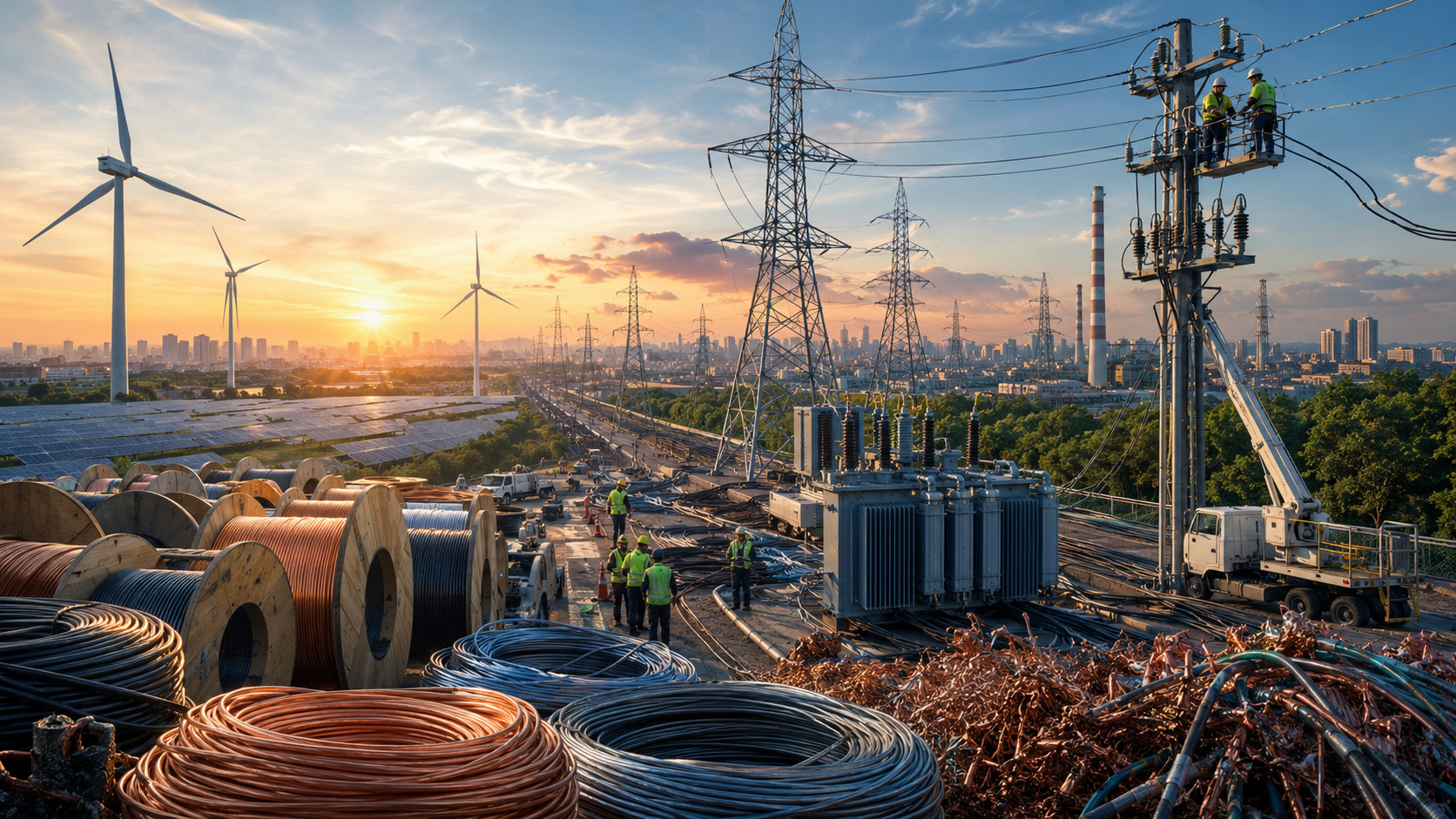
Energy Infrastructure as a Historical Basis for Chinese Growth
To understand the current strategy, it is necessary to look back. Starting in the 2000s, China began aggressively investing in energy infrastructure. According to the Chinese government, this effort aimed to sustain economic growth, reduce industrial bottlenecks, and ensure social stability.
During this period, the country expanded thermal power plants, hydroelectric plants, nuclear facilities, and, more recently, renewable sources. The result was the creation of a broad, integrated, and scalable energy network. Unlike economies that heavily rely on imports, China prioritized self-sufficiency.
Moreover, according to the National Development and Reform Commission of China, energy investments have always been aligned with five-year plans. This model has allowed for predictability, coordination, and speed of execution, which are rare factors in more decentralized economies.
Cheap Energy and Technological Competitiveness
The abundance of energy would not be sufficient without competitive prices. At this point, China also stands out. According to data from the World Bank, the average industrial electricity cost in the country remains lower than that of advanced economies such as the United States, Japan, and European Union countries.
This cost difference becomes crucial in the artificial intelligence sector, which relies on large data centers, high-performance servers, and continuous operation. Each AI model requires vast volumes and sources of energy for training and functioning.


Meanwhile, according to the U.S. Department of Energy, data centers already represent a growing share of American electricity consumption. The increase in demand puts pressure on local networks and raises costs, creating additional challenges for the accelerated expansion of AI.
In China, on the other hand, the energy infrastructure has been designed to absorb this growth. Furthermore, cross-subsidies and industrial policies keep electricity accessible for strategically important sectors.
Energy Infrastructure and AI Data Centers
The expansion of artificial intelligence directly depends on the ability to install and operate large-scale data centers. In this respect, Chinese energy infrastructure offers clear logistical and economic advantages.
According to the Ministry of Industry and Information Technology of China, the country has accelerated the construction of data centers in regions with excess energy, such as the west and north of the territory. This strategy reduces costs and balances the national power grid.
Moreover, according to the International Energy Agency, China leads global investments in ultra-high voltage transmission. These lines allow for the transportation of large volumes of electricity over long distances with reduced losses. Thus, data centers can operate far from major urban centers where energy is cheaper.
In contrast, in the United States, regulatory fragmentation and aging infrastructure make similar projects more difficult. According to the U.S. government, bottlenecks in transmission and licensing delay energy expansions in various regions.
Renewables, Coal, and Energy Pragmatism
The Chinese strategy also stands out for its pragmatism. While it leads investments in solar and wind energy, the country keeps coal plants operating as a safety base. This combination ensures stability and predictability, essential factors for AI operations.
According to the International Energy Agency, China installed more renewable capacity than any other country in recent years. Nevertheless, according to the Chinese government itself, coal remains a pillar of energy security.
This model contrasts with more restrictive approaches adopted in other economies. While some countries face risks of shortages or price volatility, China prioritizes stability. For artificial intelligence, this stability translates into operational advantage.
Energy Infrastructure and State Planning
Another important differential lies in the role of the state. According to the United Nations, China uses state planning as a central instrument of development. Energy infrastructure and technology advance in a coordinated manner, not in isolation.
National plans define where to invest, which sectors to prioritize, and how to integrate energy, industry, and innovation. Thus, AI projects are born connected to reliable and cheap energy sources.
In the United States, according to reports from the U.S. Congress, the advancement of AI largely depends on private initiative. While this stimulates innovation, it also generates regional asymmetries and dependence on local infrastructures that are not always prepared.
Energy Infrastructure as a Differential in the AI Race
Looking at the global scenario, it is clear that the competition for leadership in artificial intelligence goes beyond software. It increasingly involves the ability to generate, distribute, and price energy on a large scale.
According to the International Energy Agency, global electricity consumption by data centers could double by the end of the decade. In this context, countries with robust energy infrastructure are at an advantage.
China recognized this relationship early on. By simultaneously investing in energy, transmission, and technology, the country created an ecosystem favorable to the expansion of AI. Moreover, by keeping costs low, it reduces entry barriers and accelerates adoption.
Thus, energy infrastructure ceases to be merely support. It becomes one of China’s main strategic assets in the global race for artificial intelligence, redefining the parameters of technological competition in the coming decades.






Be the first to react!