Portuguese
  Spanish


Study with corn in an agrivoltaic system showed that partial shade can reduce the harvest even when the same area starts generating solar energy, raising a practical question for farmers, companies, and rural projects trying to produce electricity and food on the same land
Mobile solar panels over corn crops reduced production by an average of 7.7% when the shade was between 20% to 25%. This data sparked an important discussion in the field: to what extent is it worth dividing the same land between food and solar energy?
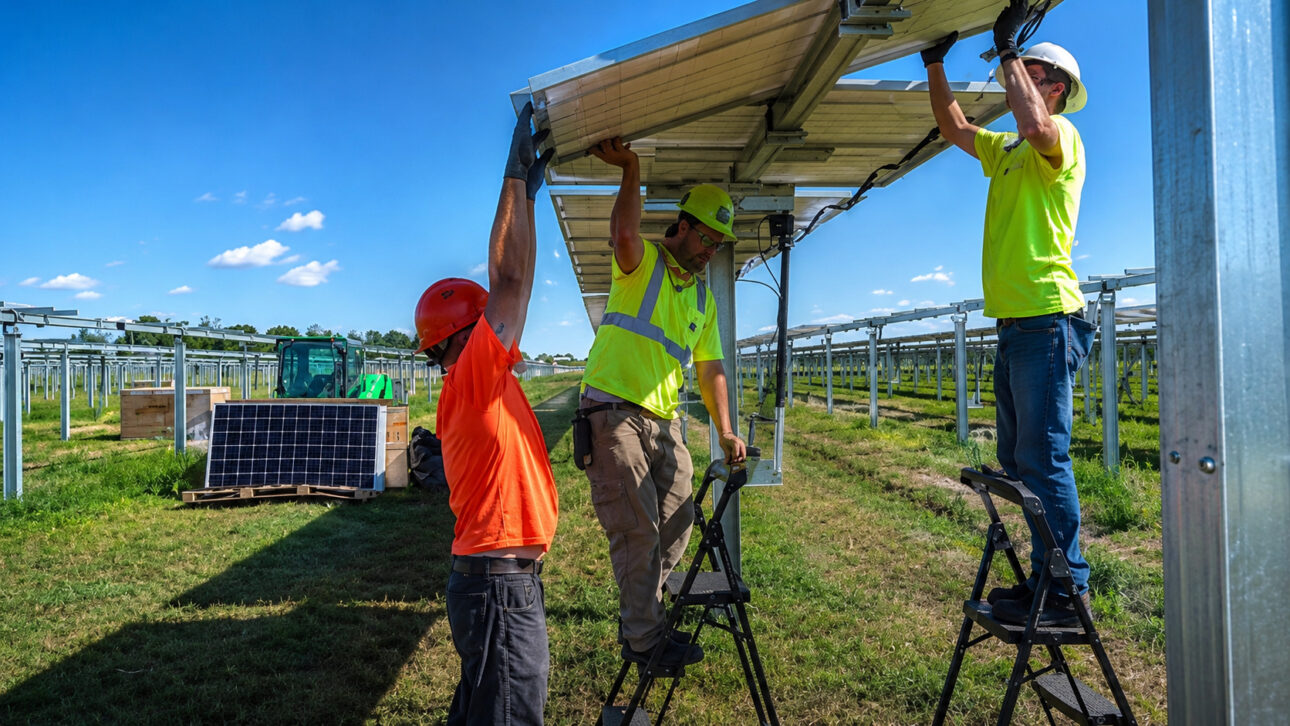
The idea of agrivoltaics seems simple. The crops remain on the ground, while solar panels are elevated above the plantation. Thus, the land can generate electricity and maintain agricultural production. But corn depends on a lot of light to grow well.
The information was published by Nature, the scientific portal of the Springer Nature publisher, on March 20, 2026. The technical study analyzed corn under elevated and mobile solar panels, focusing on shade, light received by the plant, soil moisture, and the final harvest result.
-
Itaipu Dam Stuns Visitors with First Spillway Opening in 2026, Showcasing the Power of Water Once Again

-
USP researcher creates thesis to attract international funds for the country’s electric energy sector
-
Trafigura receives authorization from ANEEL to trade electricity in Brazil and expands its operations in the largest energy market in Latin America.
-
More than 80 million kilometers of wires need to be replaced by 2040: the energy transition doesn’t just depend on panels and electric cars, but on a colossal race for copper, aluminum, transformers, and recycling of old cables.


The promise of agrivoltaics found a limit when corn received less light
Agrivoltaics tries to solve an increasingly common problem: using land better. Instead of choosing between planting or installing solar panels, the system tries to do both in the same space.
This model may work better with some crops. Plants more sensitive to heat can benefit from a bit of shade. But corn behaves differently. It needs a lot of solar radiation, which is the sunlight used by the plant to grow and form grains.
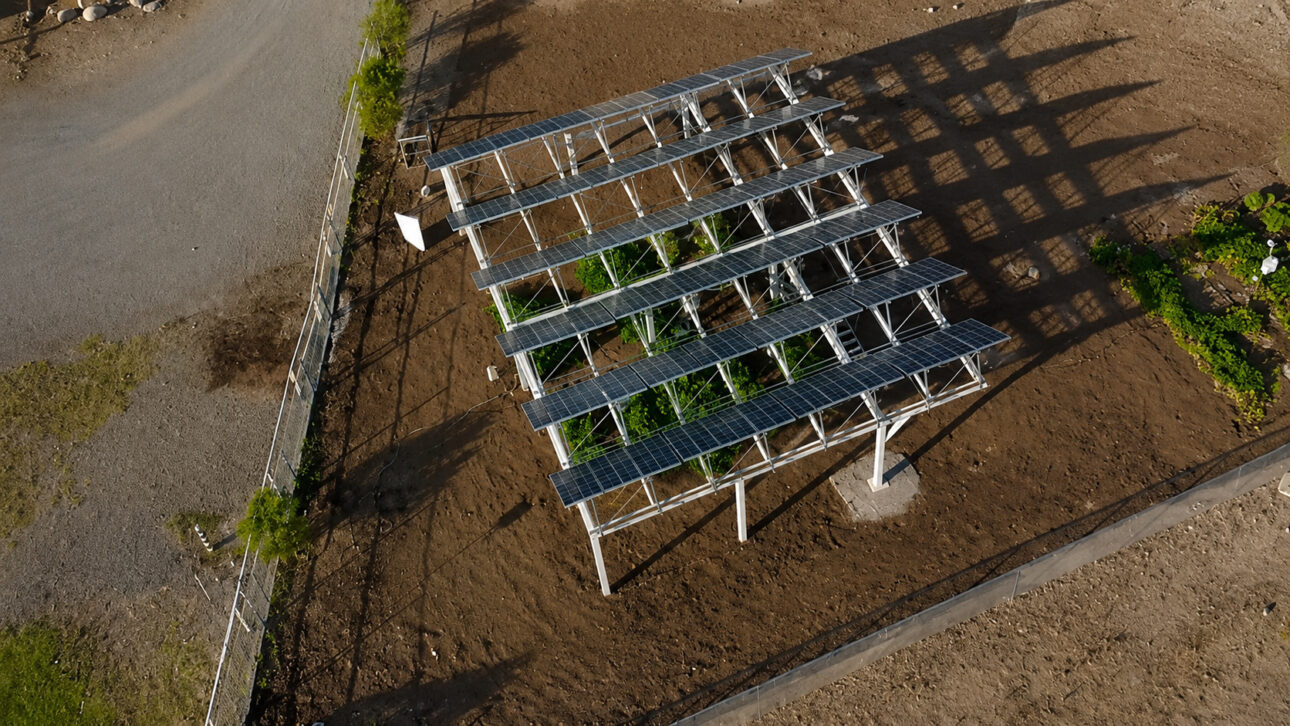
When part of this light is blocked by the panels, the plant may produce less. In the study, the shade of 20% to 25% did not destroy the crop, but reduced production by an average of 7.7%. For a crop planted on a large scale, this percentage can weigh on the final account.
Corn is a plant that demands a high price when it receives too much shade
Corn is a C4 type plant. This technical name means, simply put, that it usually takes full advantage of strong sunlight to convert energy into growth.
Therefore, shade has a different impact on it. In a garden, a little protection against excessive sun can help. In corn, the lack of light at important moments can hinder the plant’s development and grain filling.
The research monitored physical effects on the crop and the final yield. The average reduction of 7.7% shows that shade is not just a visual detail in the field. It changes the amount of energy that reaches the leaf and can change the production that comes out of the planted area.
Movable panels change the shade throughout the day, altering the life of the crop
The movable panels follow the position of the sun. This movement helps in energy generation because the panels can better capture the light during the day.
But, in the crop, this movement also changes the shade. The shaded area is not always the same. It can pass through different points of the field and affect the plant during important growth phases.
This is the debate that the study brings to the table. The producer can benefit from solar energy, but needs to know how much the shade takes from the harvest. In the case of the analyzed corn, the average loss was 7.7% under the observed conditions.
The drop in production does not mean that solar panels over crops are a mistake
The result does not allow us to say that agrivoltaics do not work. It shows that the system needs to be carefully planned, especially when it involves a crop that needs strong sunlight.
The height of the panels, spacing between structures, and the way the panels move can change the effect on the crop. The choice of crop also matters a lot. Not every plant reacts to shade in the same way.
Nature, the scientific portal of the publisher Springer Nature, detailed that corn was still little studied in this type of system compared to more shade-tolerant crops. This makes the data relevant for those discussing solar energy in large agricultural areas.
The real dispute is not energy against food, but how to divide the same hectare
The central issue is not to abandon solar energy in the field. The point is to understand how each hectare can produce electricity without overly compromising the harvest.
For the farmer, the calculation needs to consider both sides. Energy can generate a new source of income, but agricultural production cannot be treated as a detail. In important crops like corn, an average drop of 7.7% can influence planting, investment, and installation decisions.
For energy companies, the study also sends a message. Rural projects need to consider the plant that is already there. Panels over crops cannot follow a single recipe because each crop responds differently to shade.
The study places corn at the center of a debate that should grow in the field
Corn is significant in food, animal feed, and various production chains. Therefore, any change in productivity draws attention, even when the proposal involves clean energy.
The research shows that producing solar energy over crops can be an interesting alternative, but not automatic. In areas with corn, the light available for the plant needs to be factored in from the beginning of the project.
In the analyzed case, 20% to 25% shade came along with an average drop of 7.7% in production. This number does not end the discussion, but it makes clear that the field of the future will have to balance solar panels, crops, and rural income with more precision.
Agrivoltaics remains a promising idea for better land use. However, corn showed that too much shade can take a toll on the harvest, even when the same area helps produce electricity.
The dispute between energy and food does not need to have a single winner. The challenge is to find the point where the solar panel helps the producer without depriving the crop of the light it needs to produce well.
Would you accept a small loss in the harvest if the same area also generated solar energy, or should food have total priority in the field? Leave your opinion and share this discussion.