Portuguese
  Spanish


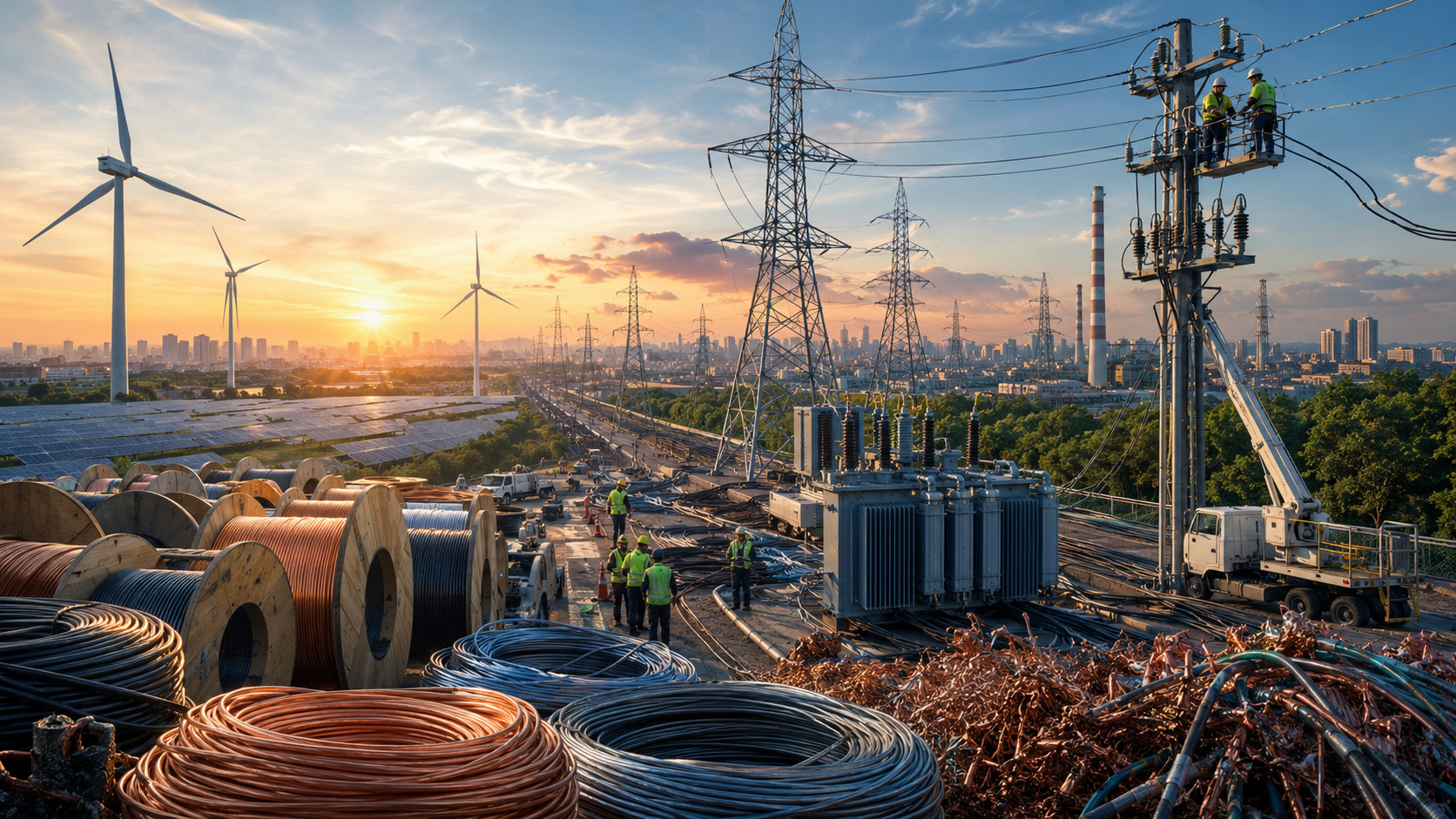

The world will need to add or renew more than 80 million kilometers of power grids by 2040 to support electric cars, solar, and wind energy.
The energy transition is often represented by solar panels, wind turbines, and electric cars, but the decisive infrastructure is much less visible. According to the International Energy Agency, the world will need to add or renew more than 80 million kilometers of power grids by 2040, equivalent to rebuilding the entire existing global network today. Without this expansion, the electrification of transport, the advancement of renewables, and the increase in electricity demand may hit a structural bottleneck.
The challenge is not marginal. The IEA itself states that grids are becoming one of the most fragile points in the transition to cleaner and safer energy systems. Instead of being just a technical detail, the transmission and distribution network has become one of the largest infrastructure projects of the century.
Electric cars, solar, and wind energy depend on a much larger power grid
According to the IEA, the rapid adoption of technologies such as electric vehicles, heat pumps, and new renewable sources is expanding the role of electricity in areas previously dominated by fossil fuels. This increases the pressure on the grids and requires more lines, more connections, and more modern systems to deliver energy to cities, industries, and consumption centers.
-
Itaipu Dam Stuns Visitors with First Spillway Opening in 2026, Showcasing the Power of Water Once Again

-
USP researcher creates thesis to attract international funds for the country’s electric energy sector
-
Trafigura receives authorization from ANEEL to trade electricity in Brazil and expands its operations in the largest energy market in Latin America.
-
Mobile solar panels promised to share space with corn crops, but the 20% to 25% shade reduced production by an average of 7.7% and opened a new dispute between energy and food.


At the same time, many clean energy projects are far from major consumer markets. Solar plants in desert areas and offshore wind farms, for example, only become useful on a large scale when the grid can transport this electricity safely and efficiently.
The energy transition, therefore, does not only depend on generating more clean energy. It depends on building the infrastructure capable of receiving, distributing, and stabilizing this new electricity on a global scale.
The 80 million kilometers are equivalent to rebuilding the entire current global network
According to the IEA, achieving national energy and climate goals will require more than 80 million kilometers of networks added or refurbished by 2040. The number is so large that the agency itself compares it to the size of the entire existing global electrical infrastructure.
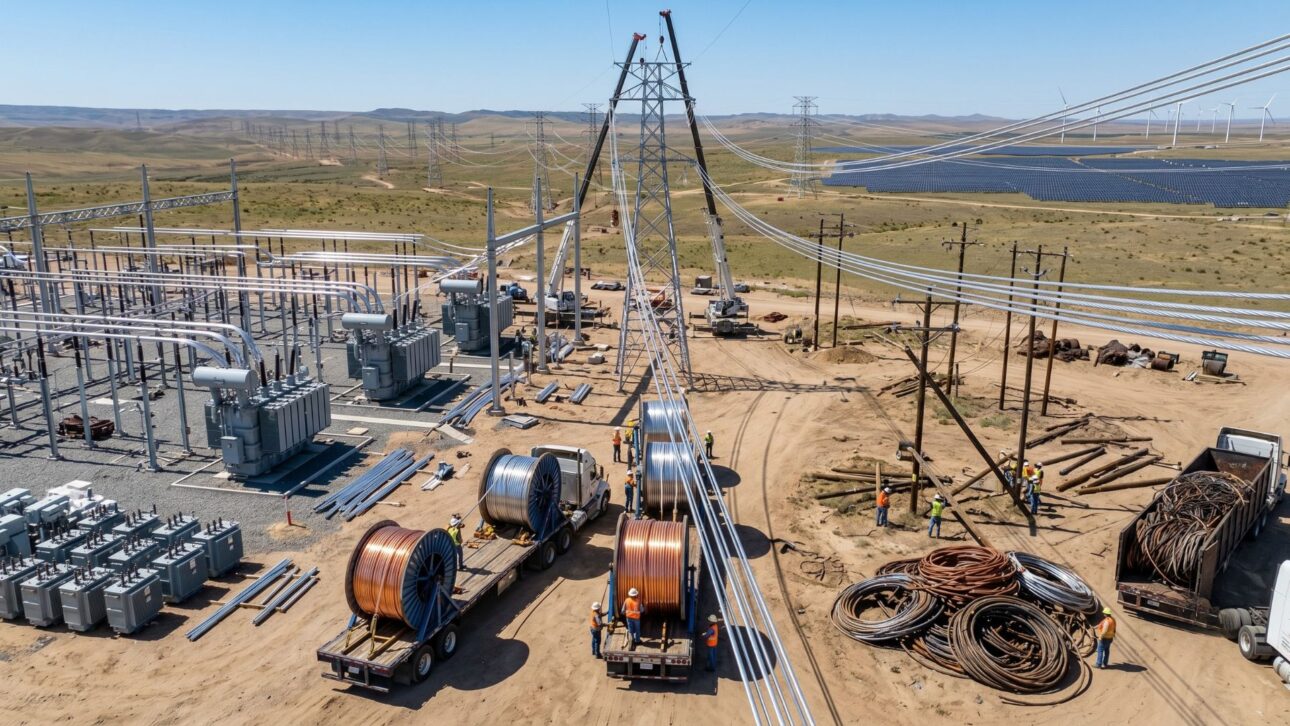
A reading of the report by Balkan Green Energy News helps to visualize this scale more clearly. According to the publication, this extension would be enough to circle the Earth about 2,000 times. The comparison shows that it is not just a matter of localized expansion, but a gigantic physical transformation of the world’s energy base.
In practice, the transition to a more electrified economy will require continuous, fragmented, and global work, spread across substations, underground cables, overhead lines, transformers, and transmission corridors in dozens of countries simultaneously.
Electrical networks have become a bottleneck in the global energy transition
The problem has already begun to appear concretely. According to the IEA, the networks are failing to keep up with the pace of the new energy economy, creating a real risk of delay for the expansion of renewable sources and electrification.


The agency points out that at least 3 terawatts of renewable projects are waiting in connection queues to the grid, and about half of this volume is already at an advanced stage. This is equivalent to approximately five times the solar and wind capacity added worldwide in 2022, showing that much of the clean energy ready to enter the system still depends on infrastructure that has not been completed at the same pace.
This is a central point. In many cases, the problem is no longer installing panels or turbines, but ensuring that the electricity generated can actually circulate to the end consumers.
Investment in networks lagged behind while renewables almost doubled
According to the IEA, global investments in renewable energies almost doubled since 2010, while investments in electrical networks remained practically stagnant at around US$ 300 billion per year. This difference explains why the expansion of clean generation has started to run faster than the system’s connection capacity.
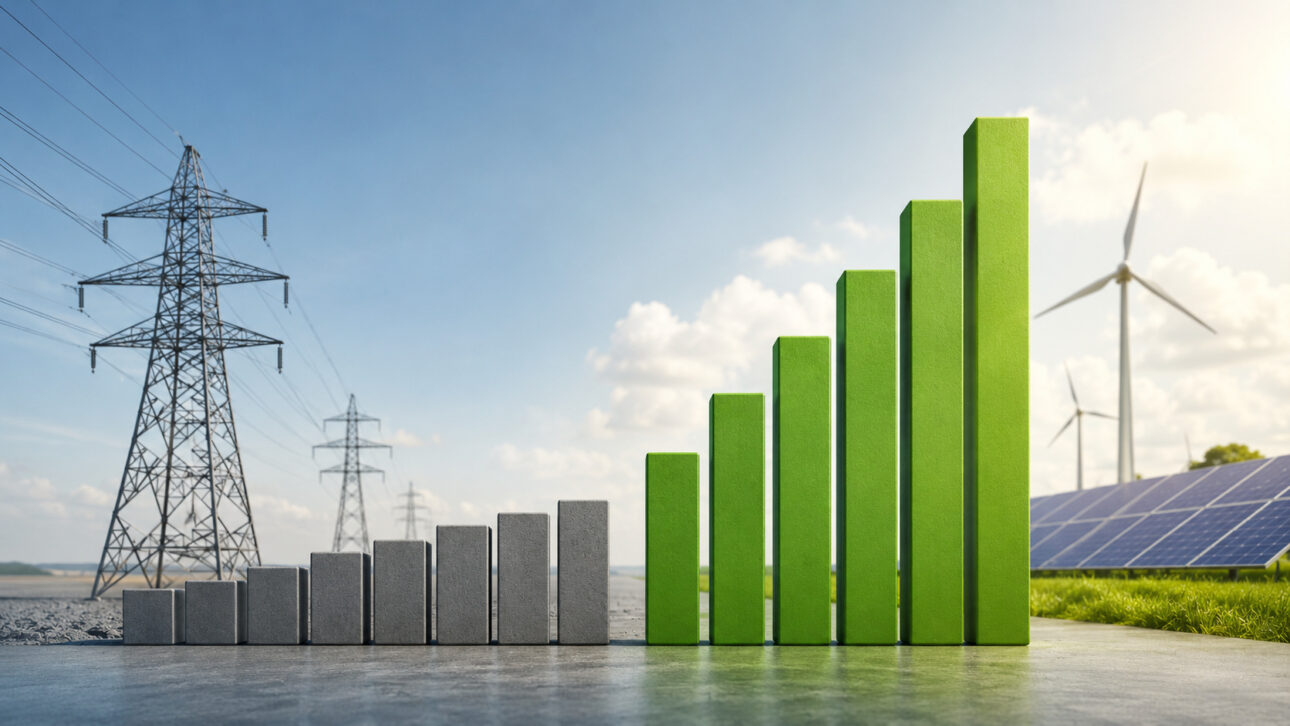
For the agency, this imbalance needs to change quickly. The report advocates that investments in networks be doubled by the end of the decade, reaching about US$ 600 billion per year. Without this, the modernization of the electrical system risks stalling just as electrification accelerates in transportation, heating, and industry.
In other words, more clean energy does not automatically mean a ready infrastructure. Network expansion is no longer a secondary step and has become a basic condition for the energy transition to really happen.
Copper, aluminum, transformers, and digitalization gain central role
Although the IEA focuses on network infrastructure and not on a single commodity, the message is clear: expanding millions of kilometers of transmission and distribution will require an industrial race for cables, equipment, transformers, and modernization solutions.
The report also highlights the need to digitize the networks, expand interconnections between regions, and remove administrative and regulatory barriers that currently delay expansion. It’s not just about installing more wires, but about building a smarter, more resilient system capable of integrating increasing volumes of solar, wind, and new electrical loads.
The most important piece of the energy transition, therefore, may be the least visible. Without sufficient network, clean energy exists, but doesn’t reach. And without modernization, it arrives with more cost, less security, and more delay.
The largest work of the energy transition may happen without almost anyone noticing
Unlike a monumental bridge, a gigantic dam, or a new airport, the expansion of electric grids happens in a scattered and silent manner. These are new lines, refurbished lines, adapted substations, replaced cables, and digitized systems in different parts of the planet.
But it is precisely this almost invisible work that may determine whether the world will be able to sustain the next phase of global electrification. According to the IEA, without more extensive, modern, and flexible grids, countries will struggle to meet climate targets, ensure electrical security, and integrate the rapid growth of renewables.
The great irony of the energy transition is that its most decisive infrastructure might be the one that appears least in promotional images.
At the center of the global change is not just clean generation, but a gigantic network of wires, towers, cables, transformers, and digital systems that will need to grow at a record pace for the new energy system to work. Could disruptions delay this transformation?