Portuguese
  Spanish


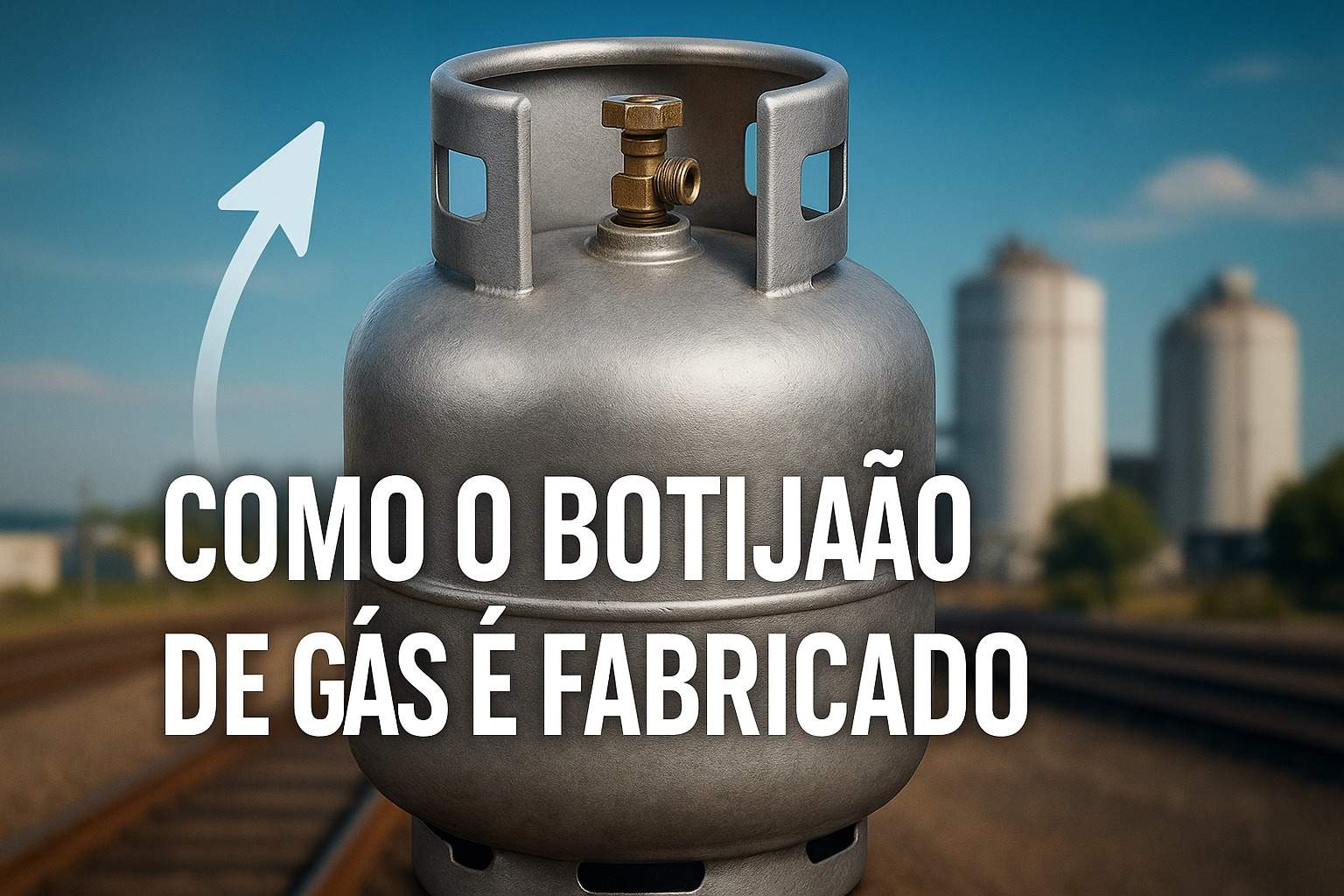


Learn About All Stages of Gas Cylinder Production, From Steel to Filling, Including Safety Tests and Technical Standards.
The gas cylinder is one of the most common items in the daily lives of Brazilian families. It ensures meal preparation, heats water, and powers commercial and industrial activities. Despite its familiarity, few people know about the complex engineering and strict safety protocols behind its manufacture. Below, you will follow all the stages: from cylinder production to gas filling.
Gas Cylinder Manufacturing
The manufacturing process begins with the selection of raw materials. Cold-rolled steel, strong and durable, is sourced from specialized suppliers.
The National Agency of Petroleum, Natural Gas and Biofuels (ANP) sets mandatory standards. ANP Resolution No. 12, from 2008, specifies that the cylinder must withstand high pressures, have safety devices, and display clear manufacturing information. In addition, the Brazilian Association of Technical Standards (ABNT), through NBR 11927, outlines technical specifications for different sizes: P5, P13, P20, and P45.
-
China Uses 432 Robots to Move a 7,500-Ton Historic Building in Shanghai, Preserving Architecture While Creating Space for Underground Center

-
World Cup Ball Chip Uses Technology to Detect Invisible Touches, Confirms Offside, Secures Portugal’s Victory Over Croatia

-
36-Meter Hydrogen-Powered Superyacht Arrives in Brazil to Debut German Engines and Showcase Future of Clean Navigation
-
Indian Students from Jaipur Win Top Prize at World’s Largest Science Fair with EcoFog, an Affordable Mesh to Harvest Fog Water Without Energy



These standards are not just recommendations. The ANP conducts periodic inspections to verify that factories meet the requirements. The most important aspect is to ensure that each cylinder that arrives in your kitchen is reliable.
Stamping and Shape
After acquiring the steel, stamping begins. The sheets undergo perforations for ventilation and then are subjected to deep stamping, taking on a cylindrical shape.
The cutting adjusts the dimensions, while the finishing removes burrs and imperfections. This set of processes ensures strength and uniformity.
Bottom Ring and Protection
Next, the bottom ring is manufactured. It provides stability when the cylinder is placed on flat surfaces and aids in ventilation, reducing the risk of corrosion. This piece is welded to the base of the cylinder.
At the top, called the head, are the safety components: valve, pressure regulator, protective ring, carrying handle, safety cap, and, in some models, pressure gauge. These elements protect against damage, facilitate handling, and control the gas output.
Assembly and Sealing
During assembly, the welding must be precise. Therefore, the process is automated. The o-ring, made of elastomer, ensures the sealing between the body and the valve, preventing leaks. This step is crucial for safety.
Heat Treatment
Heat treatment relieves stresses caused by welding. It can be done in an intermediate frequency furnace, with induction heat, or natural gas, which provides even heating. Both techniques enhance the durability and reliability of the cylinder.
Safety Tests
Before reaching the consumer, each cylinder is tested. X-ray radiographs check for invisible internal defects. Mechanical tests measure the strength of the welds. The evaluation of sealing rings completes the process. These tests confirm that the product can withstand usage conditions without risk.
Therefore, when you light the stove, you can be assured that the cylinder has undergone a rigorous quality control.
Kitchen Gas Production
The gas that arrives in the cylinder is LPG (Liquefied Petroleum Gas). It results from the distillation and fractionation of crude oil. The mixture contains propane and butane, lightweight hydrocarbons that have a high calorific value. This characteristic makes them ideal for stoves and heaters.
Additionally, LPG receives a safety additive: ethyl mercaptan. This sulfur compound gives the gas its characteristic smell. It is used to quickly identify leaks. If gas escapes, the strong odor spreads and alerts residents.
Filling the Cylinder
Once produced, the cylinders proceed to filling. First, they undergo visual inspection. Any cylinder with rust, dents, or defects is removed from the line. Only the approved ones proceed to filling.
The filling occurs in a machine called a carousel. It can fill up to 1,800 cylinders per hour. The process is divided into two phases: an initial fast fill and a slower final fill, which completes the 13 kg of gas in the residential model. The controlled pace ensures precision and avoids mistakes.
After filling, the cylinders undergo new safety tests. Leak detection uses laser technology. The sealing ring is inspected once more. Then, each cylinder is sanitized, painted, labeled, and sealed. Only after this is it released for distribution.
Different Cylinder Capacities
Sizes vary depending on the use. The P5, at 5 kg, is portable and common for barbecues and camping. The P13, at 13 kg, is the most prevalent in Brazilian households. The P20, at 20 kg, is more commonly used in businesses. Meanwhile, the P45, at 45 kg, serves industries, water heating, and power generation.
Each of these models follows the same stages of production, testing, and filling. What changes is the storage capacity and application.
From Factory to Kitchen
After passing through all stages, the cylinders go to distribution centers. From there, they are sent to authorized resellers, who deliver them to homes and establishments. This pathway ensures that the product is in perfect condition for use.
Moreover, the continuous supervision by the ANP and compliance with ABNT standards reinforces trust in the system. The process, which involves thousands of workers and sophisticated machines, is what makes the simple act of lighting the stove safe.
Safety That Reaches the Consumer
The life cycle of a gas cylinder is more complex than one might think. From the choice of steel to the final sealing, every detail is designed to provide stability, durability, and protection. This is why the cylinder remains an essential item in Brazilian kitchens.
The consumer, therefore, receives at home not just a cylinder filled with gas, but the result of meticulous work. Engineering, technical standards, supervision, and testing combine to ensure the quality of LPG.
The gas cylinder, this silent hero of kitchens, follows a path filled with invisible stages. Only then can it guarantee the heat necessary to turn simple foods into dishes that bring families together around the table.