Portuguese
  Spanish





Discover The Routine Of 30,000 People Living In The World’s Largest Residential Building In Hangzhou, China. Learn About The Infrastructure, Services, And Challenges Of The Regent Park International Center And How This Megastructure Transforms Urban Life
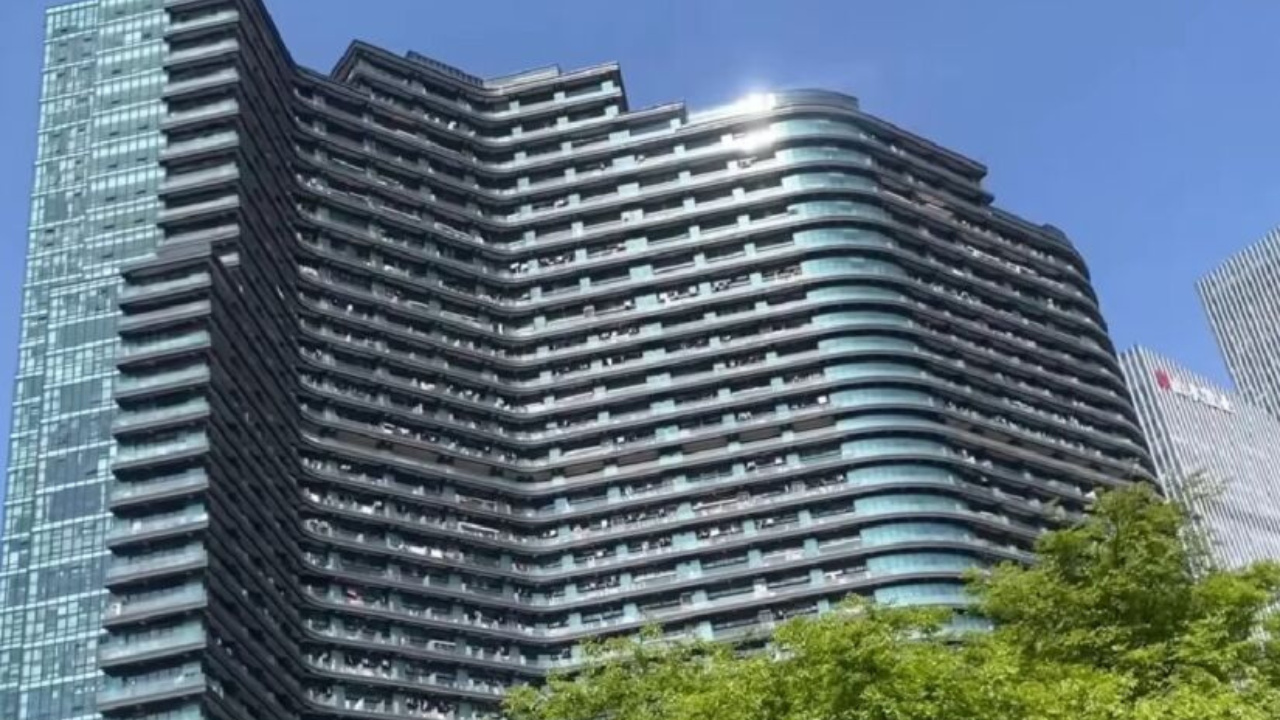
Living in the world’s largest residential building sparks curiosity and fascination. Located in Hangzhou, China, the Regent Park International Center houses around 30,000 people, offering complete infrastructure and integrated services. The complex combines apartments, commercial areas, recreational spaces, and community services, making it a true urban microcosm.
In this article, we analyze the challenges and benefits of living in such a unique building, detailing its infrastructure, social dynamics, and how the daily life of thousands of residents reflects the changes in Chinese urbanization. The experience of the Regent Park International Center is a case study on the extreme verticalization of cities and how it impacts quality of life.
The Gigantism Of The Regent Park International Center In Hangzhou
The world’s largest residential building was designed to accommodate 30,000 people, equivalent to the population of a small city. The building is a result of the need to optimize space in Hangzhou, a metropolis facing intense demand for housing.
-
Concrete-filled PVC homes could be cheaper than traditional masonry, UPF research finds; with ready modular panels, less waste, and faster construction, the Concrete-PVC system aims to cut costs and transform affordable housing in Brazil.

-
Brazilian House Built with 32.8 Tons of Construction Debris Offers Affordable Housing Solution
-
Americans Build Entire Homes in a Day Using Compact Sand Foundations and Pre-Made Wooden Trusses, Reducing Construction Costs

-
China’s Largest Floating LNG Plant, NGUYA, Sets Sail for Congo: 2.4 Million Tons Annually for Italy’s Eni


The architecture of the Regent Park International Center prioritizes extreme verticality, combining compact housing units with shared living areas and essential services. According to local government data, the building has advanced safety and accessibility standards, including fire prevention, high-capacity elevators, and 24-hour monitoring.
The high population density, however, presents significant logistical challenges. Internal traffic, waste management, and maintenance of common areas require continuous planning, making Regent Park a true urban neighborhood.
Complete Infrastructure And Integrated Services
One of the major advantages of living in the Regent Park International Center is the infrastructure. The complex has supermarkets, schools, gyms, medical clinics, recreational areas, and cultural spaces. These resources allow residents to have access to practically everything without needing to leave the building, making daily life more practical and efficient.
Security is another strong point. With advanced surveillance systems, access control, and dedicated maintenance teams, Regent Park ensures the protection of 30,000 people. Internal delivery and transport services also facilitate mobility, reducing congestion and improving the daily experience.
Additionally, the building adopts sustainability measures such as recycling, energy conservation, and efficient water management, aligning with green urbanization trends present in various Chinese cities.
Challenges Of Living In The World’s Largest Residential Building
Despite the infrastructure, living in the world’s largest residential building presents considerable challenges. The high density generates impacts on privacy, noise, and coexistence among residents. Reports indicate that issues with communication with management and delays in essential services still occur, reflecting the management difficulties of such a populous building.
Studies on vertical urbanization in China show that complexes with high population concentration require rigorous urban planning to avoid infrastructure overload and security issues. Living in a building with 30,000 people also influences social dynamics, increasing the risk of isolation or conflicts among neighbors, especially in common areas.
Another challenge is psychological. Coexisting with thousands of people in a single space generates stress and requires constant adaptation, as well as improved social coexistence skills to maintain community harmony.

Daily Life And Community At The Regent Park International Center
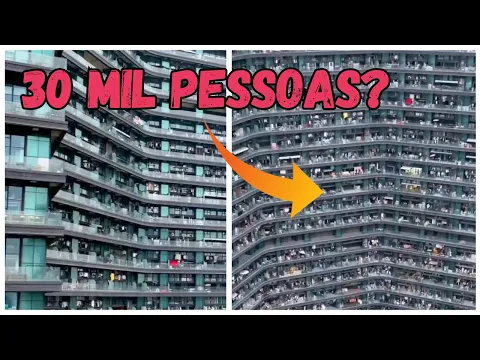
Despite the challenges, daily life at the Regent Park International Center has positive aspects. The building has developed an active internal community, promoting cultural events, classes, and leisure groups that encourage interaction among residents.
The proximity to essential services also reduces long commutes, making daily life more practical. The building management organizes activities and encourages sustainable practices, creating a functional and relatively self-sufficient urban environment.
For many residents, Regent Park has become more than just an address: it is a living community where social coexistence blends with urban routine, offering unique experiences that would be difficult to find in conventional neighborhoods.
Urban Impact And Housing Trends In China
The world’s largest residential building is not just an architectural feat, but also a reflection of urban trends in Hangzhou and other Chinese cities. Buildings of this size emerge as a solution to the lack of urban space and the growing population in metropolitan areas.
Compared to other residential complexes, the Regent Park International Center stands out for its number of residents and the integration of essential services. Urban planners point out that buildings of this type represent an evolution in the way we think about densely populated cities, but they require special attention to mobility, safety, and environmental sustainability.
The Regent Park also serves as a case study on how extreme verticalization can influence social life and urban quality of life, providing valuable insights for future projects in megacities around the world.
Experience Of Living In Regent Park
Living in the world’s largest residential building is a unique experience, marked by advantages and challenges. The complete infrastructure, integrated services, and sense of community make daily life more practical and safe. On the other hand, the population density, coexistence issues, and the need for constant adaptation require resilience and personal planning.
The Regent Park International Center shows that vertical urban projects can be effective in addressing the growing demand for housing in China, as long as they are accompanied by efficient management, adequate infrastructure, and attention to the residents’ experience.
The experience of 30,000 people living under the same roof provides important lessons about urbanization, sustainability, and urban planning. The study of this complex can inspire innovative housing solutions in other megacities, balancing comfort, safety, and efficiency.
A Look At The Future Of Life In Skyscrapers
The Regent Park International Center in Hangzhou, China, is an emblematic example of how architecture and urban planning can come together to meet the needs of large populations. Living in this world’s largest residential building means sharing space with thousands of neighbors, enjoying complete infrastructure, and participating in a unique community.
Projects like this reflect the growing trend of verticalization in global cities, indicating that life in giant skyscrapers may become increasingly common. For urban planners, residents, and housing scholars, Regent Park offers valuable insights into the challenges and possibilities of vertical living, combining innovation, coexistence, and urban efficiency.