Portuguese
  Spanish


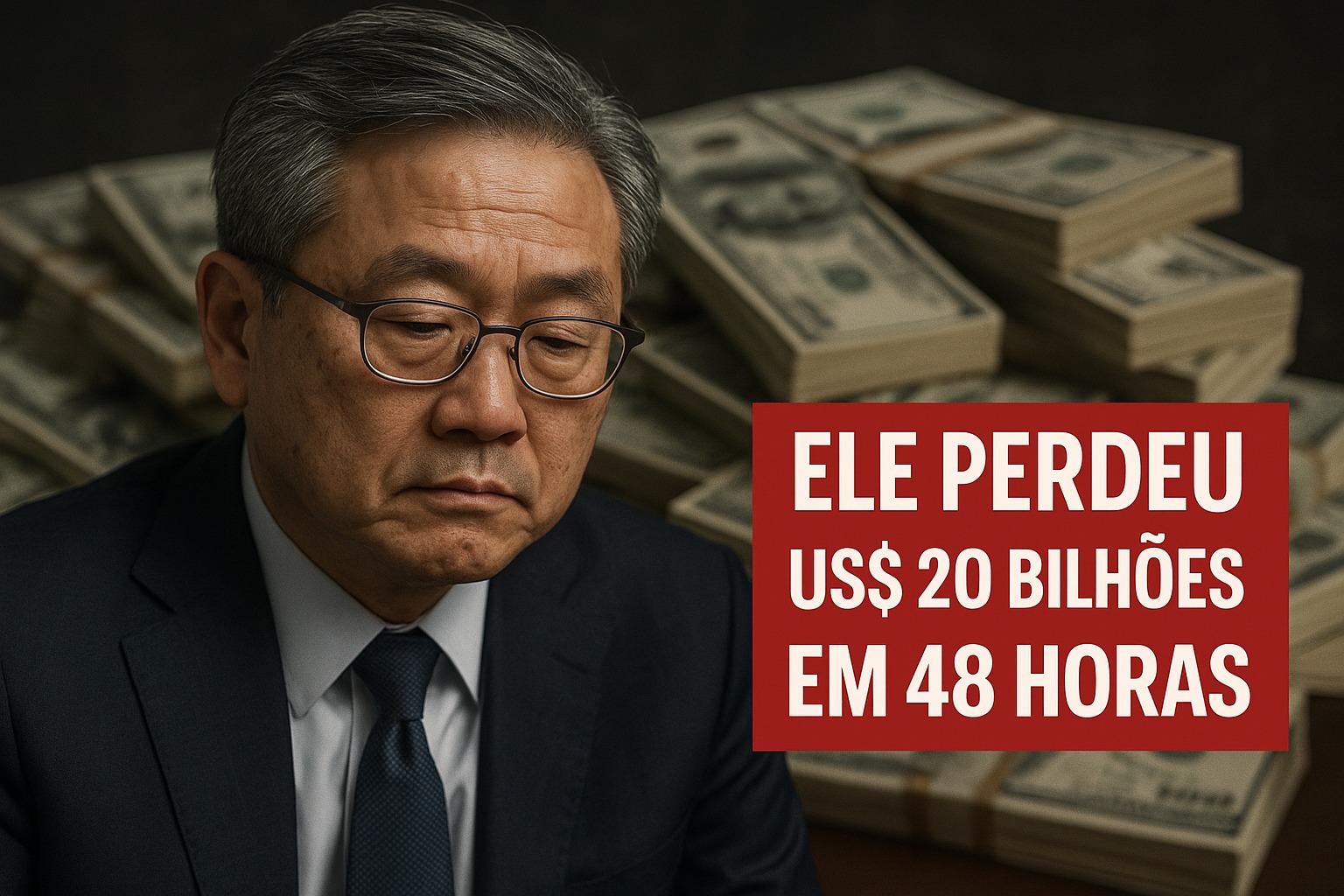


The Fall of Archegos Capital Exposed Weaknesses in Wall Street Leverage, Showed How Hidden Risks Can Explode in a Few Days, and Transformed Bill Hwang into a Symbol of an Unexpected Billion-Dollar Collapse
It was at the end of March 2021 that an unusual movement began to raise concerns among Wall Street traders as successive sell orders appeared suddenly. The transactions involved a small set of stocks but moved billions of dollars and seemed endless. The central question was to identify who was behind that flood of orders. The mystery didn’t last long. Soon, the name responsible emerged strongly: Archegos Capital, the family office led by billionaire Bill Hwang.
Hwang’s Trajectory
Bill Hwang immigrated from South Korea to the United States in 1982 and built his story in the financial market starting from scratch.
He began his career at Hyundai Securities, working in sales and trading, and his performance caught attention.
-
Brazil’s BNDES Funded Metro and Steel Plant Projects in Venezuela with Brazilian Support

-
Abandoned Building in Brazil to Become Biotechnology Unit with $10 Million Investment, Bridging Science, Industry, and Public Health
-
Company Offering “Stones to Diamonds” Scheme Sells Ruined Italian Homes to Brazilians for 1 Euro, Disappears with Promised Renovations, Leaving Buyers in Debt to Italian Tax Authorities Until 2028 Without Property

-
Plastic Packaging Drives Santa Catarina Industry to 230% Growth, Aiming for R$ 500 Million by 2030 Amid Sector Crisis, with New Gearless Line Expanding in Southern Brazil to Compete in South America



This attention came from a heavyweight figure. Julian Robertson, founder of Tiger Management and a reference among investors, invited Hwang to work alongside him. This connection was decisive.
When Robertson retired in 2000, he began to support funds of several former employees, nicknamed Tiger Cubs. Hwang was among them. Still in 2001, he created Tiger Asia, which managed over US$ 10 billion at its peak.
The Billionaire’s First Big Problem
The promising trajectory suffered a blow in 2012. Tiger Asia was shut down after Hwang admitted to insider trading in trades involving Chinese banks.
Prohibited from managing third-party funds, he opted to manage only his own wealth.
This is how Archegos Capital was born. The focus was on the technology sector. Hwang took advantage of the strong rise of the Big Techs.
Google, Amazon, Netflix, and Facebook made up his portfolio because he believed in the potential of these companies.
Between 2013 and 2021, the manager transformed US$ 200 million into US$ 20 billion by operating with high leverage. However, the strategy hit a limit on March 22, 2021.
The Unexpected Turnaround
ViacomCBS, the largest position in the portfolio, announced a US$ 3 billion equity issuance. The market reacted very poorly.
The next day, the stock fell nearly 10%. Wednesday was no different, with another drop of 23%.
With the plunge, margin calls appeared. Banks demanded collateral to cover loans. To meet the requirements, Hwang would have to sell other positions. He refused this alternative.
As the stocks continued to plummet, the banks decided to liquidate Archegos’ positions. There was no way out.
The operation exposed the extent of the leverage. Despite having US$ 20 billion, the family office was moving about US$ 100 billion.
The Destruction of the Billionaire’s Wealth
The forced liquidation wiped out Bill Hwang’s wealth from US$ 20 billion to zero in just two days. At the same time, banks involved in the operations reported losses of US$ 10 billion.
Credit Suisse was the most affected, accumulating a loss of US$ 5.5 billion. Goldman Sachs, Nomura, UBS, and Morgan Stanley also suffered significant impacts as they were exposed to Archegos’ leveraged operations.
Legal Consequences
In April 2022, Hwang was arrested and charged with fraud. The SEC stated that Archegos engaged in risky trades without economic purpose, solely to artificially inflate prices. The collapse exposed the hidden risk in the structures used by the family office.
The Broad Impact
The revelations broadened the debate on extreme leverage as they showed how complex structures can hide significant risks.
Moreover, the case highlighted weaknesses in the internal controls of the banks involved. For the market, the event served as a warning about the speed at which losses can multiply when concentrated operations become unbalanced.
Hwang’s story became a symbol of these limits. This marked the global sector.
With information from Curioso Mercado.