






 Portuguese
  Spanish


NHTSA Investigation Puts Over 1.4 Million Honda and Acura Vehicles Under Review for Possible Serious Failure in the 3.5 V6 Engine, Which May Cause Total Failure, Fire, and Million-Dollar Losses for Owners and the Automaker.
The U.S. highway safety agency has opened a preliminary evaluation (PE25008) to investigate failures in the connecting rod bearing of Honda’s 3.5 V6 engine that may cause complete failure, with a risk of collision and fire.
The procedure, initiated on August 20, 2025, covers 1,410,806 vehicles and was prompted by the number of reports submitted to the regulator.
If the defect is confirmed, the investigation could result in a widespread recall in North America.
-
Brazil’s Micro-Entrepreneur Program May See Major Changes: Income Cap Could Increase to R$ 130,000, Annual Inflation Adjustments, and Allow Hiring of an Additional Employee

-
DoorDash Founder Tony Xu, CEO of an $85 Billion App, Becomes Delivery Driver for an Hour, Completes Four Orders, Makes $19

-
Lufthansa CEO Jens Ritter Takes on Flight Attendant Role, Uncovers Overlooked Issue in Economy Class
-
7-Year-Old Estela Wins Ballet Qualifier; Family Crowdfunds for Argentina Finals in October


What the NHTSA Is Investigating
According to NHTSA’s public documents, the focus is on failures of the connecting rod bearing that, when losing lubrication or being damaged, can seize the assembly and lead to internal engine breakage.
The agency states that the goal is to measure the extent and severity of the problem and assess the risk to safety on the roads.
Which Models and Years Are Under Review
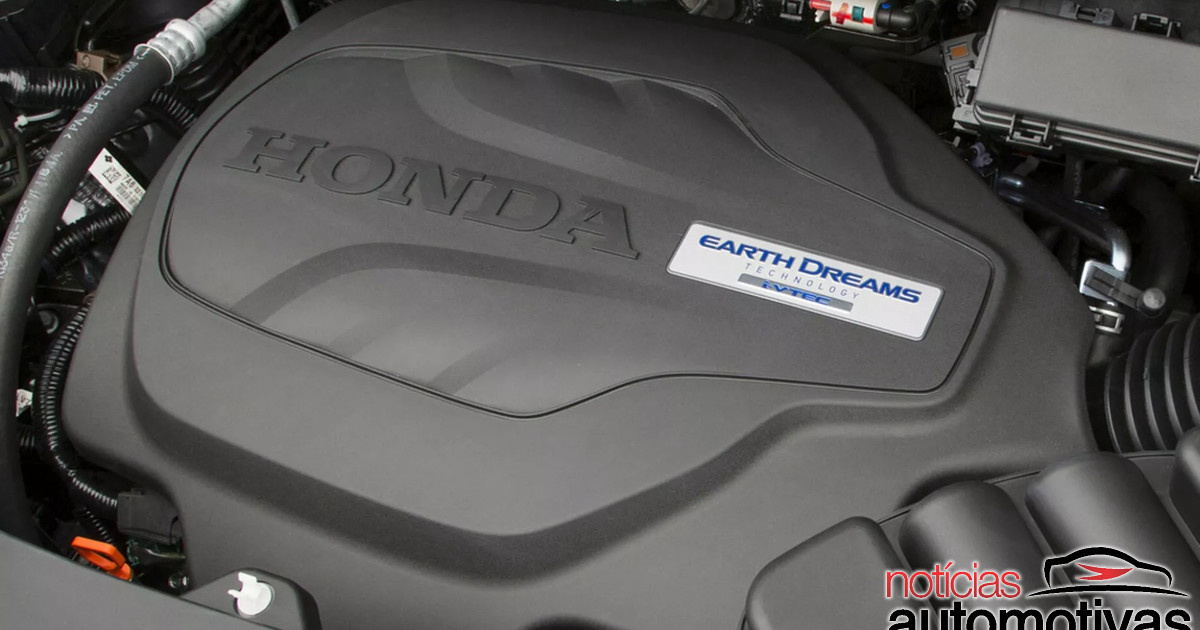
The analysis involves Acura TLX (2018 to 2020), Acura MDX (2016 to 2020), Honda Pilot (2016 to 2020), Honda Odyssey (2018 to 2020), and Honda Ridgeline (2017 to 2019).
All are equipped with the same 3.5-liter V6. The estimated fleet potentially affected in the U.S. is 1.41 million units.
How Many Complaints Exist
So far, the NHTSA has recorded 414 formal complaints from owners.
Honda itself reported 2,598 additional records, totaling 3,012 occurrences related to the issue.
There are seven reports mentioning collisions or near fires, but no injuries have been recorded.
Is It the Same Problem as the 2023 Recall?
No. In November 2023, Honda recalled about 249,000 vehicles for a manufacturing defect in the crankshaft (recall 23V-751), which could cause premature wear of the connecting rod bearing.
The new investigation, however, is not related to this noncompliance.
The NHTSA itself states that the failures currently being investigated are outside the scope of the previous recall and do not arise from the same crankshaft defect.
How the Defect Manifests
Reports describe warning lights illuminated on the dashboard, metallic noises coming from the engine, and sudden loss of power.
In extreme situations, the engine may seize while in motion, raising the risk of an accident.
These symptoms are consistent with a connecting rod bearing failure, which connects the piston to the crankshaft and operates under high load and high RPM. The agency cites the possibility of total engine failure.
Financial Impact for Owners
When there is significant internal damage, the solution may be engine replacement.
In vehicles with a modern V6, the cost often exceeds US$ 10,000 including parts and labor.
Market values show remanufactured engines at around US$ 4,900 for the part alone, excluding installation, fluids, and calibration. This helps explain the high total repair costs in severe cases.
What Changes for Honda
This time, the investigation was opened as a preliminary evaluation, a stage that may evolve into a detailed analysis and, if necessary, a recall mandated by the authority.
In the event of a recall, the automaker would have to repair for free the affected units.
The impact is significant because the J-Series 3.5 V6 is one of the pillars of the brand’s portfolio in the U.S., present in high-volume sedans, SUVs, and pickup trucks.
What the Brand Says
So far, there is no new recall announced for this specific assembly. Public documents show that the company provided data to the NHTSA during previous inquiries.
The new investigation was prompted by the accumulation of reports outside the scope of the 2023 recall. The agency states it will continue collecting information to determine the scope and cause.
Guidance for Drivers
Owners of Acura TLX and MDX and Honda Pilot, Odyssey, and Ridgeline from the listed years should monitor symptoms such as metallic noise, unusual vibration, and loss of power.
They should also adhere to oil change intervals specified in the owner’s manual.
In case of anomaly, the recommendation is to discontinue use and seek authorized service.
It is important to document the call for any potential warranty coverage or service program that may be announced after the investigation concludes.
Next Steps of the Investigation
The NHTSA opened PE25008 on 08/20/2025 and highlighted that the number of reported failures in vehicles outside the previous recall presents a possible safety risk, justifying the new phase of analysis.
In the end, the agency may close the case without action, expand the investigation, or require corrective measures from the manufacturer.
Do you drive a Honda or Acura V6 manufactured between 2016 and 2020 and have already noticed noise in the engine or sudden loss of power; what symptoms appeared and how was the service in the network?




A Honda é Bomba igual a Toyota Hilux com problema na quebra do motor por causa da gasolina