Portuguese
  Spanish


Sorocaba Surprises With Industrial Advancement, Planned Urbanization, and an Export Profile That Connects the Interior of São Paulo to Global Markets, Maintaining High Quality of Life Indexes and Innovative Tradition.
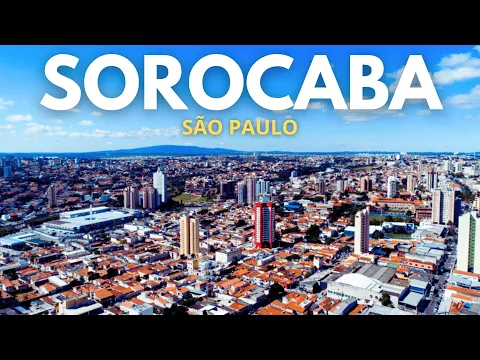
Sorocaba, located in the interior of São Paulo, has established itself as one of Brazil’s largest industrial powers and a reference in urban development.
Today, the city ranks among the ten largest economies in the state and exports to about 120 countries, maintaining the title of “Brazilian Manchester” due to its historical trajectory marked by industrialization and the ability to reinvent itself.
Sorocaba stands out not only for its industrial relevance but also for its robust infrastructure and quality of life indexes above the national average.
-
At 86, mountaineer Carlos Soria becomes the oldest person ever to summit an 8,000-meter peak, reaching the top of Manaslu in Nepal.

-
Brazil Secures Spot in International Mathematical Olympiad as Students Excel in One of the World’s Most Competitive Selections, Highlighting Growth in STEM Education Among Young Talents

-
June 2026 Heatwave in France Depletes “Blanc de Meudon” as Residents Use Chalk Powder to Cool Homes by 3 to 7°C Without Air Conditioning
-
Frustrated by delays, Brazilian entrepreneur builds toll road in 3 days to avoid 23 km detour.


According to recent data from the Brazilian Institute of Geography and Statistics (IBGE) for 2025, the municipality is the seventh most populous in the state of São Paulo, with a significant Gross Domestic Product (GDP) exceeding R$ 31 billion, approximately 32% of which comes from the industrial sector.
The Human Development Index (HDI) of the city is 0.798, considered “high” and above the national index of 0.727, highlighting the balance between economic growth and quality of life.

History of Industrialization in Sorocaba
The transformation of Sorocaba into the Brazilian Manchester began in the 19th century when textile production became the main economic driver.
The emergence of the Santa Maria Textile Factory, inaugurated in 1882 on the banks of the Sorocaba River, marked the beginning of the industrialization cycle, attracting investments, workers, and accelerating the urbanization process.
Inspired by Manchester in England, the symbol city of the Industrial Revolution, Sorocaba adopted British architectural and operational models, contributing to the development of a working-class profile and the emergence of neighborhoods with planned urbanization.
The Santa Maria Factory, now transformed into a historical park, was for decades a symbol of the city’s modernization.
Its distinctive architecture, with square chimneys and advanced ventilation and lighting systems, illustrated the British influence on national textile production.
The impact of this process was amplified by the city’s strategic location, just 90 kilometers from the state capital and integrated into the national road network through highways such as Castelo Branco, facilitating access to major consumer centers and ports.
Economic Diversification and Industrial Expansion
Throughout the 20th century, Sorocaba expanded its industrial park and diversified its economic matrix.
Industries such as metallurgy, automotive, chemicals, and equipment began to coexist with the old textile mills.
Internationally renowned companies, such as Toyota, ZF, Case, New Holland, set up factories in the city, attracted by the infrastructure, qualified workforce, and logistical ease.
Currently, Sorocaba hosts over 2,000 industries, according to the Municipal Prefecture, and the industrial sector employs about 58,000 workers, accounting for 26% of local formal jobs.
In addition to industrial production, Sorocaba invested in technological innovation, startup incubators, and technology hubs, establishing a vocation for the knowledge economy.
The municipality also implemented incentives for the green economy, seeking to align industrial development with environmental sustainability.
Planned Urbanization and Quality of Life
Despite its markedly industrial profile, Sorocaba is recognized for its high standard of urbanization and the availability of public services.
Neighborhoods such as Campolim and Jardim Faculdade exemplify the presence of reference hospitals, such as Santa Lucinda, universities, schools, and extensive green areas.
Projects like the Chico Mendes Natural Park and the Itavuvu Bike Path demonstrate the city’s commitment to integrating urban growth with environmental preservation, reinforcing the title of “Brazilian Manchester” as a symbol of balanced progress.
The planned urbanization process was not limited to residential and service expansion.
The city hall has encouraged urban mobility policies, investing in bike paths, public transportation, and accessibility while strengthening social inclusion programs and job creation.
Export Market and Innovation in Sorocaba
Just as Manchester diversified its economy over the centuries, Sorocaba has been expanding its activity beyond traditional industry.
The city has established itself as a regional hub for technology, services, commerce, and education, attracting national and international investments.
In the current scenario, its industries export products to 120 countries, ensuring a constant presence in strategic markets and contributing to the trade balance of the state of São Paulo.
With a dynamic economy, Sorocaba ranks among the Brazilian cities with the highest industrial employment.
Data from the General Employment and Unemployment Registration (Caged) shows that in 2025, the city is among the ten municipalities with the highest number of industrial jobs in the country, reinforcing its reputation as a development hub.