Portuguese
  Spanish


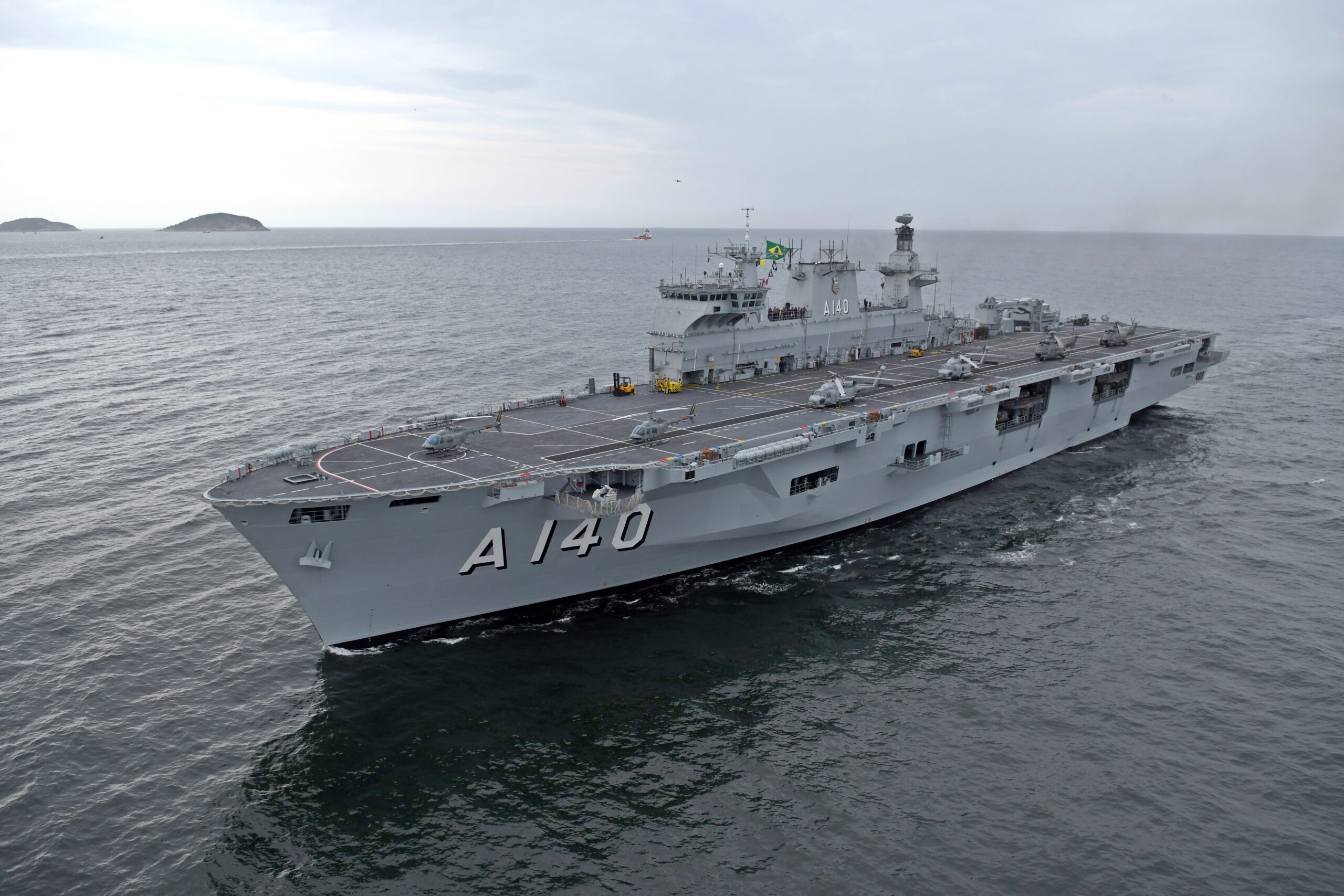
Port Piauí received a Navy ship dedicated to oceanographic research and safe navigation on the Brazilian coast.
Port Piauí received, on Tuesday (12), the hydro-oceanographic vessel Cananeia, part of the Navy of Brazil and used in research aimed at monitoring the country’s waters. The arrival is part of a commemorative expedition for the 150th anniversary of the Navy’s Directorate of Hydrography and Navigation, an initiative that is taking the ship to different points along the Brazilian coast.
The journey began in March, in Rio Grande do Sul, and will continue to Belém, in Pará. Along the route, the vessel will pass through 16 ports distributed along the national coast.
Port Piauí is part of the vessel’s special route
The stop at the Piauí terminal is part of the itinerary of the so-called “Cananeia Epic,” an action created to celebrate the history of the Directorate of Hydrography and Navigation. During the journey, the ship visits cities in different regions of the country.
-
Brazil’s Port of Santos to Receive New $1.1 Billion Container Terminal, Tecon Santos 10, Set to Begin Operations in 2029

-
Ports without drivers and cabins already move containers like automated factories: robotic cranes, autonomous electric vehicles, and software transform giant terminals into 24-hour logistics machines.
-
About 300 American ports still breathe diesel from trucks, cranes, and locomotives, but they are now trying to electrify heavy machinery to clean the air for 31 million nearby residents.

-
A 220-meter giant powered in part by solar energy and lithium batteries has just unloaded nearly 5,000 Chinese cars at the Port of Itajaí. It is the first of ten Grimaldi super ships and the first in the world prepared to run on ammonia as fuel.




Among the locations planned on the route are:
- Porto Alegre (RS);
- Santos (SP);
- Salvador (BA);
- Natal (RN);
- Fortaleza (CE);
- Belém (PA).
Additionally, the itinerary includes strategic maritime areas, such as the Abrolhos Archipelago, in the so-called Blue Amazon.

Ship engages in research for maritime safety
The main function of the Cananeia is to collect important information for navigation in Brazilian waters. The vessel conducts studies related to:
- ocean conditions;
- water temperature;
- ocean currents;
- analysis of the submerged terrain.
This data helps to enhance the safety of maritime operations and contributes to technical surveys conducted by the Navy.
Porto Piauí received a vessel built in Brazil
The Cananeia was built in 2013 by the Inace shipyard in Fortaleza, Ceará, being the first ship of this type manufactured in the country.
Initially, the vessel was named Alpha Delphini and was developed to support research by the Oceanographic Institute of the University of São Paulo (USP).
In September 2025, the ship officially became part of the Brazilian Navy’s structure after being donated by the university.
Vessel honors São Paulo city
After incorporation into the Navy, the ship was named Cananeia, in reference to the municipality located on the coast of São Paulo.

The choice honors the place where the first nautical chart entirely developed in Brazil was produced by the Directorate of Hydrography and Navigation.
In addition to the change in visual identity, the ship also received adaptations focused on operational safety. Even so, the original scientific equipment was maintained for the continuity of technical and oceanographic activities.
Ship has autonomy of up to 15 days at sea
With 26 meters in length and seven meters in width, the Cananeia was designed for long-duration maritime research missions.
The vessel has the capacity for:
- up to 24 passengers;
- six crew members.
Another highlight is the operational autonomy, which can reach 15 continuous days at sea during navigation and data collection activities.
With information from the Government of Piauí