






 Portuguese
  Spanish
  6 min of reading
  0 comments


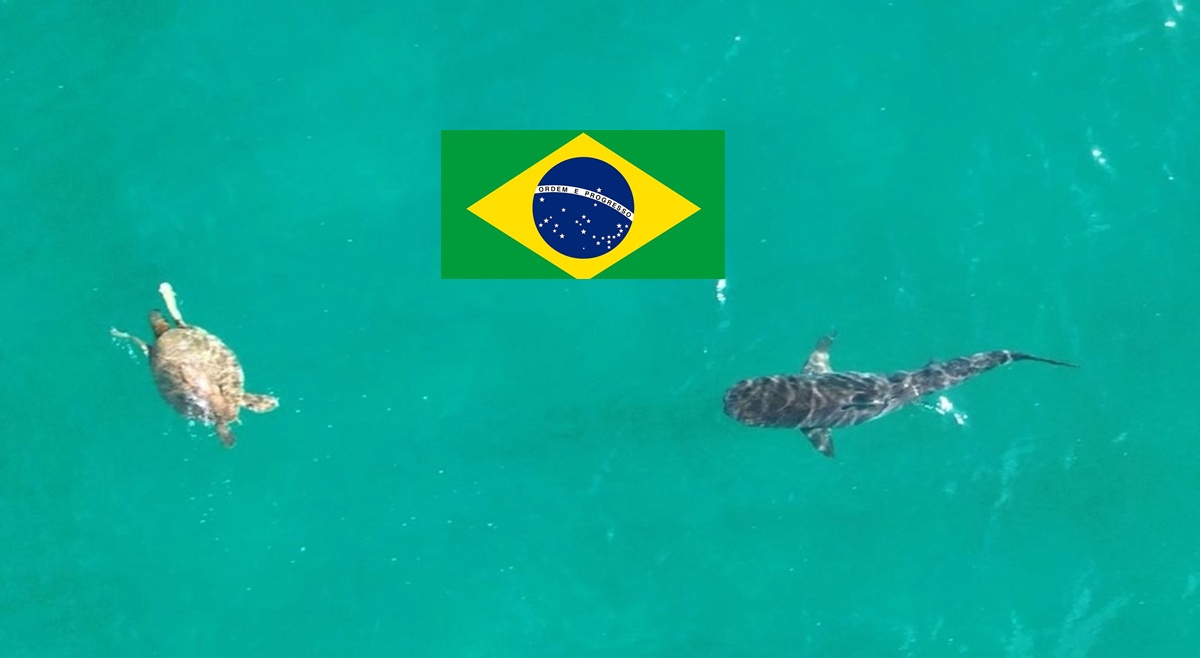
The Report Follows Research in Fernando de Noronha and the Pantanal, Showing How Drones, Radiotelemetry, and International Investments Support the Monitoring of Threatened Sharks and Anteaters, Revealing Challenges, Scientific Methods, and the Urgency of Conservation in Brazil
A report from Domingo Espetacular and a more recent article from G1, published in December 2025, reveal updated data from the monitoring of sharks in Baía do Sueste, in Fernando de Noronha, connecting science, environmental risk, and conservation.
G1 details results obtained between July 2024 and December 2025, a period during which an acoustic receiver registered 16,120 detections of sharks with transmitters in the area of Baía do Sueste.
Acoustic Technology and Animal Identification in Sueste
The equipment used identifies the passage of marked animals, allowing mapping of presence and frequency without direct contact, enhancing understanding of how sharks utilize sensitive coastal areas of the archipelago.
-
The “Chinese invasion” has arrived: BYD already dominates almost 45% of the electric buses registered in Brazil in May 2026, while 80% of the entire electric fleet in the country is concentrated in São Paulo with 1,300 vehicles.

-
From toy to track machine: Koenigsegg Sadair’s Spear made with over 327,000 Lego pieces reaches 111 km/h and surpasses the former Bugatti Chiron record.

-
Deep-sea marine animal can go more than 5 years without eating, combining physical adaptations and genetic mechanisms to survive in environments with extreme food scarcity; meet the Bathynomus.

-
Science wants to know what football does to you: study gathers smartwatch data to understand the real impact of World Cup emotions on the human body



According to researchers, the acoustic receiver identified one lemon shark and seven tiger sharks that were previously marked with acoustic transmitters installed by scientists.
Some individuals appear much more frequently in Baía do Sueste, indicating specific patterns of site usage over time, including recurring returns to the monitored area.
Biologist Bianca Rangel, coordinator of the Sharks and Rays Project of Noronha, reported that two female tiger sharks stood out in the number of records.
One of these females accumulated 7,353 records, while another totaled 3,686 detections over a period of approximately a year and a half of continuous monitoring.

Scientific Partnerships and Research Scope
The monitoring uses acoustic telemetry technology and is conducted in partnership with Professor Jones Santander Neto from the Federal Institute of Espírito Santo, expanding the scientific base of the project.
In total, the research has already marked 62 sharks with acoustic trackers, enabling tracking of movements and residency at different points of the archipelago.
Of this total, 48 are tiger sharks, seven are sharpened-nose sharks, three are sandbar sharks, two are hammerhead sharks, and two are lemon sharks, making up a diverse panel of monitored species.
These data complement the work presented by Domingo Espetacular, which showed tagging procedures, quick examinations, and release of the animals back to the sea in a matter of minutes.
Incidents and Changes in the Use of Baía do Sueste
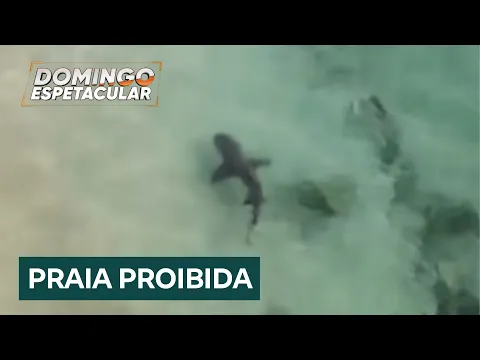
Baía do Sueste began receiving special attention after two serious incidents recorded in the region, both attributed to tiger sharks, according to official investigations.
The first case occurred in December 2015, when tourist Márcio de Castro Palma was bitten, losing his hand and part of his right arm during the attack.
The second episode happened in January 2022, when an 8-year-old girl was bitten by a shark and had her leg amputated after the incident.
After these events, the Chico Mendes Institute for Biodiversity Conservation prohibited swimming and diving in Baía do Sueste, a measure that remains in effect.
The data generated by acoustic monitoring are passed on to the agency, serving as a technical basis for management decisions and usage restrictions in the area.
Comparison with Other Points in Fernando de Noronha
In addition to Sueste, another 19 acoustic receivers are distributed across different points of the island, allowing for a comparative analysis of the presence of sharks.
The highest detections of tiger sharks occurred in areas such as Laje Dois Irmãos, Praia do Leão, Baía dos Golfinhos, Ponta da Sapata, Ilha Rasa, and Ilha do Meio.
Laje Dois Irmãos concentrated the highest number of records, with 37 sharks generating over 30,000 detections in a single year of monitoring.
This number is significantly higher than that recorded in Sueste, indicating that the bay is not the main retention point for the species in the archipelago.
According to Bianca Rangel, a general analysis of the receivers showed that the frequency of tiger sharks in Sueste is low compared to other locations in Noronha.
Use of Drones and Predation Behavior
In addition to acoustic telemetry, researchers use drones to track the movement of sharks in Baía do Sueste and adjacent areas.
According to Fábio Borges, coordinator of the Sharks and Rays Project, tiger sharks enter Sueste mainly to hunt.
He states that the area functions as a predation zone, especially for turtles, which explains the sporadic and strategic presence of the animals.
This behavior reinforces, in the researchers’ assessment, that the swimming ban in the bay is a reasonable preventive measure.
Until the behavior of the animals is fully understood, the decision reduces risks to bathers in an area where the shark is actively hunting.
Risk to Bathers and Public Perception
Fábio Borges explained that the risk to bathers in Sueste is slightly higher precisely because of the predation context observed by researchers.
The animal, when attempting to hunt, may investigate a human if there is an encounter, which increases the chance of incidents, even without feeding intention.
The coordinator emphasized that humans are not part of the sharks’ diet, an argument reinforced by the low frequency of attacks.
According to him, if people were part of their diet, incidents would be much more common, as there are sharks and humans in the sea every day.
Connection with Conservation Shown on Domingo Espetacular
The report from Domingo Espetacular contextualized the monitoring of Noronha within a broader conservation agenda in Brazil.
The program showed that the monitored sharks are not a direct threat, but rather species threatened by fishing and human pressure.
Researchers conduct small surgeries in the water to install transmitters, identify all animals that appear on the coast, and monitor their health.
The scientific work seeks to ensure that these sharks develop, reproduce, and do not disappear from areas considered natural refuges.
Pantanal and the Monitoring of the Giant Anteater
The same journalistic trip continued to the Pantanal in Mato Grosso do Sul, where another conservation project monitors the threatened giant anteater.
Using radiotelemetry, researchers monitor individuals with transmitters installed in collars or vests, tracking their movements over extensive areas.
The work revealed rare encounters with females and cubs, scenes considered increasingly uncommon in regions where the species has already disappeared.
The giant anteater faces risks such as illegal hunting, wildfires, and roadkill in highways encroaching on its natural habitat.
Scientific Data and Management Decisions
Just like in Noronha, the data collected in the Pantanal support ecological studies and conservation-oriented management decisions.
In the case of sharks, the recent numbers released by G1 reinforce that Sueste is not the area of highest permanence, but rather a specific usage area. This distinction is critical for guiding public policies, communication with tourists, and maintaining restrictions in sensitive points of the archipelago.
The integration of acoustic monitoring, drones, and comparative area analysis enhances the precision of conclusions drawn by researchers.
Science, Risk, and Preservation in Balance
The latest data from G1, combined with the television report, shows that science and prevention go hand in hand in Fernando de Noronha.
Baía do Sueste remains closed to bathers, supported by technical evidence, while researchers deepen their understanding of shark behavior.
At the same time, continuous monitoring reinforces that the animals are threatened and need safe areas to survive.
This balance between human protection and environmental preservation defines the direction of management in Noronha and other Brazilian biomes monitored by science.


-

-

-

-

-

-

60 people reacted to this.