






 Portuguese
  Spanish


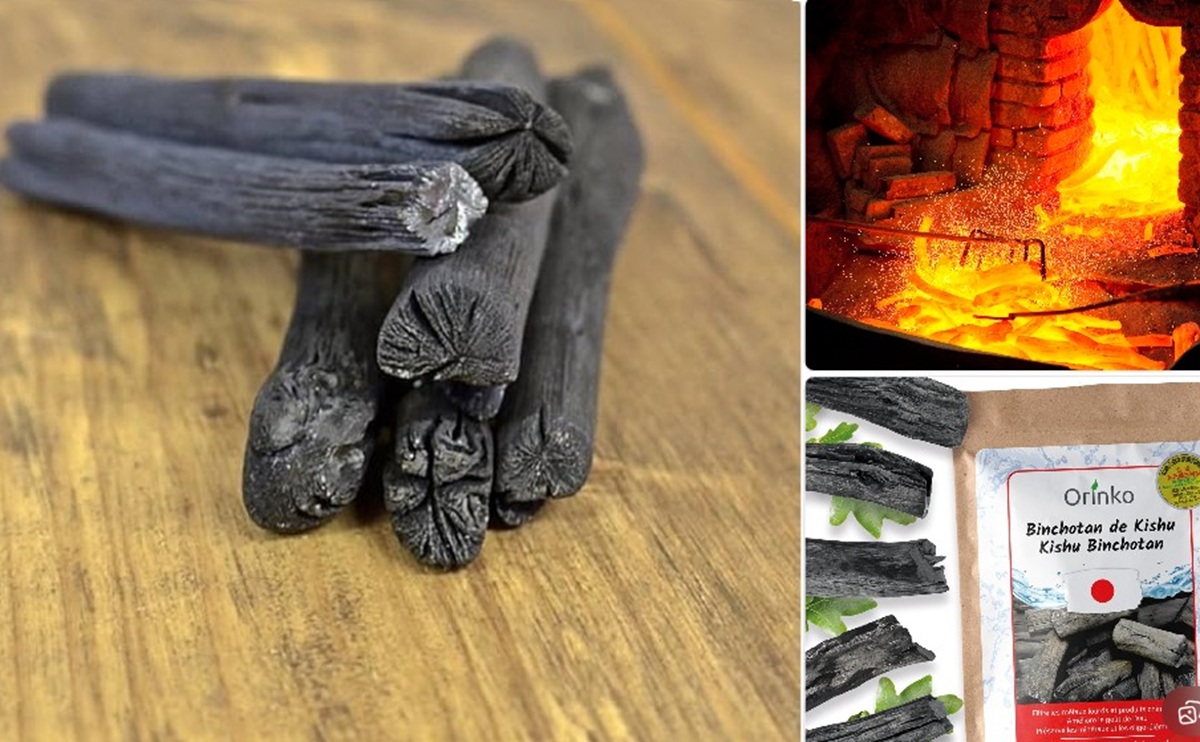
Produced In Japan For Up To 10 Days In A Traditional And Meticulous Process, Binchotan Offers Intense Burning Without Smoke And Odor, Becoming The Favorite Charcoal Of Chefs And Enthusiasts Seeking Maximum Performance
The Binchotan charcoal has always sparked curiosity among enthusiasts seeking to understand how this traditional Japanese product is made and where it comes from.
Now, you will see a detailed explanation of its manufacturing process, dedicated to true connoisseurs of this special charcoal.
Binchotan charcoal received its name in honor of the manufacturer Bi cchuya Cho zaemon, who lived in Tanabe, in the Japanese province of Wakayama, in the late 17th century.
-
Russia and India Lift 320-Ton Pressure Vessel into Kudankulam Nuclear Plant Reactor, Advancing Project That Has Already Prevented 112 Million Tons of CO2 Emissions

-
Brazilian Student Wins Global Science Fair in the U.S. with Sound Wave Method to Alter Alzheimer’s-Linked Genes
-
Bosch Unveils Revolutionary 2.3 kg Hub Motor for E-Bikes with 45 Nm Torque and 400 Watts Power, Eliminating Resistance Above 25 km/h in Historic Shift for German Manufacturer
-
Brazilian Engineer Develops Marine Bacteria from Ubatuba into a Mini Power Plant Generating 227 mW per Square Meter, Cleans Air by Capturing CO₂ and Releasing Oxygen


Binchotan Charcoal
Binchotan charcoal is made using the wood of Ubame oak, which stands out for being harder and having denser grains than other types of oak, making it ideal for production.
Producers seek mountainous and hard-to-access regions to find this type of wood, as Ubame grows specifically in steeper areas.
This characteristic makes the harvesting work much more complicated than cutting common oaks.
The name Ubame can appear with different kanji.
Some meanings refer to the reflections of the trees, resembling wrinkled eyes or the shape of horse eyes. These particularities reinforce the uniqueness of the species used in the charcoal production.
The Principle Of Controlled Burning And The Absence Of Oxygen
Curiosity about how wood can turn into charcoal instead of ash is common. Many people think that extreme heat would completely destroy the material.
When firewood is burned outdoors, oxygen reacts with the wood’s carbon, forming carbon dioxide and leaving only ash. The secret of charcoal is to avoid this reaction.
The key lies in controlling the oxygen. In a low-air environment, the water contained in the wood evaporates while the fire slowly consumes the material.
This process results in charcoal, which undergoes similar procedures in various regions, differing only in the final stage, which is quite characteristic of Binchotan.
The Importance Of Sustainable Wood Use
Just like any activity that depends on natural resources, Binchotan producers need to be responsible for the use of wood.
Over the years, they have learned that trees can be harvested annually without harming the ecosystem or putting the industry at risk.
However, the recent increase in demand has led some companies to ignore sustainable practices and harvest more than allowed, threatening the supply of Ubame oak.
From The Forest To The Oven: The Hard Routine Of Producers
Production begins in the forest, where trees are manually felled. Since the terrain is mountainous and hard to access, everything is done without the assistance of machines.
The trees need to be tied in bundles for transport, but since they do not grow completely straight, it is necessary to make incisions in the trunk and insert wooden wedges to straighten them.
When the trunks are too thick, producers will even split them in half.
It is intense physical work that requires skill, technique, and much practice accumulated over generations. After being collected, the wood is transported to the factory, where it proceeds to the oven.
The Organization Of Firewood Inside Special Ovens
The bundles of wood are placed vertically inside a large oven. The space is ample enough for a person to enter during the arrangement.
The wood needs to be distributed in a compact and organized manner since this directly influences the final result.
After this stage, lighter and faster-burning wood is inserted to serve as initial fuel.
The fire is lit, and the opening of the oven is gradually sealed with bricks and mortar over nine hours. Even sealed, the oven remains with four small holes, two at the bottom and two at the top. These holes ensure minimal air entry and allow steam to escape.
The Long Burning That Transforms Wood Into Charcoal
For six or seven days, burning occurs at low temperatures. This prolonged process removes all moisture from the wood.
The proof that this is happening is the white steam that comes out of the factory’s chimney. When the steam disappears, it means that ordinary charcoal would be nearly ready.
However, in the case of Binchotan, there is still a stage that completely differentiates it from other types of charcoal.
The Refinement Process That Makes Binchotan Unique
The final stage is called Seiren, which means refinement. Instead of merely extinguishing the fire by completely closing off the air outlets, the producer does the opposite: he opens new openings and gradually increases the oxygen entry into the oven.
This must be done with extreme caution. If the oxygen flow increases too quickly, all the carbonized wood will burn completely. If it’s too slow, the charcoal will not achieve the expected quality.
This phase lasts from twenty-four to forty-eight hours. The internal temperature reaches one thousand degrees Celsius. During this period, the wood bark completely burns off, leaving the charcoal denser, more durable, and of higher purity.
Binchotan reaches more than ninety-five percent pure carbon, while ordinary charcoal remains around seventy-five percent.
The Removal Of Red-Hot Charcoal And Controlled Cooling
At the end of the process, the oven needs to be emptied while the charcoal is still very hot. If it were left to cool like producers do with other types of charcoal, Binchotan would turn to ash.
To prevent this, the charcoal is removed from the oven and immediately covered with sand and ash. This gradual cooling is essential to preserve its structure. The white dust that covers the charcoal is precisely why it is called white charcoal.
Producing Binchotan takes up to ten days and results in about six hundred kilograms per batch. The process requires large amounts of wood and a lot of technique.
A significant part of the mass is lost during burning, as the final material weighs about one-tenth of the original wood.
The Tradition That Crosses Generations
The manufacturing of Binchotan is a craft passed down from generation to generation. The dedication is significant because the final result compensates for all the effort.
Binchotan burns hotter and cleaner than any other charcoal. Its durability is greater, and it emits infrared radiation that cooks food more evenly. Additionally, the intense heat transforms fat drips into steam, generating a characteristic smoky flavor.
Access to Binchotan allows customers in Canada to enjoy a tradition that carries history and technique over the centuries.





Be the first to react!