






 Portuguese
  Spanish


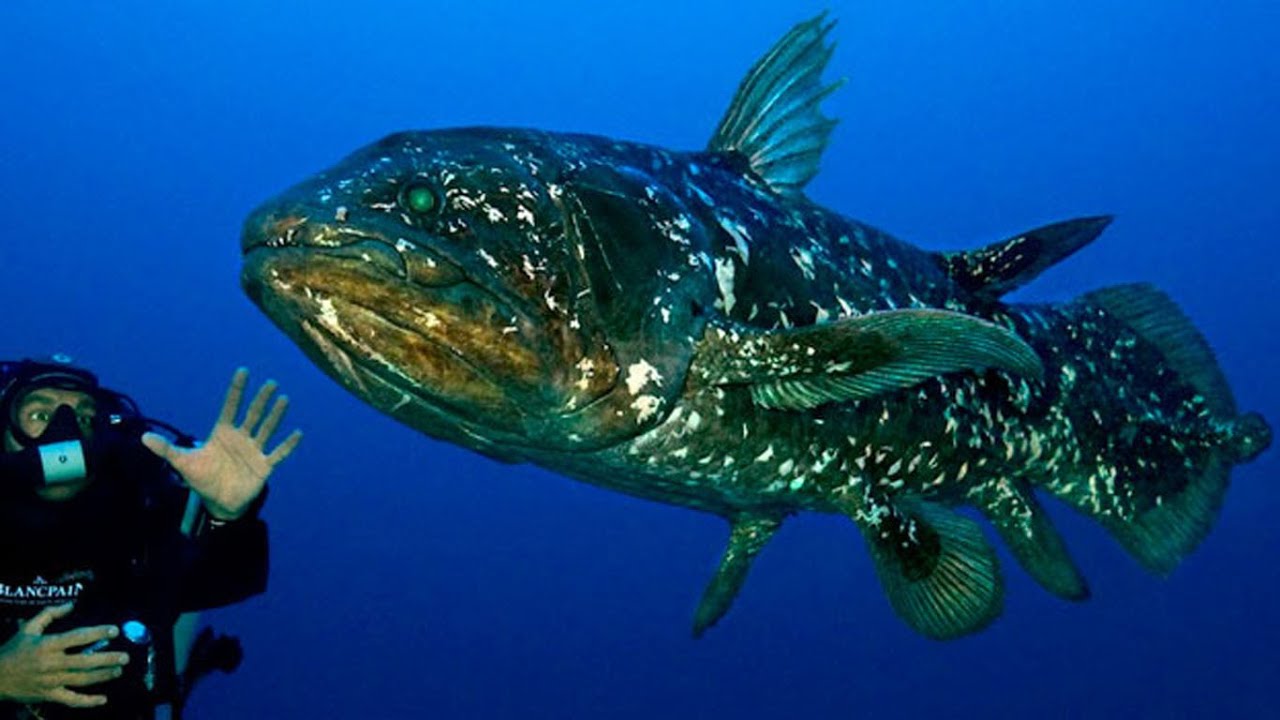


Coelacanth, Considered Extinct for 66 Million Years, Was Found Alive in Deep Waters, Maintained Primitive Anatomy, and Became the Largest “Living Fossil” Ever Recorded.
For over half a century, biology textbooks confidently stated that the coelacanth had vanished along with the dinosaurs at the end of the Cretaceous period, about 66 million years ago. The fish appeared only in ancient fossils, linked to a remote past in the evolution of vertebrates. Everything changed in December 1938, when a living specimen was accidentally captured by fishermen off the coast of South Africa. The discovery not only shocked the scientific community but also forced the rewriting of entire chapters on extinction, evolution, and the persistence of life in extreme environments.
What seemed impossible turned out to be real: an animal considered extinct for tens of millions of years was still alive, hidden in the depths of the ocean.
What Is the Coelacanth and Why Was It Considered Extinct
The coelacanth belongs to the genus Latimeria, with two living species known today: Latimeria chalumnae, found in the western Indian Ocean, and Latimeria menadoensis, described in 1999 in Indonesia.
-
Scientists Race to Harness Vast Underground Energy for Clean Electricity

-
23andMe Convinced 15 Million to Share Genetic Data, Went Bankrupt in 2025, and Auctioned DNA Database for $305 Million

-
Firefly Aerospace Becomes First Private Company to Successfully Land Lunar Module Upright on the Moon
-
Sony Announces Major Shift: Physical Disc Games for PlayStation to End by 2028, PS3 and PS Vita Stores to Gradually Close


It is a large fish, capable of exceeding 2 meters in length and weighing over 90 kilograms, living in deep waters, usually between 150 and 700 meters.
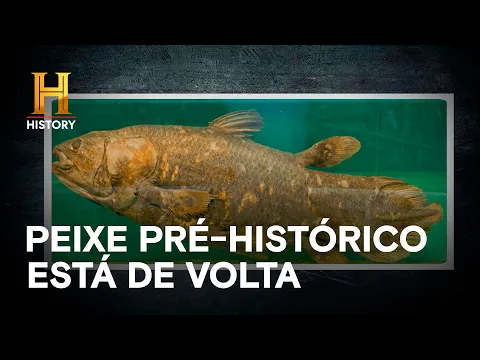

The reason it was considered extinct for so long lies in the fossil record. The last known fossils date from the end of the Cretaceous, a period marked by mass extinctions. For millions of years, no modern vestige was found, leading paleontologists to conclude that the group had completely disappeared.
This assumption seemed logical until a living specimen appeared, virtually identical to the oldest fossils.
The 1938 Discovery That Shook Biology
The first known live coelacanth was captured on December 22, 1938, near the mouth of the Chalumna River in South Africa. Museum curator Marjorie Courtenay-Latimer recognized that this fish did not resemble anything known in modern fauna.
Icthyologist J.L.B. Smith later confirmed that it was a coelacanth, a group considered extinct for tens of millions of years.
The impact of the discovery was immediate. It was not a new exotic species but an animal that, theoretically, should not exist.
From that moment on, the coelacanth came to be called a “living fossil,” not because it was identical to the fossils in all details, but because it retained rare ancestral anatomical features in modern vertebrates.
Primitive Anatomy Preserved for Millions of Years

What makes the coelacanth so special is its anatomy. Unlike common bony fish, it has lobed fins, with internal bones resembling the basic structure of limbs in terrestrial vertebrates. These fins are considered an important link in the evolutionary transition between fish and animals that began to walk on land.
Another surprising trait is the intracranial joint, a kind of “hinge” in the skull that allows movements nonexistent in most modern fish. Additionally, the coelacanth has a vestigial organ similar to a lung, a remnant of ancestors that lived in low-oxygen environments.
Even after modern genetic analyses, it became clear that the coelacanth evolves at an extremely slow pace. Its DNA exhibits mutation rates much lower than those of other fish, which helps explain why its overall form has changed so little over millions of years.
Life in the Depths: The Refuge That Saved the Species
The survival of the coelacanth is directly linked to its habitat. It lives in deep underwater caves, in cold, dark, and stable environments, where pressure is high and human presence is minimal. In these regions, environmental changes occur much more slowly than in shallow waters, reducing evolutionary pressures and risks of rapid extinction.
Studies with submersibles revealed that the coelacanth is a slow swimmer, with an almost “floating” behavior, conserving energy. It feeds on fish and cephalopods, hunting mainly at night. This discreet lifestyle explains why it remained unnoticed by science for so long.
The Scientific Impact of the Rediscovery of the Coelacanth
The discovery of the living coelacanth had profound consequences. It demonstrated that the absence of recent fossil records does not guarantee the extinction of a lineage. It also reinforced the idea that underexplored environments, like the deep ocean, may still hide species considered lost.
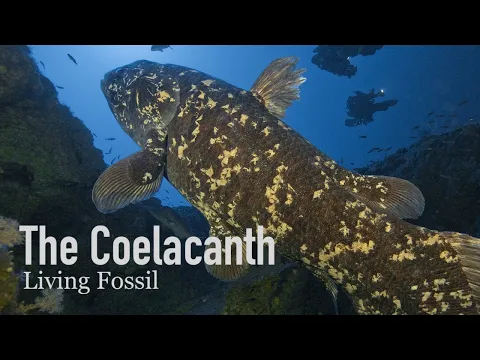
From an evolutionary standpoint, the coelacanth has become a living laboratory. Its genome has helped scientists better understand the origin of terrestrial vertebrates, especially regarding the evolution of limbs, respiration, and adaptation to different environments.
Furthermore, the case raised important debates about conservation. Despite its resilience over geological time, the coelacanth is extremely vulnerable to modern human activity, such as bycatch and degradation of deep habitats.
Conservation and the Risk of a “Living Fossil” Disappearing Forever
Today, the coelacanth is classified as an endangered species. It is estimated that there are only a few hundred known individuals, distributed in isolated populations. Its reproduction is slow, with gestation that can last up to three years, making population recovery difficult.
Ironically, an animal that survived mass extinctions, global climate changes, and millions of years of natural transformations may disappear quickly if there is no adequate protection. Therefore, its preservation is seen as a priority by international conservation organizations.
What the Coelacanth Teaches About the Limits of Extinction
The case of the coelacanth is a powerful reminder that extinction, from a scientific perspective, is not always definitive as long as there are still underexplored environments. It challenges the notion that evolution always follows a straight line and shows that some forms of life can remain virtually unchanged if the environment permits.
At the same time, its history exposes a modern paradox: life can resist the forces of nature for millions of years but succumb in just a few decades to human action.
If an animal considered extinct since the Age of Dinosaurs managed to survive hidden in the depths of the ocean, how many other forms of life might still exist outside our line of sight, and how many could disappear before even being rediscovered?


Existe um tempo para tudo!!! Celacanto provoca maremoto em Ipanema!!
Eu não duvido de nada. Há coisas escondidas nesses oceanos que não temos as vezes a mínima idéia. Volta e meia também reaparece do nada um ****, um pássaro considerado extintos há décadas.
Os acima de 65 anos entenderão: Celacanto provoca maremoto (National Kid)!
Muito pixado de modo limpo nas bancas de jornais e muros
👏👏👏👏 Só quem assistia National Kid sabe disso!!!!