While previous private missions crashed or toppled on the lunar surface, Firefly’s module descended intact and upright, carrying ten NASA experiments and opening a new market for commercial trips to the Moon
The Blue Ghost module, from the Texas-based company Firefly Aerospace, landed upright and intact on the Moon on March 2, 2025, a feat no other private company had achieved before. The accomplishment made Firefly the first commercial company in history to perform a fully successful lunar landing, at a time when only governments had reached the Moon’s surface without crashing.
Why is a landing by a private company so important? Because NASA decided to stop building its own modules and started hiring private companies to take its instruments to the Moon, cheaper and faster. The success of the Blue Ghost proves that this model works and opens up an entire market of custom lunar deliveries.
An upright landing where others toppled
The magnitude of the feat becomes clear in comparison. According to Olhar Digital, the company Intuitive Machines had already reached the Moon in February 2024, but its Odysseus module toppled during descent and had its operations impaired, while the Blue Ghost descended without apparent mishaps.
-
Sony Announces Major Shift: Physical Disc Games for PlayStation to End by 2028, PS3 and PS Vita Stores to Gradually Close

-
Brazil Conducts First Long-Distance Robotic Cancer Surgery via Public Health System, Spanning 2,700 km with Advanced Tech

-
Brazilian Farmer Ingeniously Builds Electric Mini Tractor, Home Wind Turbine, and Biogas System Using Scrap Parts and Solar Power
-
Apple and Samsung Warn: Metal Objects Between Phone and Wireless Charger Can Overheat and Damage Devices


The difference between landing and toppling is everything in this game. According to Olhar Digital, the Blue Ghost touched the surface at 5:34 AM Brasília time, on Sunday, March 2, 2025, standing upright and ready to work. Reaching the Moon is already difficult, but arriving upright and functional is what separates success from costly failure, and that’s exactly where previous attempts stumbled.
Where the Blue Ghost landed, the Mare Crisium basin
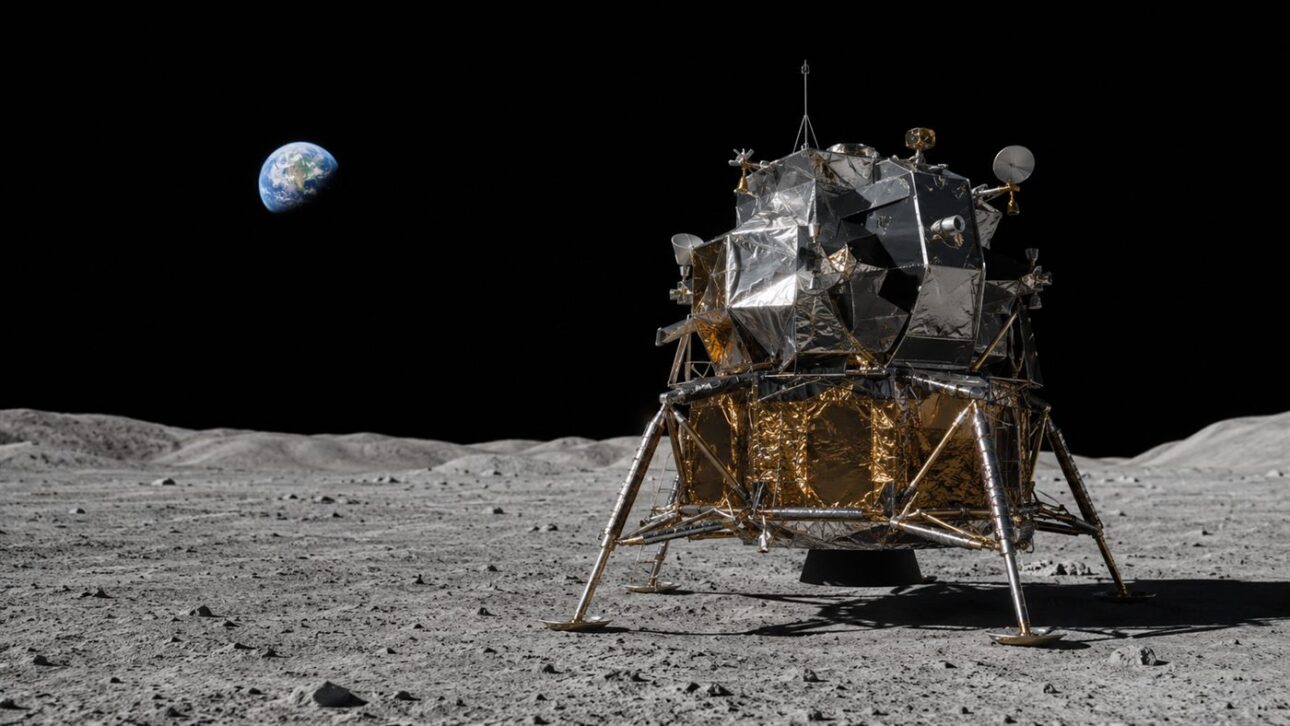
The landing site was not chosen by chance. According to Olhar Digital, the module descended on a volcanic formation called Mons Latreille, within the Mare Crisium, a basin over 480 kilometers wide in the northeastern quadrant of the Moon’s visible face.
This type of terrain is very important for the mission. A relatively flat and wide plain provides more safety margin for landing and better conditions for experiments, while slopes and craters increase the risk of tipping over. Choosing the right place to land is half the battle, and Firefly got it right in lunar exploration.
The 10 NASA experiments aboard the Blue Ghost module
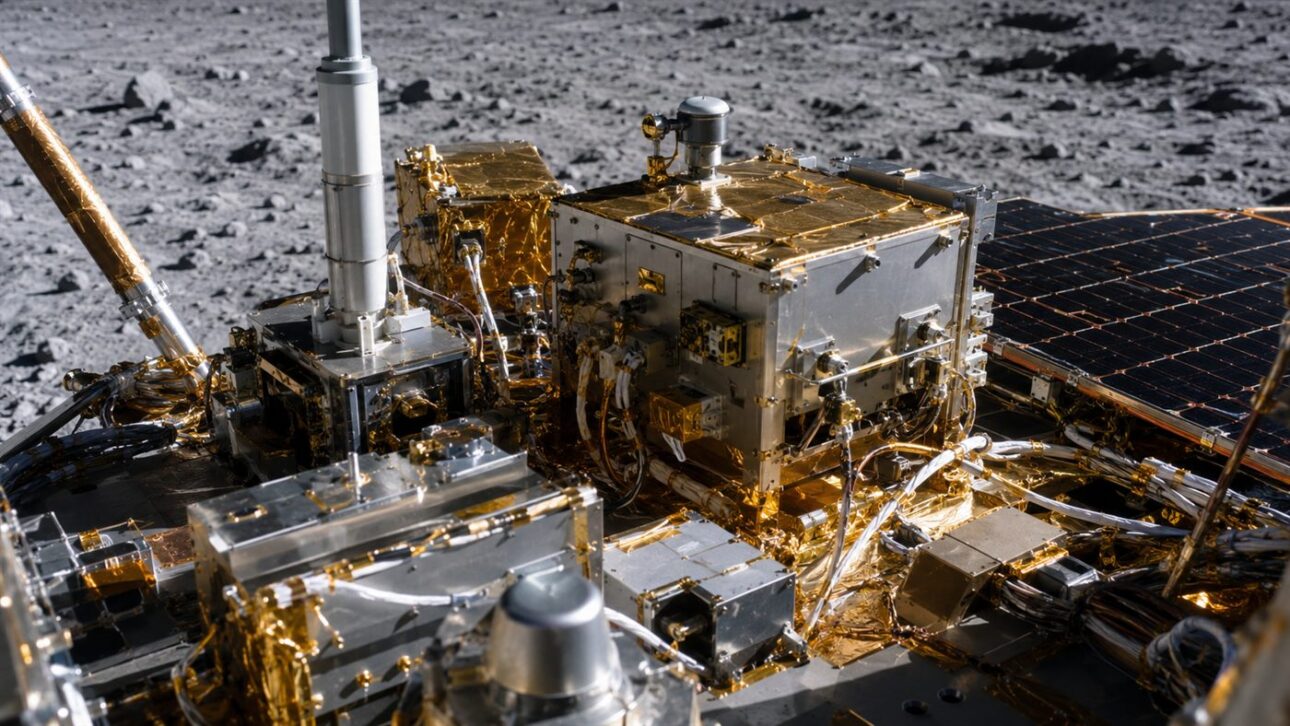
The module was not there for a stroll, it was there to work. According to Olhar Digital, the Blue Ghost carried 10 NASA payloads and was designed to operate for 14 days, equivalent to an entire lunar day, performing tasks such as subsurface drilling, sample collection, and X-ray imaging.
The task list is enviable for a government probe. According to Olhar Digital, the instruments also tested satellite navigation on the Moon and radiation-resistant computing, technologies that will be essential when astronauts return to the surface. Each experiment is a building block for the human return to the Moon, and Firefly has become the carrier that delivers these blocks.
A 2.6 billion dollar program behind it
None of this would be possible without a new business model. According to CNN Brasil, the mission is part of the Commercial Lunar Payload Services program, or CLPS, through which NASA pays private companies to deliver its instruments to the Moon, instead of manufacturing its own modules.
The money involved shows the seriousness of the bet. According to Olhar Digital, CLPS contracts amount to about 2.6 billion dollars by 2028, all within the Artemis program, which NASA created to take astronauts back to the Moon for the first time in over 50 years. The Moon is no longer just a government destination and has also become a market, with companies competing for billion-dollar contracts.
Why NASA pays companies to go to the Moon
The logic behind CLPS is the same that made rockets cheaper. Instead of bearing the cost and risk of designing each module alone, NASA buys the transportation service from whoever can deliver, letting competition among companies drive the price down and accelerate the pace of missions.
This arrangement divides the risk in an intelligent way. If a module fails, the company loses first, not the entire agency’s budget, and each new attempt teaches the sector to make fewer mistakes. Outsourcing the trip to the Moon is what allows sending dozens of missions in the time it used to take to send one, and this is what the Artemis era bets on to return to the surface.
The tasks of the module in 14 days of lunar day
The Blue Ghost’s schedule was tight and full of science. According to Olhar Digital, besides drilling and collecting, the module had the mission to record images of an eclipse on March 14 and capture the lunar sunset on March 16, rare events to observe from the surface itself.
These records have value beyond beauty. Observing how lunar dust behaves at dusk and how light changes during an eclipse helps prepare equipment and suits for future manned missions. A lunar day lasts two Earth weeks, and Firefly took advantage of every hour before the cold night ended the operation on the surface.
Who commands Firefly Aerospace
Behind the feat is a relatively young company with big ambition. Jason Kim, CEO of Firefly Aerospace, led the mission that placed the company in the select group of those who have landed on the Moon, alongside powers like the United States, Soviet Union, China, India, and Japan.
On the agency’s side, the bet is strategic. Nicky Fox, associate administrator of NASA, represents an institution that decided to bet on the private sector to reduce costs and gain speed. The partnership between a Texan startup and the world’s largest space agency is a portrait of how lunar exploration is changing hands and model.
What this turnaround represents
The landing of the Blue Ghost shows that going to the Moon is no longer the exclusivity of superpowers and has become a service that a company can sell. There is still much to prove about cost, reliability, and what to do with so much access to the surface, but the simple fact of a commercial module landing upright and working for two weeks already changes the map of the space race. The next decade may have more private missions to the Moon than the entire century had.
And you, do you think handing over the exploration of the Moon to private companies will accelerate the return of humans to space, or is it too risky to leave this in the hands of startups? Share your thoughts in the comments.