






 Portuguese
  Spanish


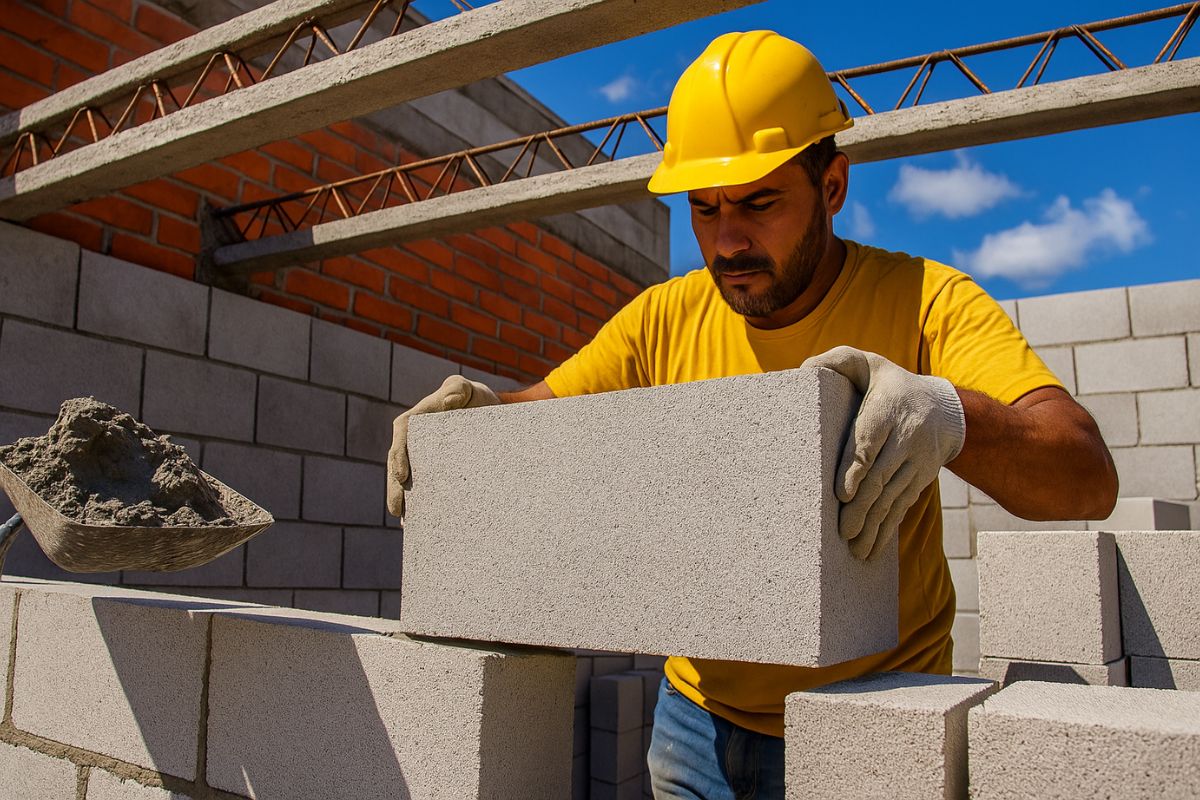


The “Giant Block” (≈0.5 m² per piece) Cuts >90% of Setting Mortar and Allows for Integration of Installations in the Holes, Which Combined with the Troughs for Beams Without Wood Enables Construction to Be Up to 5× Faster and with Up to 50% Structural Savings (in Modular Design).
The Brazilian civil construction is beginning to experience a silent revolution. A method based on blocks of 0.5 m² each promises to deliver construction 5× faster and up to 50% cheaper in the structural part, according to engineer Thiago Melo.
The secret lies in reducing the number of pieces per square meter, drastically decreasing the use of mortar, and incorporating permanent forms for beams, eliminating wood from the process.
In practice, the bricklayer goes from about 30 conventional bricks per m² to just two blocks per m², which accelerates the pace of execution. In cases of modular projects, the author cites results of up to 100 m² of wall erected in a single workday.
-
Brazilian Executive Takes Helm of Heineken Amid Decline in Sales: 51-Year-Old Has Led Operations Across Four Continents and Managed a $7 Billion Empire

-
Brazilian Actress Turns Waxing Clinic into 400-Unit Chain with $50 Million Revenue, Sells Stake After 13 Years
-
Major Company Shuts Down 70-Year-Old Factory in Brazil, Relocating Production and Impacting Over 100 Families
-
Toyota Shuts Down Brazilian Plant After Producing Over 1 Million Vehicles, Plans Special Destination for Final Corolla Produced Following $2.1 Billion Investment and Expansion.


How Giant Blocks Work
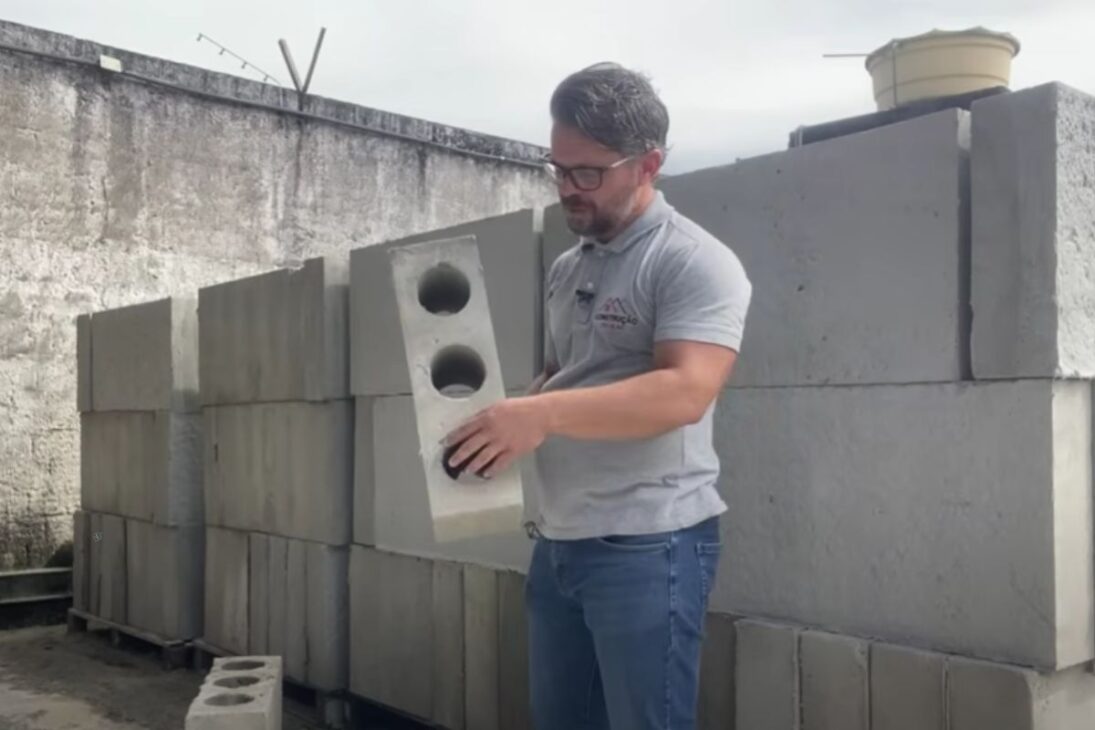
Each piece covers about half a square meter and weighs around 20 kg, with smaller versions for adjustments.
The internal holes allow for the integration of water, sewage, electricity, and data pipes, eliminating cuts and rework later. This reduces material costs, execution time, and waste.
Another differential is the saving on mortar. As the joints are only between the blocks, consumption drops by more than 90% compared to traditional bricks. Additionally, the wall gains greater uniformity and fewer points of infiltration or cracking.
Beams Without Wood and Continuous Work
The system also incorporates the use of “U” Troughs that function as permanent forms for the beams.
The steel is placed inside the piece, and the concrete is poured in, with no need for wooden forms or subsequent removal. This reduces construction stages, minimizes waste, and accelerates the schedule.
According to Thiago Melo, in lightweight constructions (ground level or small-scale), it is even possible to eliminate isolated pillars, as part of the structure is absorbed by the blocks and troughs. This means more simplicity on-site and less downtime between phases.
Economic Impact and Additional Gains
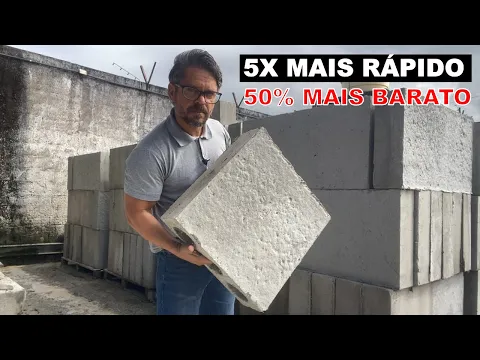

In projects specifically modular for the system, savings can reach up to 50% in structural costs. In adapted projects, the average percentage lies between 25% and 30%.
Besides speed and cost reduction, the blocks offer advantages in thermal and acoustic insulation, enhancing building comfort.
Another effect is the reduction of solid waste, as the system virtually eliminates the use of wood in beams and minimizes mortar. This brings the technique closer to the sustainability goals of the construction sector.
Do you believe this model of construction 5× faster can replace traditional brick in Brazil? Do you think it’s worthwhile to invest in new construction technologies? Leave your opinion in the comments — we want to hear from those who live this in practice.





Bom dia , de qual material é feito o bloco e se permite bom acabamento interno,externo e assentamento de portas e janelas e se tem algum exemplo para mostrar.