Portuguese
  Spanish


Instead of a steel drill that wears out on hard rock, a company born within MIT bets on an idea that borders on fiction: using a microwave generator to literally vaporize the stone and open deep wells like never before, reaching such intense heat that it would transform almost any point on the planet into a source of geothermal energy.
The energy that comes from the Earth’s heat has always had an address problem. It is abundant and clean, but only cheap where the crust is already thin and hot, like in Iceland. For the rest of the world, it would be necessary to drill too deep, crossing kilometers of hard rock where any conventional drill wears out, breaks, and costs a fortune. This is the wall that a new technology tries to break down in an unusual way: by melting the stone.
The protagonist is Quaise Energy, a company that emerged from MIT laboratories with a bold proposal. Instead of the traditional drill, it wants to use a device called a gyrotron, which fires a concentrated beam of microwaves capable of vaporizing rock without touching it. The gyrotron is not a new invention; it has been used for decades in nuclear fusion research, and the idea was to repurpose it as a kind of energy drill.
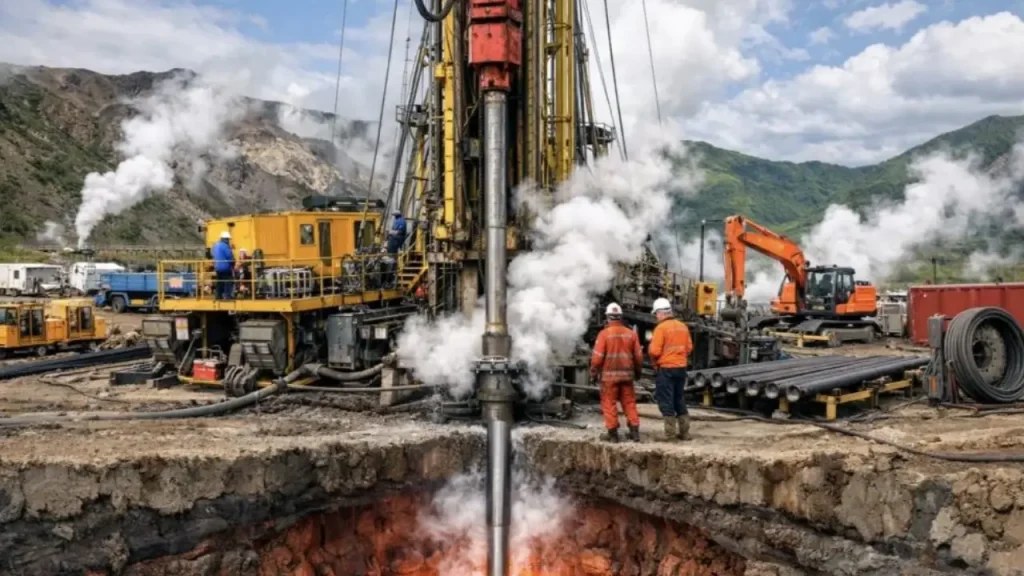
Drilling without a drill
The principle is elegant. Since the microwave beam does not touch the rock, there is no physical part that wears out and needs to be replaced all the time, the bottleneck that makes deep drilling expensive. Quaise’s idea is to start the opening with conventional methods and, from a certain depth, turn on the gyrotron to vaporize the hardest stone and continue descending to where the temperature exceeds 400 degrees.
-
The Trap of Modern Technology: How Screen Overload and Digital Connections Can Impact Your Mental Health and Well-being

-
Wyoming Couple Grows Tropical Fruits Year-Round in -40°C Using Geothermal Greenhouse, Demonstrating Earth’s Heat Can Produce Oranges and Lemons in Snow Without Traditional Heating

-
Ship Returns from Brazilian Coast with Thirty Newly Discovered Life Forms
-
Nigerian Professor Invents Electricity-Free Refrigerator Using Clay Pots and Wet Sand, Extending Shelf Life of Vegetables to 27 Days; 7,000 Units Distributed in Energy-Deprived Villages



In this range of extreme heat, the water pumped to the bottom does not just become common steam: it reaches a state called supercritical, which carries much more energy and makes each well yield like several traditional wells together. If it works on the promised scale, the same amount of drilling would generate much more electricity, and geothermal would no longer be a thing of a few privileged places.
The race that already shows results
Quaise is still proving the concept in the field, but it is not alone in the rush to make deep drilling cheaper. Fervo Energy, which uses techniques inherited from shale oil, has just hit an impressive mark: it drilled an ultra-deep geothermal well in just 16 days, a huge reduction in time compared to the industry standard, reaching rock at temperatures that promise plenty of electricity.
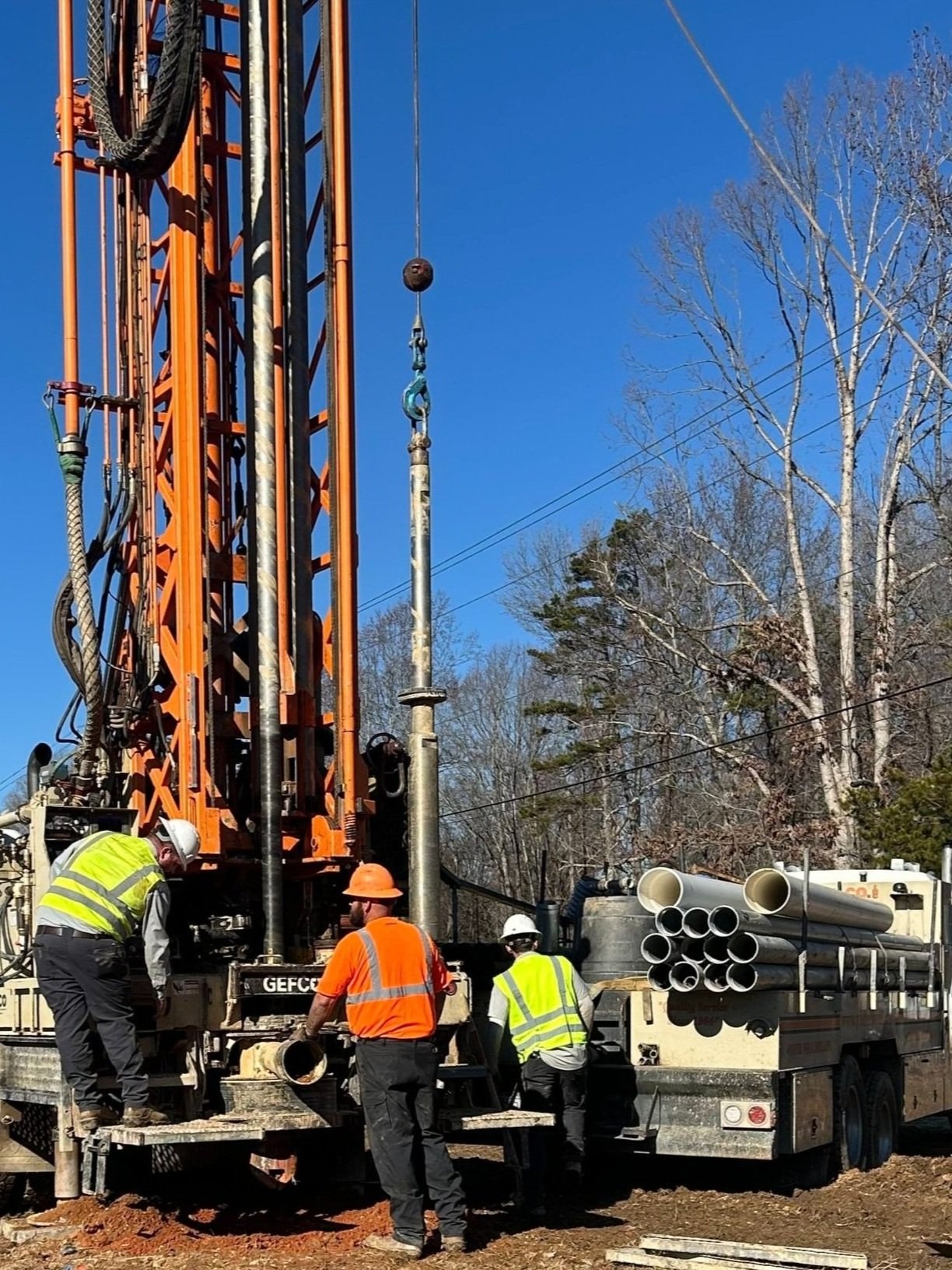
These two paths, the gyrotron and the drilling boosted by shale technology, show that the sector has found new momentum. For years, geothermal was forgotten in a corner, overshadowed by the falling price of solar and wind. What changed was the perception that it offers something that sun and wind do not: firm energy, available 24 hours, without depending on the weather, coming from an almost eternal heat reservoir beneath our feet.
How much heat is down there
To understand the size of the bet, it’s worth looking at the numbers. At about 20 kilometers deep, the rock in much of the planet exceeds 500 degrees Celsius, heat enough to generate electricity on an industrial scale. The problem has always been getting there: conventional drills lose efficiency and break down long before that, and each extra meter exponentially increases the cost of the work. That’s why the deepest well ever made by man, the Soviet Kola, stopped at just over 12 kilometers after almost two decades of drilling.
What Quaise proposes is precisely to leap over this wall with the microwave beam, which does not wear out because it does not touch the stone. The company calculates that, reaching rock at supercritical temperatures, a single well would produce energy equivalent to dozens of common geothermal wells. The declared goal is to transform retired coal and gas plants into geothermal plants, reusing existing turbines and transmission lines, which would cut costs and implementation time.
Why this matters now
The world’s hunger for electricity has exploded, driven by data centers, car electrification, and air conditioning in increasingly hot regions. Sources that work all the time have become gold, and deep geothermal promises exactly that without burning anything. We talk a lot about batteries and solar panels, but the answer to base energy may literally be under the ground, waiting for a better drill.
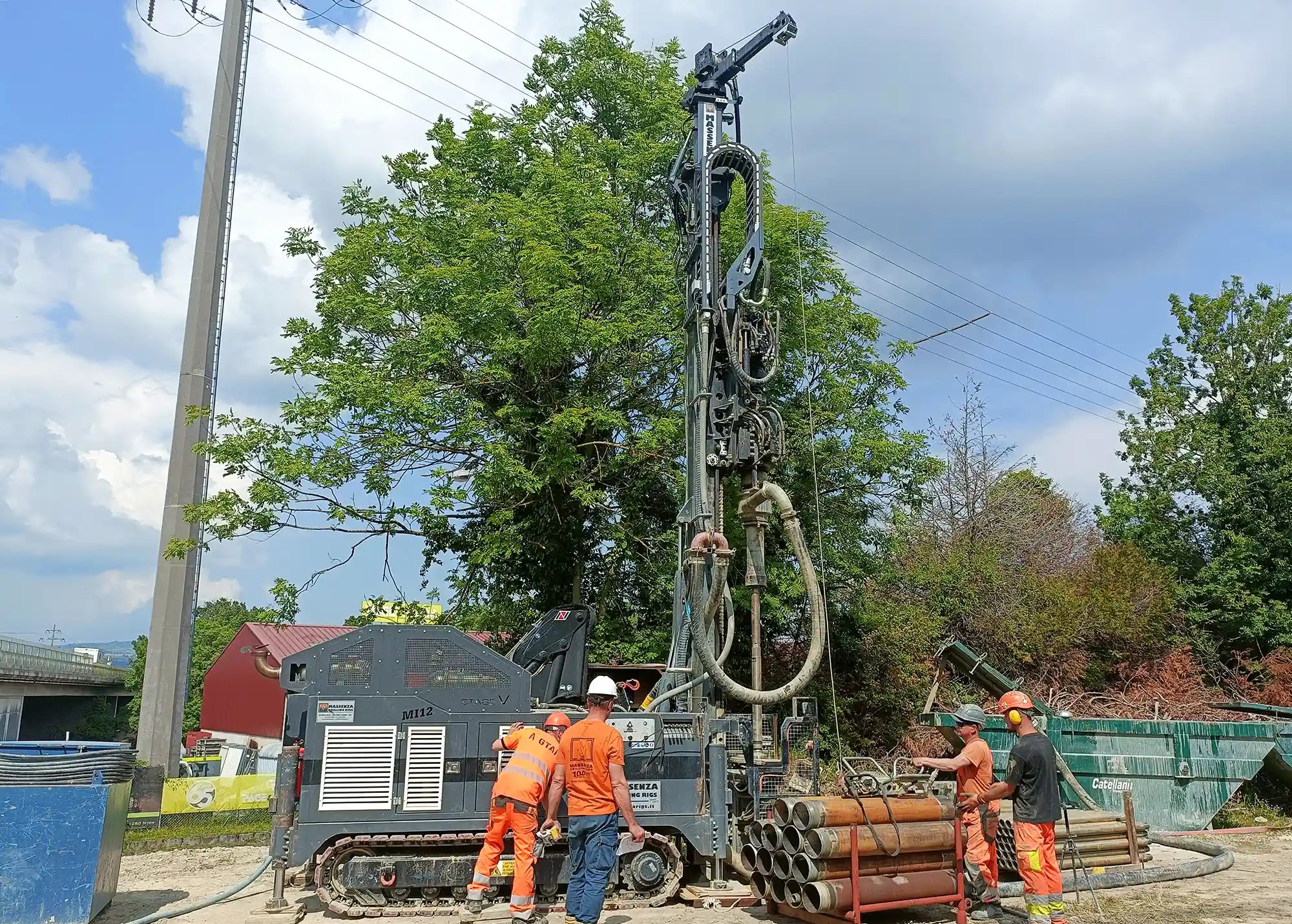
There are reasons for caution. Vaporizing rock kilometers deep with microwaves still needs to work outside the laboratory, on a commercial scale and at a competitive cost, and that is never guaranteed. The first pilot wells will tell if the promise holds up or if it hits some unforeseen physical limit. I confess I hope it works because the idea of drawing infinite energy from the Earth’s heat is too good.
If the gyrotron delivers what it promises, the energy map changes. Instead of depending on where geology helps, any country could drill deep enough to reach the heat and generate its own clean electricity, without importing fuel or relying on the sun and wind. Countries without oil, large rivers, and volcanoes would have, beneath their own territory, a plant waiting to be unlocked. The difference between dream and reality, this time, is at the tip of a microwave beam.
Will drilling with microwaves finally unlock geothermal energy for the whole world?