Portuguese
  Spanish



Understand Why High Electricity Bills in Summer Weigh on the Budget and How Solar Energy Has Become an Efficient, Economic, and Timeless Solution to Reduce Expenses.
Currently, high electricity bills in summer worry families and businesses across Brazil.
This is because, with increasingly high temperatures, people use electrical equipment for longer periods and with greater intensity.
Thus, air conditioning, fans, refrigerators, and cooling systems become part of the daily routine rather than being exceptions.
-
Solar energy can increase property value by up to 10% and become a selling point.

-
Solar and wind energy surpass natural gas for the first time in the world and accelerate energy revolution

-
Africa has about 500,000 cell towers and most still burn diesel to operate, while companies rush to cover antennas with solar energy and avoid signal blackouts.
-
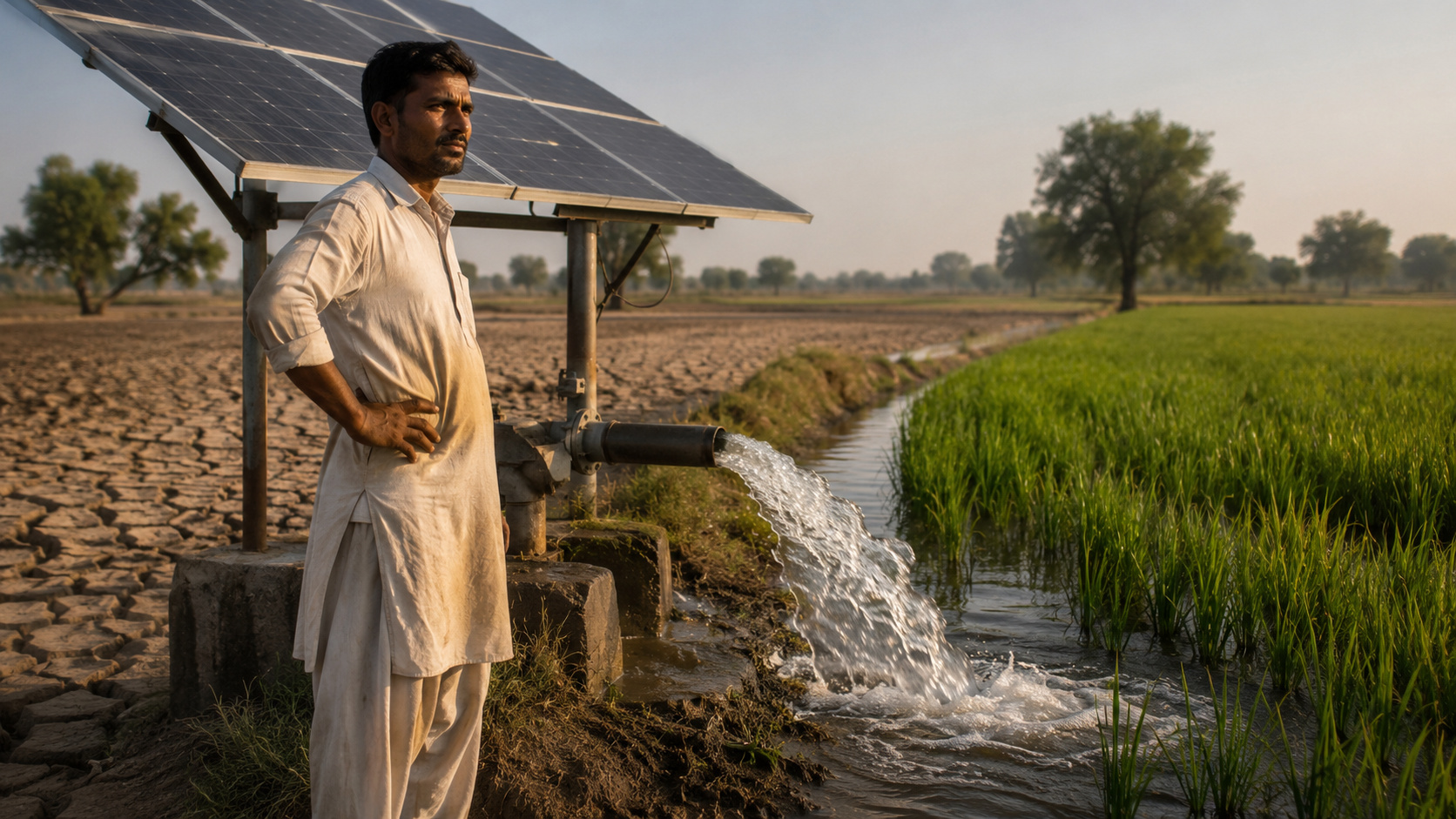
Farmers swapped diesel for solar panels in Pakistan, powered irrigation pumps almost cost-free, expanded rice fields, and now groundwater has become a red alert in the countryside.



As a consequence, the household budget is under constant pressure and operational costs for businesses rise, making financial planning difficult.
Moreover, this increase in consumption does not occur in isolation.
Over the years, population growth, rapid urbanization, and the widespread availability of electrical appliances have increased dependence on energy.
Therefore, high electricity bills in summer no longer affect just a few consumer profiles and now impact homes and businesses in different regions of the country.
Historically, summer has always concentrated higher electricity consumption.
Since the popularization of household appliances in the late 20th century, the hottest months have recorded peaks in demand on Brazil’s electrical system.
As time has passed, this pattern has intensified.
In addition to urban development, the spread of air conditioning and climate change have reinforced this scenario.
Therefore, high electricity bills in summer have ceased to be an occasional problem and have become structural.
Besides high consumption, another factor directly impacts consumers’ wallets.
The tariff flag system, for instance, signals the real cost of energy generation and tends to operate at higher levels during periods of high demand.
In summer, when consumption increases and climatic conditions affect reservoirs, the more expensive flags become frequent.
As a result, the final bill amount becomes less predictable.
Why Solar Energy Has Gained Ground in Brazil
In this context, solar energy has rapidly gained ground in recent years.
After all, consumers have begun to seek alternatives to reduce their dependence on the traditional power grid.
Thus, instead of merely reacting to high electricity bills in summer, many people have started to adopt solutions that offer predictability and greater control over energy expenses.
In this context, solar photovoltaic energy stands out for taking advantage of an abundant resource in Brazil.
From the first experimental projects to the consolidation of grid-connected systems, the country has made consistent progress.
Additionally, the regulation of distributed generation since the 2010s has driven this movement and brought the technology to homes, businesses, and industries.
Another determining factor involves the democratization of access to solar energy.
Today, financing options, more flexible payment terms, and an increase in the number of specialized companies facilitate the adoption of the technology.
Thus, solar energy is consolidating as a viable alternative to high electricity bills in summer.
Moreover, over the years, the reduction in equipment costs has further stimulated this progress.
Manufacturers have invested in efficiency, production scale, and technological innovation.
As a consequence, photovoltaic systems have become more accessible and now represent a long-term investment.
Solar Energy as an Ally in the Warmest Months
During summer, solar energy shows its full potential.
This happens because the period combines greater solar radiation incidence and more hours of sunlight throughout the day.
Thus, energy production increases just when consumption reaches higher levels.
By generating their own electricity, consumers can offset the heavy use of appliances and reduce the financial impact of high electricity bills in summer.
Moreover, production occurs at times when demand usually rises.
For this reason, the alignment between production and consumption increases system efficiency and maximizes economic gains.
In this way, solar energy becomes even more attractive during intense heat months.
Another important benefit involves predictability of costs.
While energy rates undergo constant adjustments, the solar system ensures greater financial stability.
After the initial investment, consumers can rely on their own energy source, which facilitates financial planning.
From a historical perspective, this shift reflects a new relationship between society and energy.
In the past, the debate focused solely on access to electricity.
Over time, however, the discussion has come to include efficiency, sustainability, and cost control.
Today, consumers seek energy security and financial predictability, factors directly linked to high electricity bills in summer.
Economic and Strategic Benefits for Companies and Families
For companies, solar energy generates benefits that go beyond immediate savings.
First, reducing high electricity bills in summer increases competitiveness.
In addition, the savings free up resources for new investments and reduce vulnerability to fluctuations in the energy market.
Moreover, companies that adopt solar energy strengthen their institutional image.
At the same time, they demonstrate a commitment to sustainable and efficient practices.
As a result, this positioning adds value to the brand and generates competitive advantages in the long run.
In residential settings, the gains are also notable.
After all, maintaining thermal comfort during summer without surprises on the monthly bill brings more peace of mind to families.
Moreover, solar energy encourages more conscious consumption.
Another relevant point involves the continuity of benefits throughout the year.
Although summer boosts generation, the solar system works in all seasons.
Thus, this characteristic reinforces the timeless nature of the solution and expands its ability to tackle high electricity bills in summer.
Solar Energy and the Future of Electricity Consumption
By 2026, the discussion around high electricity bills in summer is expected to gain even more traction.
This is because climate change, increased electricity consumption, and the need to modernize the system keep the topic in the spotlight.
In this scenario, solutions that offer stability and cost reduction become relevant.
When analyzing the trajectory of solar energy in Brazil, it becomes clear that this progress is not a passing trend.
On the contrary, the technology responds to historical challenges in the electricity sector.
Thus, high electricity bills in summer emerge as one of the signs of a model that requires continuous adaptation.
Therefore, investing in solar energy represents more than just seeking immediate savings.
In practice, this decision involves strategy, predictability, sustainability, and autonomy.
In a country with great solar potential, this choice solidifies as a natural path to reduce the financial impacts of intense heat and elevated rates over the years.