






 Portuguese
  Spanish


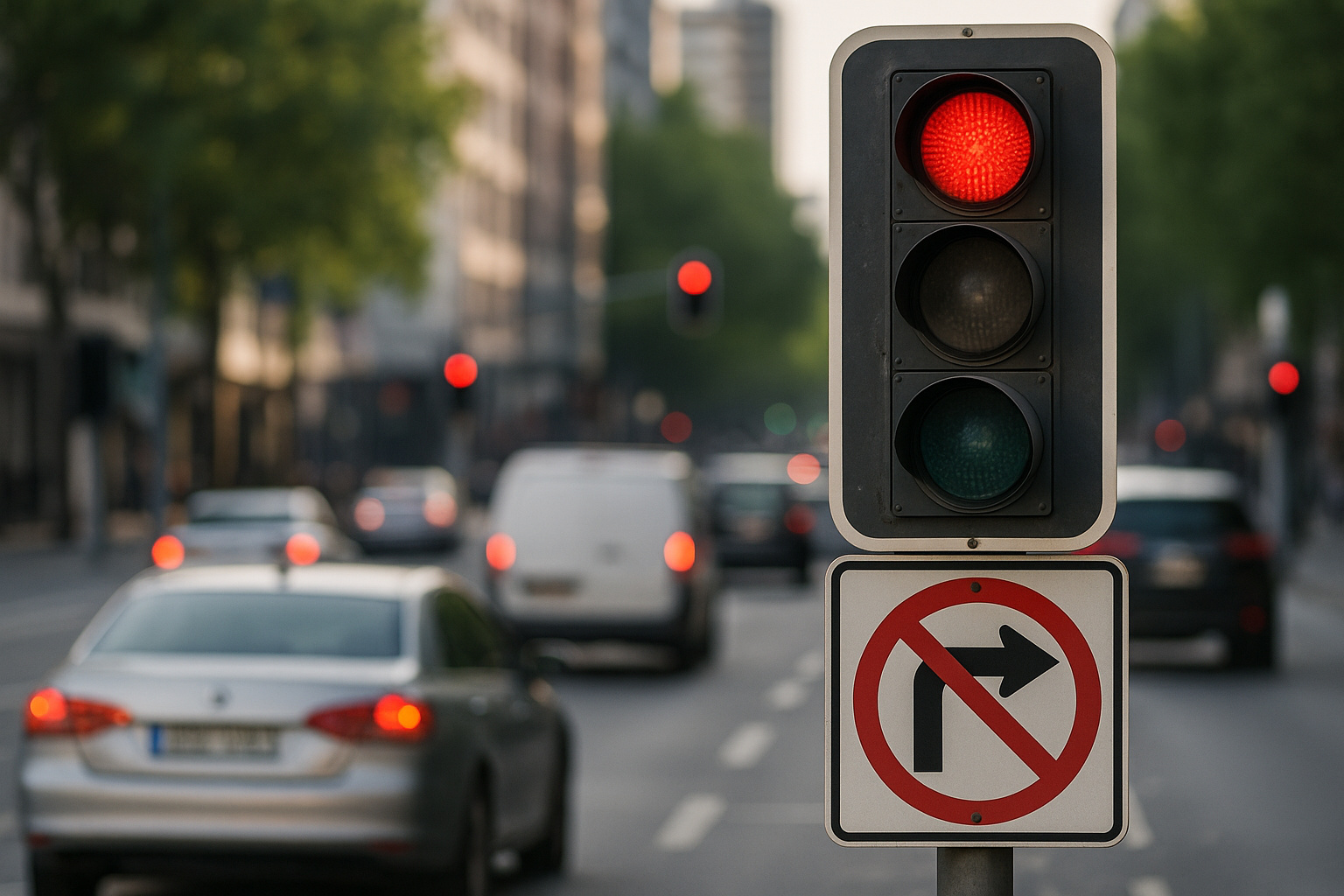


Know Directly and Organized When Right Turn on Red is Allowed and How to Avoid Violations
Since 1997, with the implementation of the Brazilian Traffic Code by Law No. 9,503, the country has operated with structured rules that guide drivers, cyclists, and pedestrians.
Therefore, these norms have become essential for organizing traffic flow and reducing risks.
In addition, over the years, the National Traffic Council has updated relevant instructions.
Thus, these revisions reinforce the importance of constant attention to the rules.
The question about right turns on red remains common.
Therefore, this topic requires correct interpretation of the legislation.
-
The Port of Itaqui closes the best first semester in history with over 17 million tons and takes off as the locomotive of the Northern Arc.

-
Brazil’s North-South Railway to Auction Two Grain Terminals in Central Tocantins

-
AI-powered traffic cameras in São Paulo now issue fines for cellphone use and seatbelt violations around the clock

-
Free Upgrade to Professional Driver’s License Categories in Over 130 Locations in Brazil, Including Exams and Courses



In 2021, after adjustments made by Contran, the technical understanding remained the same.
A right turn on red is only allowed with explicit signaling.
Thus, any maneuver without indication constitutes a violation.
When Right Turn on Red is Authorized
Although many drivers observe common practices in other countries, the CTB establishes clear rules regarding these situations.
Therefore, the turn is only allowed when there is a sign authorizing the movement.
The absence of vehicles or pedestrians does not permit the maneuver.
Thus, the guidance has been in effect since the initial validity of the legislation in 1998, according to Denatran records.
In this way, only three conditions allow the turn:
- Sign “Free to the Right”, which authorizes the movement regardless of the traffic light.
- Specific horizontal signaling, indicating traffic channeling for turning.
- Guidance from traffic agents, valid in special operations or emergency situations.
Why These Signs Are Rare in Brazil
Since 2000, municipal bodies have stated that this type of authorization depends on complex technical studies.
Thus, only after an analysis of traffic engineering is the authorization implemented.
In this manner, the signs remain infrequent.
Additionally, turning on red can pose risks to pedestrians.
This point was reinforced by specialists from Denatran and Contran in 2004.
There were also reinforcements in 2009 and 2016.
Penalties Applied When the Turn Occurs Incorrectly
As determined by the CTB, making a turn on red without the authorization sign constitutes a medium violation.
Thus, this conduct generates fines and points on the driver’s license.
Since 2016, with the update of values by Contran, these penalties have become stricter.
When the practice is repeated, the driver may face greater consequences.
Among these consequences is the suspension of the right to drive.
Moreover, the violation puts drivers, cyclists, and pedestrians at risk.
Therefore, it directly affects road safety.
This point was reinforced by the Ministry of Cities in communications in 2018.
There were also reinforcements in guidelines in 2022.
How Drivers Can Avoid Violations Related to the Turn
To avoid penalties, the driver must constantly check the signaling.
Therefore, they need to respect traffic lights and signs.
Even when traffic seems clear, the rule remains the same.
Thus, the driver must redouble their attention to the surroundings.
It is essential in areas with heavy pedestrian traffic.
Among the essential recommendations are:
- Stay updated on the CTB and its periodic revisions.
- Take refresher courses when necessary.
- Prioritize pedestrians and cyclists in any turn.
- Completely observe the environment before initiating the movement.
In this way, respect for the rules becomes indispensable.
Therefore, it ensures a safer and more organized coexistence on urban roads.


