






 Portuguese
  Spanish


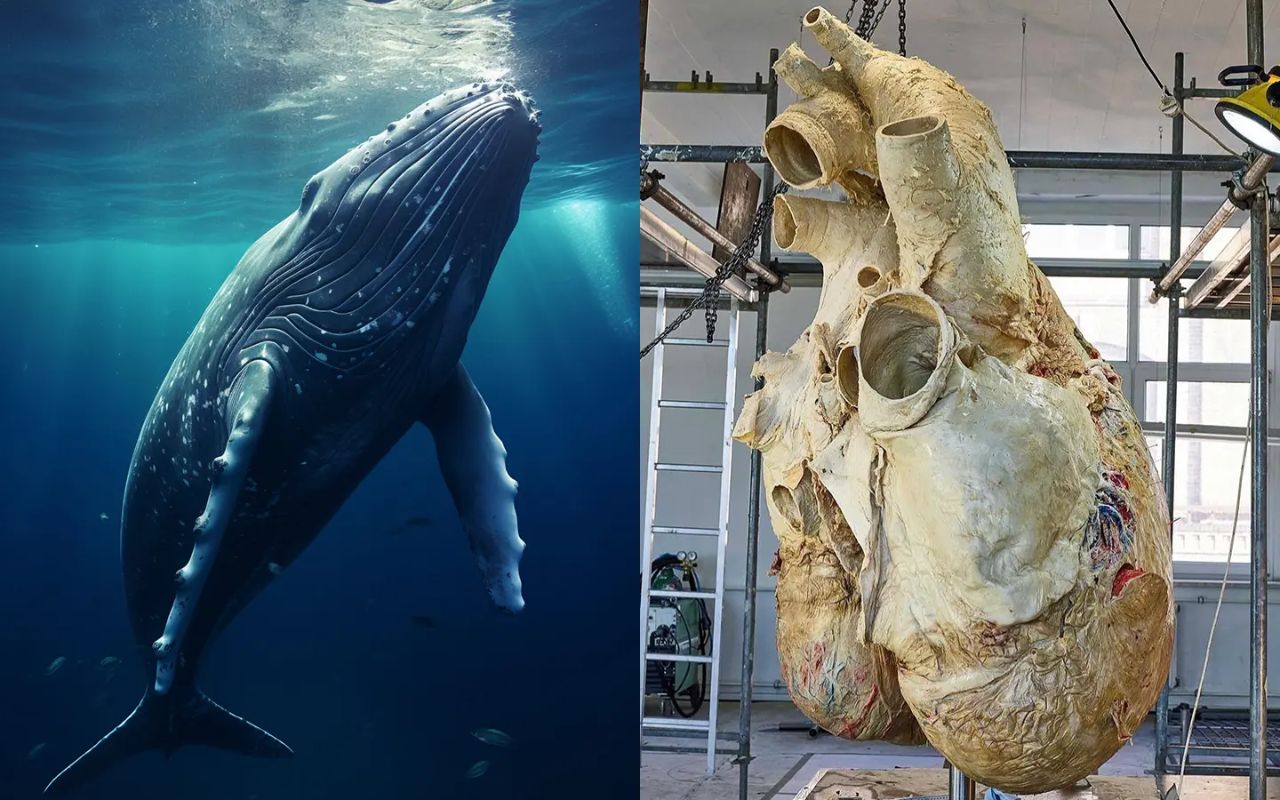


The Heart of the Blue Whale Can Weigh More Than a Car and Pump More Than 220 Liters of Blood Per Beat, Adapting to Deep Dives.
The heart of the blue whale is a true giant of nature. At around 1.5 meters tall, it can weigh more than a small car, being vital for transporting blood and oxygen throughout the body of this colossal animal.
Each beat can pump more than 220 liters of blood, ensuring that vital organs receive enough oxygen, even during long periods submerged.
The sound of its beats can be heard from over 3 kilometers away, something that impresses even marine biologists.
-
China Develops Custom 140-Ton Electric Mining Truck with 770 kWh Swappable Battery, Deploys 290 Units in Xinjiang’s Largest Zinc Mine

-
Meta to Launch Arena, a New Prediction App Targeting 3.56 Billion Users, Competing with Polymarket and Kalshi

-
Scientist Challenges Famous Human Evolution Theory, Argues Homo Sapiens Evolved Gradually Over Thousands of Years
-
15-Year-Old American Builds Ocean Generator with PVC Pipe and 3D-Printed Propeller for $12, Wins National Prize, Presents at White House, and Makes Forbes 30 Under 30 List




Learn Everything About The Heart of the Blue Whale
Heart Rate Adapted to Submarine Life
Weighing approximately 180 kilograms, the blue whale’s heart adjusts as the animal alternates between the surface and deep dives.
At rest, the beats per minute range between 8 and 10, enough to maintain the body’s vital functions.
When the whale dives into deep waters to feed, the heart slows down to approximately 2 beats per minute.

This extreme reduction helps conserve oxygen and direct it to the most important organs, such as the brain and the heart itself, ensuring survival at great depths.
Upon returning to the surface to breathe, the beats quickly accelerate to about 37 per minute, distributing freshly inspired oxygen throughout the body.
This dynamic adjustment is essential for the animal to maintain the energy needed to swim and feed.
Comparisons That Highlight The Greatness of The Organ
When compared to other animals, the heart of the blue whale is unmatched.
The human heart weighs about 300 grams and beats much faster, ranging from 60 to 100 times per minute, while the whale’s heart combines gigantic size and extreme efficiency.
Large animals exhibit their own adaptations: the elephant’s heart can weigh up to 21 kilograms, the giraffe’s is designed to pump blood up to its tall head, and the hummingbird’s is tiny but beats up to 1,200 times per minute.
Still, none of these examples come close to the volume of blood pumped by the blue whale’s heart, which moves approximately 5,300 liters per minute.
The Circulation That Sustains The Giant of The Oceans
For such a massive body, maintaining blood flow is vital.
Blood needs to travel long distances, carrying oxygen from the lungs to the tail, allowing the whale to swim, feed, and communicate.
The aorta of the heart is so wide that a small child could crawl inside it, demonstrating the impressive scale of this organ.
This highly efficient circulatory system explains how the whale can remain submerged for long periods and adapt to life in the oceans.


The Impact of The Physiology of The Blue Whale
The heart that weighs more than a car is not just a scientific curiosity.
It symbolizes the adaptive perfection of the species, combining strength, size, and adaptive rhythm to endure deep dives and prolonged apnea.
Each characteristic, from the ability to pump thousands of liters of blood to the controlled deceleration during apnea, reveals the natural engineering that sustains the largest animal on the planet.






