






 Portuguese
  Spanish


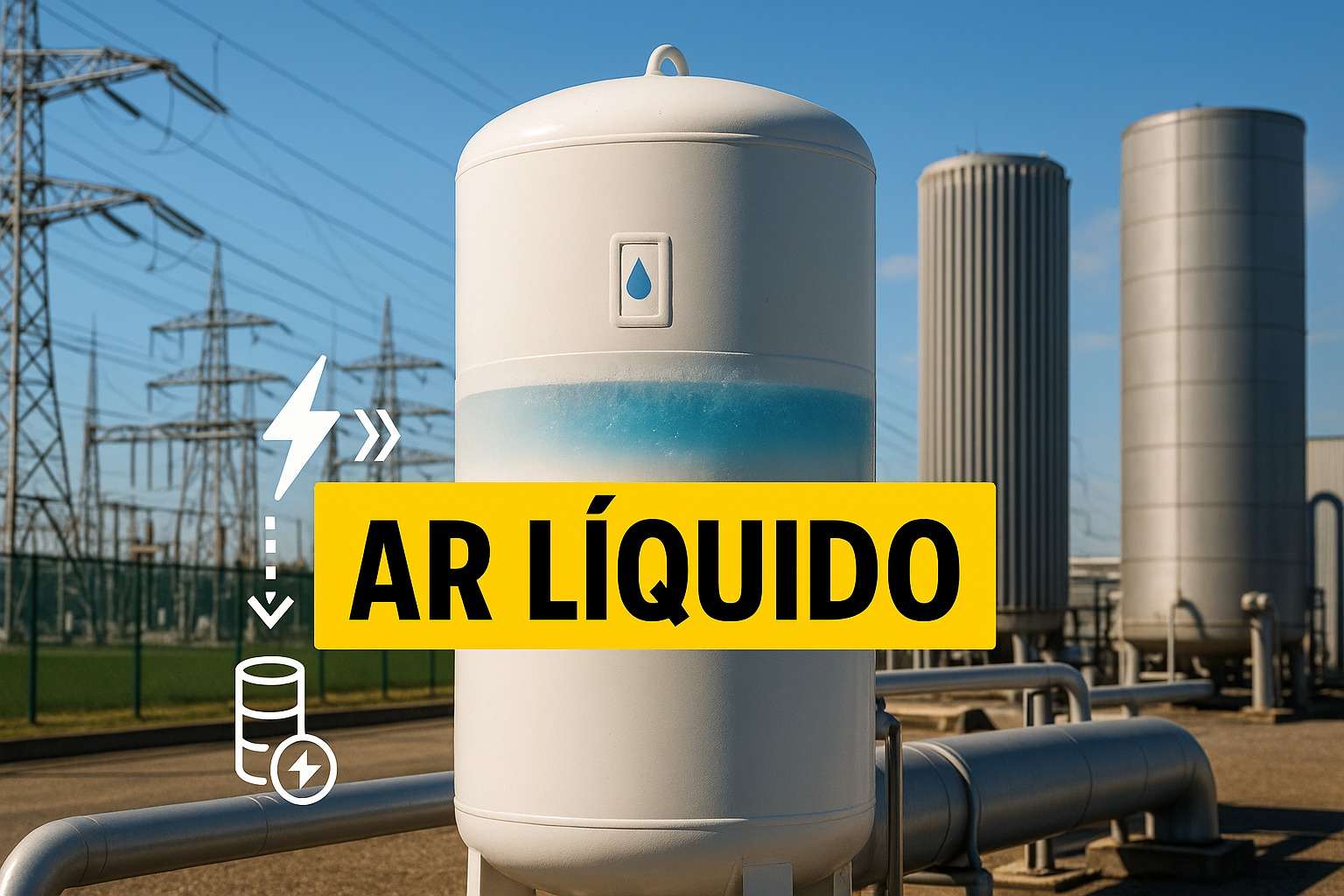


Pioneering KIMM System Uses Liquid Air to Store Excess Electricity, Generate On-Demand Energy, and Achieve Daily Production of 10 Tons
Researchers from the Korea Institute of Machinery and Materials (KIMM) developed the first national liquid air energy storage system in South Korea.
The liquid air storage utilizes excess electricity to cool air to a liquid state, store it, and then reconvert it into electrical energy on demand.
The team reported production of up to 10 tons of liquid air per day.
-
She spent 73 years breathing inside an iron lung, survived the aftereffects of polio, and became the last woman in the United States dependent on the equipment before dying at 78 years old.

-
Brazilian students created a $1 filter using pine bark, cotton, and 3D-printed parts to clean cassava wastewater, reduce the toxicity of a hazardous waste, and transform contaminated water into biofertilizer.

-
Astronaut from Artemis II steps down after mission to the Moon and decision surprises after a record of 406,771 km, a historic 10-day journey, and an unprecedented achievement for Canada.

-
A fossil kept for years in a small museum in Montreal concealed 450-million-year-old soft tissue, a discovery that has only happened once before in history.


Liquid Air Storage: Concept and Operation
When the power grid has excess, the air is cooled to extremely low temperatures until it becomes liquid and is kept in insulated tanks, forming an energy reserve.
As demand increases, the air is heated again; when it expands rapidly, about 700 times its liquid volume, the pressure drives turbines for electricity generation.
The liquid air storage allows for controlled “bottling” of electricity.
Components Developed by KIMM
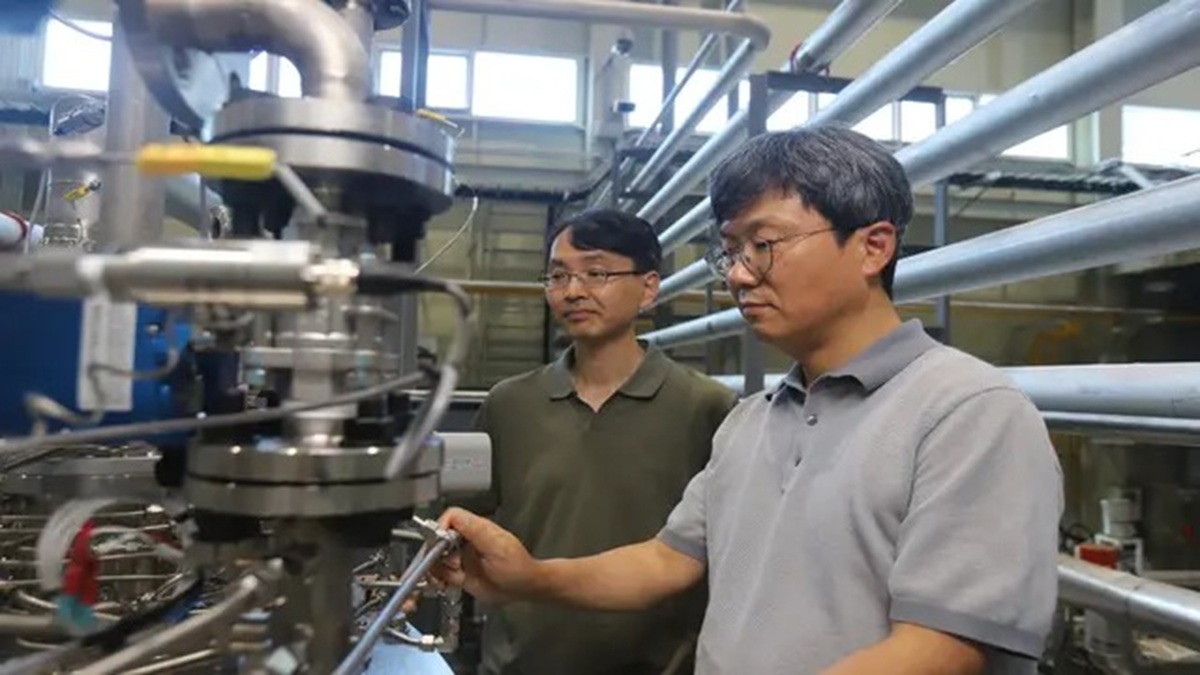
Under the leadership of chief researcher Dr. Jun Young Park, two central elements were internally designed: a turbo expander that operates above 100,000 revolutions per minute and a cold box equipped with multi-layer insulation and powerful vacuum to maintain cryogenic conditions.
These solutions enabled the first successful test of air liquefaction for energy storage in Korea, demonstrating that the technology can operate with domestic development.
The liquid air storage thus advances as a locally conceived scalable solution.
“This is a crucial step for the future of renewable energy in Korea,” said Dr. Park. “Large-scale energy storage is the missing piece, and our work shows that LAES can provide it without geographic limits.”
Applications and Advantages of Liquid Air
The current landscape of large-scale storage primarily relies on pumped hydro and compressed air.
Such alternatives require specific geographic conditions, like mountains, valleys, or underground caverns, and also have environmental disadvantages.
The liquid air storage circumvents these restrictions by being able to be built in almost any location, a relevant feature for urban centers and industrial hubs.
The extreme cold generated can be utilized in industrial cooling processes, and residual heat from factories can be reused to increase cycle efficiency.
International Context and Next Steps
There is a global race for the technology. Companies in the UK, China, and the United States are already exploring liquid air as a means of storage.
KIMM’s achievement stands out as it was developed entirely in the country and is considered a critical step for the Korean plan to build an “energy superhighway” to transport renewable sources throughout the territory.
The current system is described as modest in the face of national energy needs; its successful operation is presented as proof of concept.
If expanded, bottled air is seen as a clean and versatile alternative for large-scale renewable energy storage.
For now, it is still early. In a world described as lacking long-term storage, Korea’s progress indicates that the future of energy may be within reach.







Krl a dilma estava certa quando disse pra estocar vento
Roubaram a idéia da Dilma. Estocadora de vento
Dilma Russef bem que falou.