Portuguese
  Spanish


Recent Studies Detailed That the Batagaika Crater in Siberia Is Expanding at an Alarming Rate of One Million Cubic Meters Per Year Due to Climate Change. In 2016, It Is Believed That the Thawing of Permafrost Released Bacillus anthracis, the Cause of Anthrax, Which Killed 2,649 Reindeer and Resulted in Dozens of People Falling Ill and the Death of a Child
The phenomenon due to climate change, known as ‘Gateway to Hell’, located in remote Siberia, has Captured Attention Not Only From Film Enthusiasts but Also From Biologists and Ecologists.
This term Refers to the Growing Concern About the Melting of Subsurface Permafrost in the Poles, a Problem That Is Exacerbated by the Discovery of Ancient Viruses, Some Over 48,500 Years Old, Reactivated by the Thawing of Arctic Permafrost.
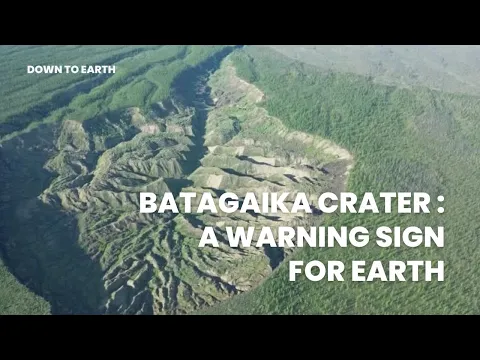

Expansion of the Batagaika Crater
Recent Studies Detailed That the Batagaika Crater in Siberia Is Expanding at an Alarming Rate of One Million Cubic Meters Per Year. Currently, This Crater Is About 1 km Long and 800 m Wide at Its Widest Point, and Its Growth Is Accelerating. Although It Is Called a Crater, the Batagaika Is Actually a Thermokarst Depression, a Type of Sinkhole or ‘Mega-Slide’ Caused by the Collapse and Fracturing of Soil Due to Permafrost Loss. It Was Discovered in 1991, After This Subsurface Opening Split Further and Dragged Along a Large Section of Land. From Its Discovery Until 2007, Its Growth Was Documented and Is Visible in Various Visual Records.
-
The Trap of Modern Technology: How Screen Overload and Digital Connections Can Impact Your Mental Health and Well-being

-
Wyoming Couple Grows Tropical Fruits Year-Round in -40°C Using Geothermal Greenhouse, Demonstrating Earth’s Heat Can Produce Oranges and Lemons in Snow Without Traditional Heating

-
Ship Returns from Brazilian Coast with Thirty Newly Discovered Life Forms
-
Nigerian Professor Invents Electricity-Free Refrigerator Using Clay Pots and Wet Sand, Extending Shelf Life of Vegetables to 27 Days; 7,000 Units Distributed in Energy-Deprived Villages


Permafrost: An Unslumbering Giant
Permafrost, Despite Its Name, Is Not Actually Permanent; It Is Soil That Has Remained at 0°C or Below for More Than Two Years. Approximately One Quarter of the Earth’s Surface in the Northern Hemisphere Is Comprised of This Frozen Land, Which Can Vary From a Few Meters Deep to Nearly a Kilometer. The Problem Lies in the Fact That Warming Air Temperatures Are Fueling a Positive Feedback Cycle in the Batagaika Crater, Which Is Likely Not to Diminish While There Is Ice to Melt.
Ecological Consequences of Thawing Due to Climate Change
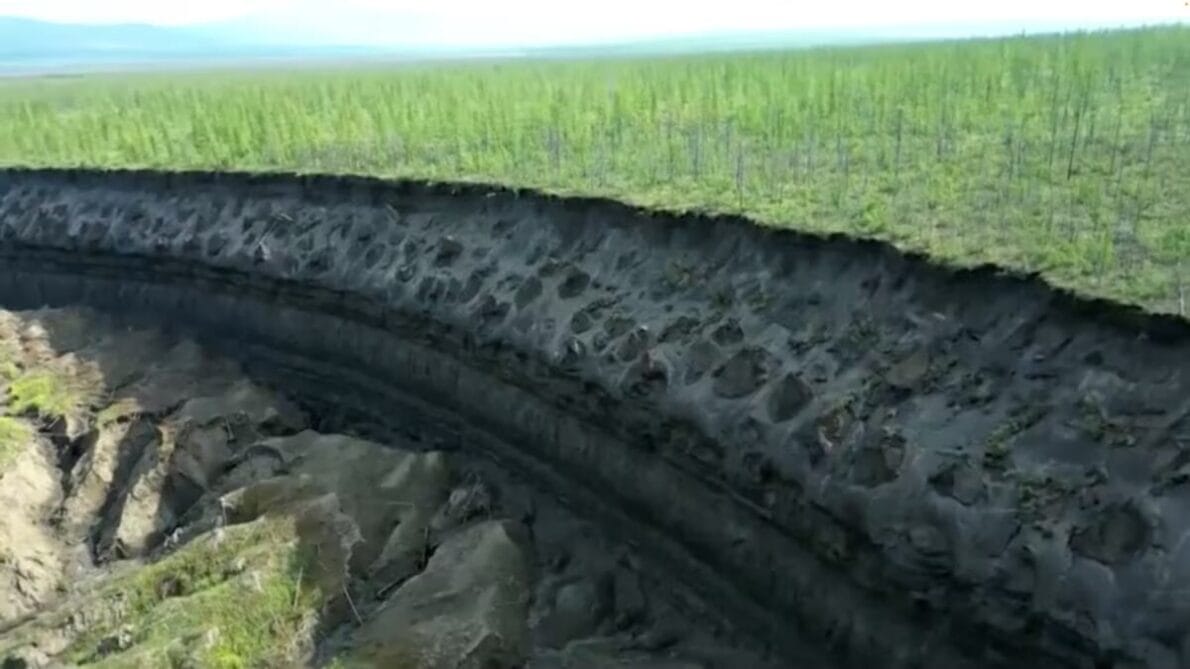
When the Permafrost Layer Degrades or Melts, It Transforms From a Concrete-Like Consistency to a Muddy Mass, Unable to Support Vegetation on the Surface. As the Edges of the Terrain Collapse, Tree Canopies That Protect From Sunlight (and Heat) Are Lost. At This Point, Organic Matter Previously Preserved in the Ice Decomposes and Releases Carbon Into the Atmosphere, Further Fueling Global Warming. This, of Course, Results in Even Greater Loss of Permafrost.
The Ancient ‘Creatures’ and Their Risks
We Do Not Know If These Ancient Microorganisms Are Equipped to Survive a Long Time Once Exposed to the Earth’s Atmosphere, Nor If Our Modern Biology and Medicine Are Prepared to Face New Viruses That Return After 50,000 Years of Dormancy. In 2016, It Is Believed That the Thawing of Permafrost Released Bacillus anthracis, the Cause of Anthrax, Which Killed 2,649 Reindeer and Resulted in Dozens of People Falling Ill and the Death of a Child.
An Ironic Detail
And the Good News, What Is It? Well, This Crater Has Become Somewhat of a Tourist Attraction. Despite Its Dangers, This Natural Phenomenon Attracts Those Who Wish to See Up Close the Dramatic Transformations Our Planet Is Facing. The Batagaika Crater and Its Implications Are Not Just a Reminder of the Imminent Challenges of Climate Change But Also a Call to Action to Understand and Mitigate Its Effects Before It Is Too Late.”