Portuguese
  Spanish


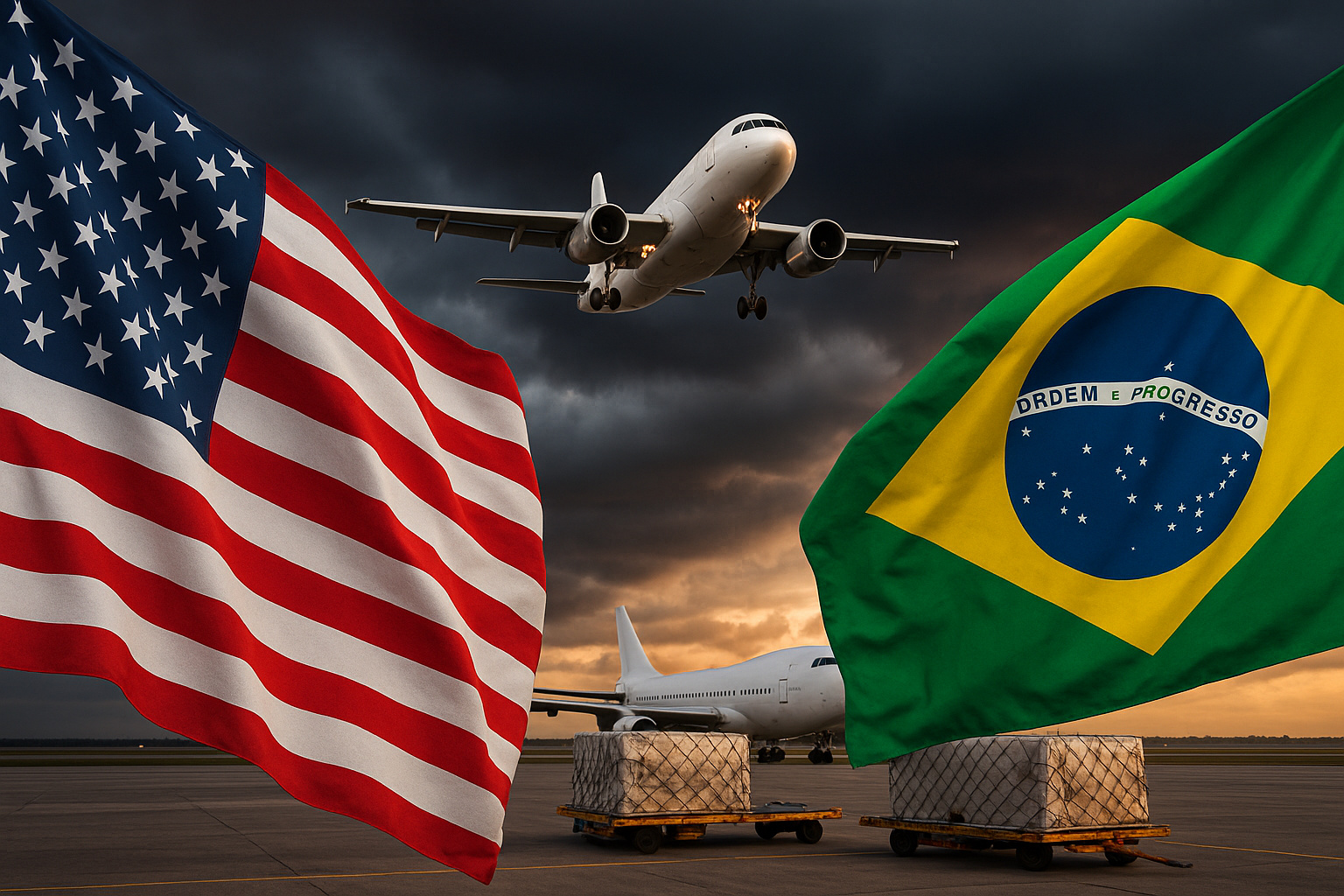


Analysts Warn About Global Risks from U.S. Government Shutdown
The shutdown of the United States, known as a shutdown, can bring immediate impacts to global air logistics.
It can also have direct consequences for Brazil.
Experts highlight that this type of administrative blockade has occurred on other occasions.
-
Brazil Welcomes Spanish Wamos Air and Nigerian Air Peace, Potentially Transforming International Routes and Increasing Competition

-
Offshore air transport soars in Brazil, surpasses 2.5 million passengers, and reveals how oil has transformed Rio’s airports into key pieces of national logistics.

-
Latin America becomes the “global champion” of aviation taxes, tickets may become more expensive in Brazil, and IATA’s warning exposes risk for flights, tourism, and passengers.
-
Brazil has lost 85 air routes since 2019 and is still flying less than before the pandemic, leaving passengers with fewer destinations, fewer frequencies, and a more limited air network.


In 2019, the country faced 35 days of shutdown, which cost about US$ 11 billion, according to foreign trade specialist Jackson Campos.
That year, the impact reduced U.S. economic growth forecasts by 0.2%.
This put pressure on global supply chains and increased operational costs across various international sectors.
Direct Effects on International Aviation
During the shutdown, public servants have their contracts suspended, which causes a labor shortage in strategic sectors.
Among them is air transport, which is highly dependent on continuous oversight.
Although essential services continue to operate, the reduction in staff creates operational bottlenecks at airports and terminals.
According to Campos, agencies such as FDA and USDA reduce their activities, directly affecting foreign trade.
This also impacts international logistics and increases delays in shipments and arrivals.
As a result, ports and airports report queues, accumulation of goods, and greater pressure on storage costs.


Impacts on Brazil
In Brazil, the effects arrive almost immediately.
This happens because fewer inspectors and controllers in the U.S. result in delays in flights and bottlenecks at airports.
The direct consequence is the slower release of cargo on international routes.
For sectors that depend on American supplies, such as the automotive, chemical, and pharmaceutical industries, the scenario is one of elevated risks and additional costs.
Additionally, late imports and held exports increase logistical costs.
According to Campos, the rise in operational expenses and the risk of production disruption require urgent attention from Brazilian companies and authorities.
Services Continue, but with Limitations
Despite the effects, essential services such as air traffic control remain active during the shutdown.
Currently, 13,227 controllers are still working without pay until the government reopens.
However, important activities such as aircraft certification and engine oversight are paused.
The hiring of new controllers is also suspended, as are field training programs.
This raises concerns about operational safety and system efficiency.
Moreover, it creates a sense of insecurity for passengers and operators in the international air sector.
Reaction from the Aviation Industry
In light of this scenario, groups linked to the American aviation industry mobilized against the shutdown.
In September 2023, a coalition of organizations sent a letter to the U.S. Congress, urging that the shutdown be avoided.
The document warned that the lack of funding would severely compromise the Federal Aviation Administration (FAA).
It also highlighted that safety programs would be suspended during the shutdown.
The absence of support personnel would exacerbate operational risks in the aviation sector.
Industry representatives called for urgent action to avoid further delays and global losses.
They also emphasized the importance of the U.S. as a world leader in aviation.