Portuguese
  Spanish


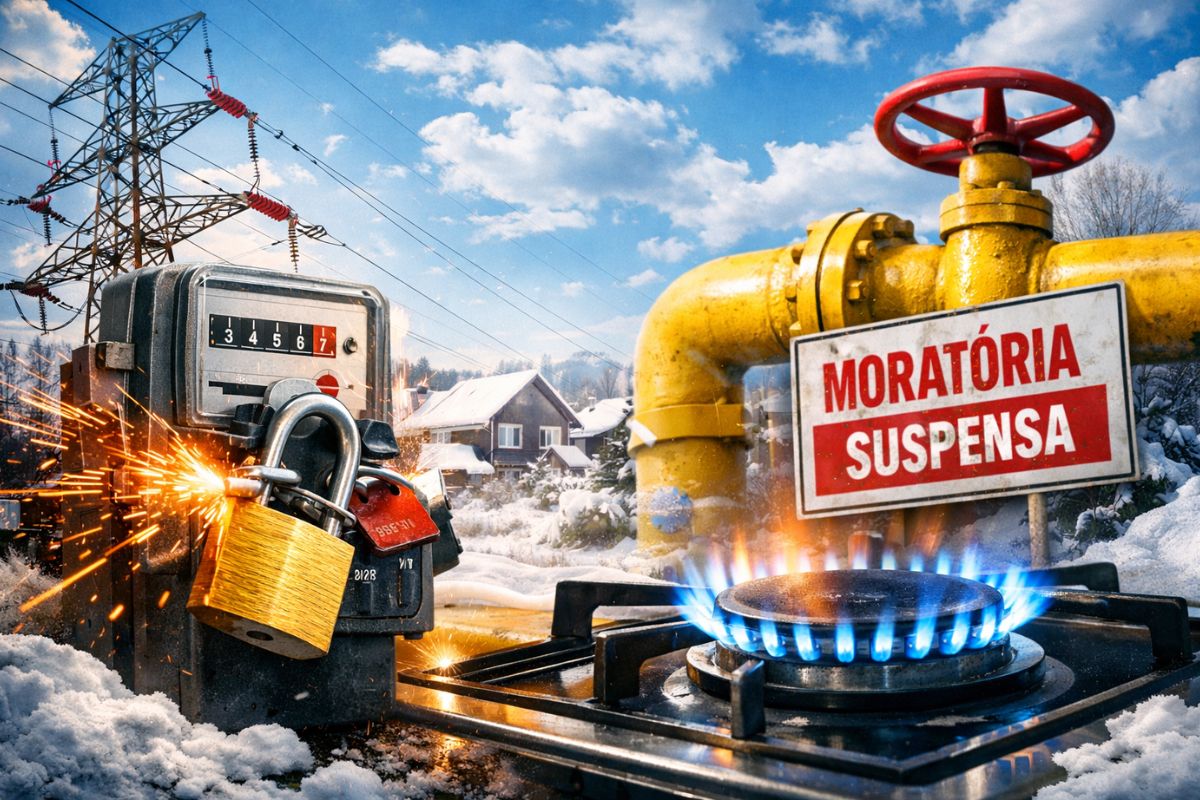

CRU Suspends Power And Gas Cutoffs In Winter For Residential And Vulnerable Customers, Expands Protections, But Warns That Debts May Explode If Families Do Not Negotiate In Time.
When the CRU, Ireland’s energy regulator, suspends power and gas cutoffs in winter for all residential customers, the message is twofold. On one hand, the decision ensures that families do not lose electricity or heating during the coldest time of the year. On the other hand, the agency makes it clear that the protection is temporary and that if the bills are simply accumulated, the debt may become much more difficult to pay when the moratorium ends.
In announcing the new cut-off moratoriums, the CRU detailed distinct periods for vulnerable customers and for the general resident population.
Vulnerable customers continue with a higher level of protection, including those who critically rely on electrical equipment for medical assistance, who cannot have their supply cut off for non-payment at any time.
-
Brazilian Homebuyers Still Fall for Illegal “Drawer Contracts,” Risking Foreclosure and Long Legal Battles Without Deeds.

-
World’s Largest Pencil Factory, Producing 2 Billion Annually, Operates in a Brazilian University Town with Its Own Sustainable Forest

-
World’s Largest Banknote Printer is a British Private Company Producing Currency for Over 69 Nations
-
Europe’s Largest Hydrogen Truck Fleet Begins Operation with 125 Vehicles Emitting Only Water Vapor




At the same time, the regulator emphasizes that the goal of the moratoriums is not to encourage non-payment, but rather to give families in difficulty time to negotiate with suppliers before the moratorium ends.
How The Winter Moratorium Works
In practice, the CRU suspends power and gas cutoffs in winter in two layers of protection. The first is directed at customers registered as particularly vulnerable.
In addition, the CRU maintains a permanent protection for vulnerable customers dependent on electrical assistance devices, who cannot have their supply interrupted for non-payment at any time of the year.
This extra layer is presented as an essential safeguard for those who literally depend on electricity to keep medical equipment functioning at home.
Extra Protection For All Residences
The second layer of the decision applies to all domestic customers. The CRU suspends power and gas cutoffs in winter for this group for a shorter period, but extended compared to the historical standard.
Instead of the usual three weeks around Christmas, the moratorium for residences has been extended to December 1, 2023 to January 31, 2024.
According to the regulator, this extension aims to balance protection and responsibility. On one hand, it prevents families from being without energy during weeks of intense cold.
On the other hand, it preserves the incentive for consumers to talk to their providers, set up payment plans, and avoid having the debt spiral out of control when the moratorium ends.
Why The CRU Limited The Moratorium Time
The CRU explains that it would not be in the best interest of consumers to maintain the suspension of power and gas cutoffs in winter for an even longer period.
The analysis of recent retail market data showed that, in prolonged moratoriums, many customers continue to accumulate debt without negotiating with suppliers, which increases the outstanding amounts and makes it harder to reduce them later.
The agency emphasizes that the longer the moratorium, the greater the risk of an undesirable side effect.
When the protection ends, families may face a debt volume so high that the risk of supply interruption increases right when the moratorium ceases to exist.
Therefore, the CRU asserts that the current design seeks to protect at the peak of winter, without encouraging the indefinite postponement of financial decisions.
Additional Consumer Protection Measures
The moratoriums in which the CRU suspends power and gas cutoffs in winter do not come alone. They complement a package of consumer protection measures announced in August, based on retail data and contributions from consumer advocacy groups.
Among these measures are extended payment deadlines, reducing the burden of debt in prepaid plans, and better cost-effectiveness in financial assistance meters, used by customers in more delicate situations.
There has also been an increased promotion of the registration of vulnerable customers, so that more families who fit this category can be formally protected.
The Role of The Energy Engagement Code
Another important pillar is the Energy Engagement Code, led by electricity and gas supply companies.
This code functions as an additional commitment to protect residential customers, especially those who have already accumulated debt.
Under the code rules, suppliers cannot interrupt the supply of those who reach out and try to negotiate.
They must offer all opportunities for the customer to find a way to manage the debt, whether through installment plans, plan revisions, or by using financial assistance meters.
The CRU emphasizes that this dialogue is essential to avoid that the end of the moratorium results in energy cutoffs.
Direct Message For Those Who Are In Debt
In the CRU’s assessment, and as highlighted by Karen Trant, Director of Policy and Customer Protection, energy cut-off moratoriums are vital to ensure support and peace of mind during winter, but they cannot be viewed as a license to ignore outstanding bills.
The Energy Engagement Code, applied by suppliers, is presented as the bridge between temporary protection and a lasting solution for debts.
The regulator insists on one central point: customers who already have financial difficulties should contact their supplier as soon as possible, take advantage of the period in which the CRU suspends power and gas cutoffs in winter, and negotiate before the moratorium ends.
In the agency’s view, with these protections active and in light of debt data, extending the moratoriums further would not bring real benefits to consumers.
And you, if you were struggling to pay for electricity and gas during winter, would you contact the supplier to negotiate soon or wait until the end of the moratorium to decide?