






 Portuguese
  Spanish
  3 min of reading
  1 comment


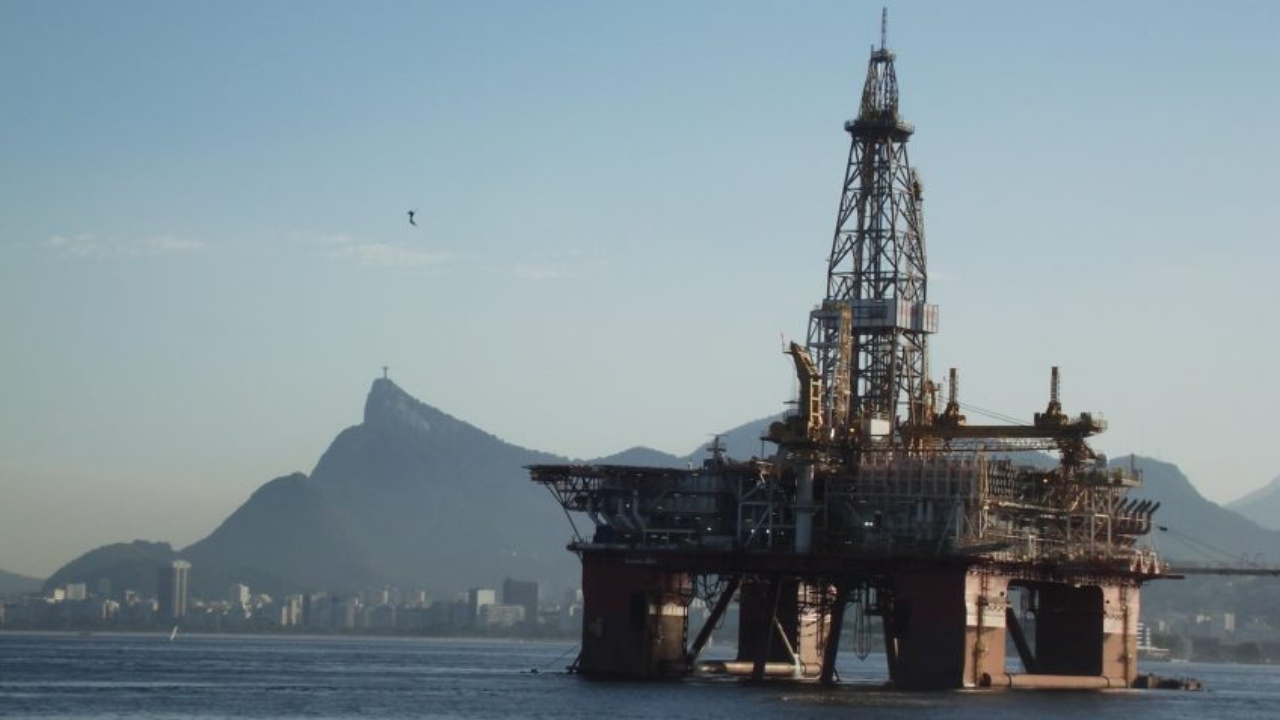


Brazilian Oil Is Increasingly Concentrated in Rio de Janeiro, While Other States Lose Ground and the Santos Basin Dominates National Production.
Oil production in Brazil has never been so concentrated. In the last five years, one single state has come to dominate almost all the volume extracted in the country.
Rio de Janeiro has rapidly expanded its leadership, while other regions have lost ground in the rankings.
Even without leading the global scene, Brazil remains one of the largest global producers. In 2023, the country ranked seventh among the largest oil producers, according to the U.S. Energy Information Administration.
-
Petrobras is expected to complete the drilling of the Morpho well in the Foz do Amazonas in August 2026, the first well in the Equatorial Margin, an oil frontier that the ANP estimates at more than 30 billion barrels and could redraw the map of Brazil.

-
Oil returns to the center of concerns with tension between the US and Iran

-
IEA reduces forecast for global oil demand in 2026 after impacts of the Middle East crisis

-
Bank of Japan raises interest rates to 1%, reaching the highest level in over three decades


Still, within Brazilian territory, the scenario is marked by a significant imbalance.
Rio de Janeiro Expands Its Dominance Over National Oil
The data from the last five years show consistent growth for Rio de Janeiro in oil production. In 2021, the state accounted for 80.60% of Brazil’s total. However, this number jumped to 87.80% by 2025.

In practice, this means that nearly nine out of ten barrels of oil produced in Brazil today come from the fluminense territory. The advance was not momentary. It happened year after year, reinforcing the state’s strategic role in the energy sector.
Meanwhile, other producers have fallen further behind.
São Paulo and Espírito Santo Lose Ground
Although São Paulo and Espírito Santo still occupy the second and third positions in the national oil ranking, both have lost participation over time.
São Paulo dropped from 9.36% in 2021 to just 4.89% in 2025. Espírito Santo, which fluctuated throughout the period, ended 2025 with 5.12% of national production.
Despite still being relevant, these numbers show that the gap to Rio de Janeiro has clearly increased. The concentration of production has become more visible.
Smaller States Are Almost Off the Oil Map
Other producing states appear only as supporting characters. Rio Grande do Norte, for example, fell from 1.15% to 0.83%. Bahia dropped from 0.77% to 0.55%. Amazonas decreased from 0.50% to 0.29%.
Sergipe, Alagoas, Paraná, and Ceará report shares below 0.4%. In some cases, the volume is almost symbolic.
Ceará, for instance, maintained only 0.02% throughout the entire period. Paraná only entered the ranking starting in 2024, with 0.04%, rising to 0.07% in 2025.
Santos Basin Dominates Brazilian Oil
The dominance of Rio de Janeiro is directly related to the strength of the Santos Basin. In 2025, this region concentrated 77.79% of all oil produced in Brazil, increasing its share compared to the previous year.
Next comes the Campos Basin, which accounted for 19.67% of production. Although still important, it has lost ground, with a decrease of 0.60 percentage points compared to 2024.
These two hubs together practically control all national oil extraction, reinforcing the country’s dependence on a few strategic areas.
Even with this internal concentration, Brazil remains an important player in the global oil market. In 2023, the country was the seventh-largest producer in the world.
Moreover, the exported volume is growing, strengthening Brazil’s presence in the international energy trade. The oil extracted in the country fuels refineries, generates fuels, and drives billions in revenues.
However, the dependence on a few regions raises debates about risks, infrastructure, and the distribution of gains.
And in your state, how is the oil production index? Is the percentage significant enough to impact the economy, or is the focus on other areas?






Ao observar a matéria extraída do solo eu praticamente conclui a existência de grandes quantidades de petróleo no Brasil. explorar sempre com o objetivo de melhorar cada vez mais a qualidade de vida do povo. lembre-se um mundo desenvolvido é um mundo em que a miséria não tem vez!!!!!!!.